
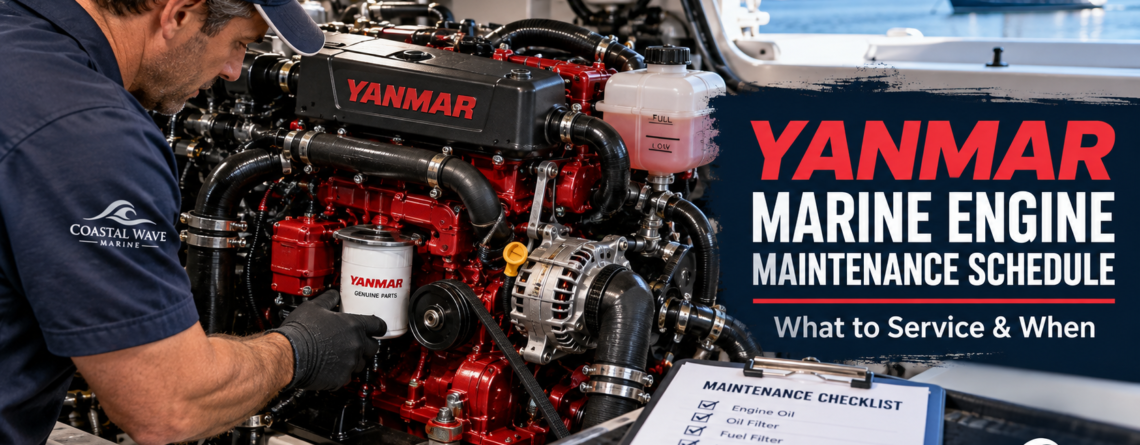
A reliable Yanmar marine engine doesn’t stay reliable by accident.
It stays reliable because someone checks the oil before the trip, notices a small coolant leak before it becomes an overheating problem, replaces filters before they become restricted, inspects the raw-water system, and keeps track of engine hours instead of guessing when the next service is due.
That is what a proper Yanmar marine engine maintenance schedule is really about.
And there is one important detail to understand before you copy any maintenance chart from the internet:
There is no single maintenance schedule that applies identically to every Yanmar marine engine.
Yanmar’s own documentation makes this clear. Its YM-series Operation Manual, for example, lists maintenance intervals including the initial 50 hours, 50 hours/monthly, 100 hours/six months, 150 hours/one year, 250 hours/one year and 1,000 hours/four years. The JH-series manual uses a different structure, including 50 hours/monthly, 250 hours/one year, 500 hours/two years and 1,000 hours/four years.
So whether you’re maintaining a Yanmar 3YM30, 3JH40, 4JH45, 4JH57, 4JH80, 4JH110, 4LV or another Yanmar marine engine, the first rule is simple:
Identify the exact engine before deciding what needs to be serviced.
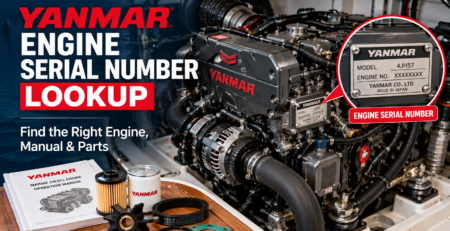
At Coastal Wave Marine, that same principle should guide every maintenance-parts conversation. Before choosing an oil filter, fuel filter, impeller, belt, gasket or other Yanmar marine engine parts, you want the engine model and, where required, the serial number.
That small step can prevent a surprisingly expensive mistake.
Why a Yanmar Marine Engine Maintenance Schedule Matters
Marine engines operate in an environment that is harder on equipment than many people realize.
You have heat.
You have vibration.
You have moisture.
You have saltwater exposure.
You have periods of inactivity.
You have fuel sitting in tanks.
And, unlike a car, a marine engine is often working in an enclosed engine compartment where cooling, ventilation and access can all affect operating conditions.
Regular maintenance is therefore more than an attempt to make an engine last longer.
It is a way of finding small problems before they become expensive problems.
Yanmar states that daily inspections and regular maintenance are important for maintaining safety and performance, preventing breakdowns and serious accidents, reducing running costs and extending product life.
That’s the philosophy behind a good Yanmar diesel engine maintenance schedule.
You don’t wait for the engine to tell you that something is wrong.
You create a system that helps you find problems before they become emergencies.
How Often Should You Service a Yanmar Marine Engine?
The correct answer depends on several factors:
- Engine model
- Engine operating hours
- Calendar time
- Engine application
- Operating load
- Fuel used
- Engine oil
- Operating environment
- Storage conditions
- Manufacturer requirements
Yanmar’s recreational marine FAQ says each engine’s Operation Manual contains a Periodic Maintenance section with the applicable maintenance schedule.
That is important because online articles often simplify maintenance into statements such as:
“Service every 250 hours.”
That may be appropriate for one Yanmar engine under certain conditions, but it should not automatically be applied to another model.
For example, the JH-series Operation Manual identifies maintenance intervals of 50 hours or monthly, 250 hours or one year, 500 hours or two years, and 1,000 hours or four years, whichever comes first.
The YM-series schedule is different.
Engine Hours vs. Calendar Time
This distinction is one of the most important things an owner can understand.
Imagine two boats.
Boat A runs 500 hours every year.
Boat B runs only 50 hours.
It would be tempting to assume Boat B needs almost no maintenance.
That isn’t necessarily true.
Some maintenance requirements are based on time as well as operating hours. Filters, fluids, belts, hoses and other components can still require inspection or replacement according to the manufacturer’s schedule even when the engine has relatively few hours.
That’s why serious maintenance tracking should include both:
Engine hours + calendar date.
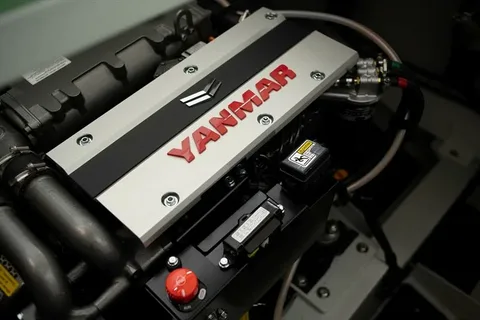
Yanmar Marine Engine Maintenance Schedule at a Glance
Use this table as a planning framework—not as a replacement for your engine’s Operation Manual.
| Maintenance period | Main focus |
|---|---|
| Before starting | Fluid levels, leaks, visual inspection |
| During operation | Gauges, alarms, seawater discharge and abnormal behavior |
| Initial service | Break-in and model-specific service requirements |
| 50 hours/monthly | Periodic inspections and model-specific service |
| 100–150 hours | Model-dependent maintenance |
| 250 hours/annual | Major scheduled service items |
| 500 hours/2 years | Applicable extended maintenance |
| 1,000 hours/4 years | Major model-specific maintenance |
The exact requirements vary by engine family. Yanmar’s YM documentation and JH documentation demonstrate why owners should not combine schedules from different engines into one universal chart.
Daily Yanmar Marine Engine Maintenance: What to Check Before You Run
Daily checks are where preventive maintenance starts.
They don’t necessarily require specialized equipment.
They require consistency.
Check the Engine Oil
Check the engine oil according to the procedure specified in your Operation Manual.
Look for:
- Correct oil level
- Unusual oil loss
- Signs of contamination
- Oil around seals or fittings
- Changes from the engine’s normal condition
Don’t automatically assume that repeatedly adding oil is normal.
If oil consumption has changed noticeably, investigate it.
Check the Coolant
Check the coolant level according to your engine’s procedure.
Look around the engine for evidence of leakage.
Pay particular attention to:
- Hoses
- Clamps
- Connections
- Expansion tank
- Cooling-system components
- Dried coolant residue
A cooling-system problem is much easier to address while the engine is sitting safely at the dock than after an overheating alarm appears offshore.
Look for Fuel, Oil and Coolant Leaks
Before starting, take a visual inspection of the engine compartment.
You’re looking for changes.
A wet fitting.
A new stain.
A loose hose.
A damaged clamp.
An unusual smell.
A drip beneath the engine.
These observations can provide valuable clues.
Check the Seawater Discharge
Once the engine is running, pay attention to the normal seawater discharge.
A noticeable change in flow can indicate that the raw-water cooling system needs investigation.
Possible causes can vary, so don’t automatically assume the impeller is the culprit.
Check Warning Indicators
If a warning light or alarm appears, don’t simply silence it and continue operating.
Find out why it appeared.
On electronically controlled Yanmar engines, diagnostic trouble codes can provide additional information, and Yanmar says these systems can identify potential issues before they contribute to engine failure.
The Initial 50-Hour Yanmar Marine Engine Service
If your engine is new, the initial service deserves special attention.
The first service isn’t merely an early version of your annual service.
Yanmar’s manuals contain specific procedures for the initial operating period.
For the YM series, the Operation Manual includes a dedicated “After Initial 50 Hours of Operation” section.
The JH-series manual likewise identifies initial 50-hour service requirements.
Why the First Service Matters
The initial operating period establishes the baseline for the engine’s future maintenance.
Depending on the model, the scheduled work can include:
- Engine oil replacement
- Oil filter replacement
- Marine gear oil service
- Fuel-system checks
- Belt inspection
- Other model-specific inspection or adjustment procedures
The important point is not to memorize a generic list.
Follow the list for your engine.
Yanmar Marine Engine Oil Change Schedule
Oil is one of the most important routine maintenance items on a marine diesel.
But the correct oil isn’t simply:
“Whatever oil says diesel on the bottle.”
The engine manufacturer specifies appropriate fluids and service intervals.
Yanmar’s marine FAQ directs owners to the Operation Manual for their particular engine to determine the appropriate oil/coolant and change intervals.
Why Oil Maintenance Matters
Engine oil performs several important functions.
It helps lubricate moving components.
It helps manage friction and heat.
It carries contaminants away from critical surfaces.
It supports the engine’s lubrication system under operating load.
As oil accumulates contaminants and experiences heat cycles, its condition changes.
That’s why scheduled oil changes are preventive maintenance rather than optional housekeeping.
Don’t Forget the Oil Filter
Changing oil while ignoring the filter defeats part of the purpose of the service.
Yanmar’s published maintenance schedules include oil-filter replacement at specified service intervals. For example, the YM and JH documentation both identify oil-filter replacement as a scheduled maintenance task.
For Coastal Wave Marine customers shopping for Yanmar marine engine parts, this is also why model identification matters before ordering a filter.
A filter that physically resembles another filter isn’t automatically the correct filter for your engine.
Yanmar Marine Fuel Filter Maintenance Schedule
Fuel-system maintenance is particularly important for diesel engines.
A clean fuel supply supports proper engine operation.
Inspect the Fuel System
Pay attention to:
- Fuel leaks
- Fuel hoses
- Connections
- Water
- Sediment
- Fuel/water separator condition
- Fuel filter condition
Yanmar’s YM maintenance schedule includes draining water and sediment from the fuel tank, draining the fuel/water separator and replacing the fuel filter element at specified intervals.
Don’t Ignore Repeated Water Contamination
If you’re repeatedly finding water in the fuel system, don’t treat draining the separator as the entire solution.
Ask the bigger question:
Why is water getting into the fuel system?
The source may require investigation.
That is the difference between performing a maintenance action and actually solving a maintenance problem.
Yanmar Marine Engine Impeller Maintenance
The raw-water pump impeller is a small component with an important job.
It helps move seawater through the engine’s raw-water cooling system.
Why the Impeller Matters
Insufficient seawater flow can contribute to overheating.
The challenge is that an impeller can deteriorate without producing an obvious warning beforehand.
Potential warning signs include:
- Reduced seawater discharge
- Overheating
- Damaged impeller blades
- Abnormal raw-water flow
- Cooling-system warnings
Yanmar’s maintenance schedules include seawater-pump impeller inspection/replacement requirements. The exact interval depends on the engine.
So when someone searches for Yanmar marine engine impeller replacement, the correct next question is:
Which Yanmar engine?
That information helps determine the appropriate part and maintenance procedure.
Yanmar Marine Cooling System Maintenance
Cooling-system maintenance deserves the same attention as lubrication and fuel maintenance.
Check Coolant
Maintain the coolant according to the engine’s specific instructions.
Do not assume all Yanmar engines use identical coolant specifications or replacement intervals.
Inspect Hoses and Clamps
Look for:
- Cracking
- Swelling
- Abrasion
- Loose clamps
- Leaks
- Corrosion
- Deterioration
Maintain the Raw-Water Side
Depending on the engine, the system may involve:
- Seawater intake
- Raw-water pump
- Impeller
- Heat exchanger
- Seawater passages
- Exhaust/water-mixing components
- Hoses and fittings
The JH-series maintenance documentation, for example, includes seawater-system and cooling-system maintenance at specified intervals.
Coolant Replacement
This is another area where copying a generic internet interval can create bad advice.
Use the exact engine manual.
The YM manual, for example, specifies coolant replacement annually, with a different interval when Long Life Coolant is used.
Yanmar Marine Engine Belt Maintenance
Belts are easy to overlook because they’re visually simple.
But the alternator and other belt-driven systems depend on them.
Inspect for:
- Cracks
- Wear
- Fraying
- Contamination
- Incorrect tension
- Damage
- Alignment problems
A belt can appear intact while still requiring adjustment or replacement.
Yanmar’s JH documentation includes alternator belt inspection, adjustment and replacement within its maintenance procedures.
If your engine develops charging problems, don’t immediately assume the alternator itself has failed.
Start with the fundamentals:
belt, tension, connections, battery and charging system.
Yanmar Marine Engine Air Intake and Exhaust Maintenance
The engine needs to breathe properly and remove exhaust gases effectively.
Depending on the model, scheduled maintenance may involve:
- Air intake
- Air cleaner or intake silencer
- Exhaust system
- Water-mixing elbow
- Turbocharger
- Related hoses and connections
The JH-series documentation includes maintenance related to the intake silencer, exhaust/water-mixing elbow and turbocharger on applicable engines.
This is an area where model-specific knowledge matters.
A naturally aspirated small Yanmar and a turbocharged engine should not automatically be treated as identical systems.
Yanmar Marine Battery and Electrical Maintenance
A diesel engine still depends heavily on its electrical system.
Inspect:
- Battery condition
- Battery terminals
- Connections
- Wiring
- Corrosion
- Alternator belt
- Starting system
- Warning indicators
Electrical problems can sometimes produce symptoms that appear to be engine problems.
For example, a weak starting system can make an otherwise healthy diesel engine appear to have a starting problem.
The correct diagnostic approach is therefore systematic:
Observe → inspect → test → identify → repair.
Don’t start replacing expensive parts simply because the symptom sounds familiar.
Yanmar Marine Gearbox and Saildrive Maintenance
One of the most common mistakes in engine maintenance is thinking:
“The engine is maintained, so the propulsion system is maintained.”
Not necessarily.
A Yanmar marine propulsion package can include a marine gear or saildrive, depending on the installation.
These components have their own maintenance requirements.
Marine Gear Oil
Check the correct lubricant and replacement interval for your specific gear.
Saildrive Oil
Saildrive maintenance should be treated as its own service category.
Yanmar’s YM documentation includes saildrive gear-oil replacement in its periodic maintenance schedule.
Yanmar’s 4JH80 product documentation also identifies compatible gear and saildrive configurations and provides model-specific documentation.
For Coastal Wave Marine, this creates natural product connections between:
- Yanmar marine engines
- Yanmar marine engine parts
- Marine gearboxes
- Yanmar-compatible saildrives
- Propulsion components
Yanmar Marine Engine Maintenance by Model
This is where a high-quality maintenance article should be more careful than a generic SEO article.
Yanmar has multiple marine engine families, and each can have its own maintenance requirements.
Examples include:
- Yanmar 1GM10
- Yanmar 2YM15
- Yanmar 3YM30
- Yanmar 3JH40
- Yanmar 4JH45
- Yanmar 4JH57
- Yanmar 4JH80
- Yanmar 4JH110
- Yanmar 4LV series
For example, Yanmar’s 4JH80 product page provides the JH-CR Operation Manual covering the 3JH40, 4JH45, 4JH57, 4JH80 and 4JH110.
That creates an important SEO opportunity for Coastal Wave Marine.
Instead of trying to make one article answer every model-specific question, use this article as the maintenance-schedule pillar page and internally link to dedicated pages covering individual engine models.
That creates a logical topical structure:
Yanmar Marine Engine Maintenance Schedule
→ Yanmar 4JH80 Maintenance
→ Yanmar 4JH110 Maintenance
→ Yanmar 3JH40 Maintenance
→ Yanmar 3YM30 Maintenance
→ Yanmar Marine Engine Parts
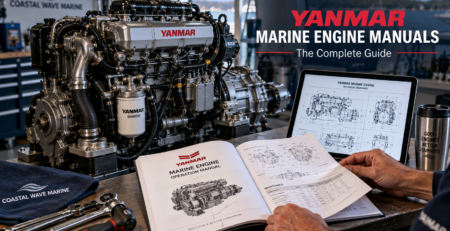
→ Yanmar Marine Engine Manuals
→ Yanmar Marine Engine Troubleshooting
This is much stronger than repeating the same keyword dozens of times.
What Should You Do If Your Yanmar Engine Is Overdue for Maintenance?
Don’t panic.
Start by establishing the facts.
Step 1: Identify the Engine
Record the complete model number.
Yanmar says complete model and serial-number information is needed for accurate engine identification because of its broad product line.
Step 2: Record the Engine Hours
Write down the current hour-meter reading.
Step 3: Find the Correct Operation Manual
Yanmar says current engine Operation Manuals can be downloaded from model product pages, while older engines may require contacting a dealer or distributor.
Step 4: Compare the Engine Hours and Calendar Date
Determine which maintenance interval you’re approaching or have passed.
Step 5: Build the Parts List
Depending on the service, this could include:
- Oil filter
- Fuel filter
- Impeller
- Belt
- Gasket
- Coolant
- Engine oil
- Gear oil
- Other model-specific maintenance components
Step 6: Verify Every Part
This is where Yanmar marine engine parts expertise becomes important.
Don’t rely only on a photograph.
Confirm:
Model → Serial/Application → Part → Quantity → Specification
That workflow dramatically reduces ordering errors.
Genuine Yanmar Marine Engine Parts and Maintenance
When you need replacement parts, quality and compatibility matter.
Yanmar says its Genuine Parts are manufactured to its standards for quality and durability, and Yanmar maintains a parts portfolio covering current and previous engine models. It also offers maintenance kits designed around scheduled service intervals.
Yanmar also states that Genuine Parts are available through its distributor and dealer network.
That doesn’t mean every aftermarket component is automatically unsuitable.
It does mean that owners should understand exactly what they’re buying and verify compatibility rather than choosing a part simply because the product description contains the word “Yanmar.”
For a commercial website, this is also where trust matters.
If a part’s compatibility has not been confirmed, don’t claim that it fits.
Ask for the model and serial information.
Verify it.
Then recommend the appropriate component.
That is how a marine-parts buying process should work.
Yanmar Marine Engine Winterization and Seasonal Maintenance
A boat that is going into storage needs a different mindset from a boat that runs continuously.
Yanmar’s official FAQ says its Operation Manuals include seasonal-maintenance guidance and recommended parts for procedures such as winterization.
Depending on the engine and climate, seasonal preparation can involve:
- Fuel-system preparation
- Cooling-system procedures
- Seawater-system protection
- Battery maintenance
- Corrosion protection
- Long-term storage procedures
- Spring recommissioning
Don’t invent a winterization procedure from a generic diesel-engine article.
Use the instructions for your engine.
The YM Operation Manual, for example, contains dedicated sections for long-term storage and draining the seawater cooling system.
Common Yanmar Marine Engine Maintenance Mistakes
Mistake 1: Treating Every Yanmar Engine the Same
This is the biggest mistake.
A 3YM30 and a 4JH80 are not interchangeable maintenance subjects.
Mistake 2: Using Engine Hours Without Calendar Time
Some intervals are defined using hours or months/years.
Mistake 3: Guessing the Correct Part
A picture or vague product description isn’t enough.
Use the complete engine information.
Mistake 4: Ignoring Small Leaks
A small leak is information.
Investigate it.
Mistake 5: Waiting for a Breakdown
Preventive maintenance exists precisely to avoid waiting for failure.
Mistake 6: Ignoring the Marine Gear or Saildrive
Your propulsion system extends beyond the engine block.
Mistake 7: Assuming Low Usage Means No Maintenance
Time can matter even when operating hours are low.
Mistake 8: Performing Technical Work Beyond Your Skill Level
Yanmar states that whether an owner can perform maintenance depends on the type of maintenance and the owner’s skill set. Yanmar recommends authorized dealers for service and notes that electronically controlled engines may require specialized equipment.
Knowing when to call a professional is part of good maintenance.
How Coastal Wave Marine Can Help With Yanmar Marine Engine Parts
When you’re buying a maintenance component, the goal shouldn’t simply be:
“Find me a Yanmar filter.”
The better question is:
“Which filter is correct for my specific engine?”
That difference matters.
At Coastal Wave Marine, the information you should have ready when requesting a part includes:
- Yanmar engine model
- Serial number when available
- Existing part number
- Engine application
- Quantity required
- Maintenance task being performed
From there, the part can be matched against the appropriate application information.
This same process applies whether you’re looking for:
- Yanmar marine engine oil filters
- Yanmar fuel filters
- Yanmar impellers
- Yanmar belts
- Yanmar gaskets
- Yanmar cooling-system parts
- Yanmar marine engine maintenance kits
- Other Yanmar marine engine parts
If the application isn’t confirmed, the honest answer is to verify it first.
That’s better for the customer and better for the engine.
How to Keep a Yanmar Marine Engine Maintenance Log
A maintenance log is one of the simplest tools an owner can use.
Record:
Date
Engine hours
Maintenance performed
Parts installed
Part numbers
Fluids used
Observations
Next service due
For example:
| Date | Engine Hours | Service | Parts | Next Due |
|---|---|---|---|---|
| June 10 | 250 | Scheduled service | Oil filter, fuel filter | According to manual |
| Aug. 15 | 275 | Inspection | — | Next scheduled interval |
| Oct. 2 | 300 | Impeller inspection | Impeller if required | According to manual |
This creates a maintenance history.
It also becomes valuable when selling the boat, diagnosing a recurring issue or ordering future parts.
Yanmar’s YM manual itself emphasizes keeping a log of engine hours and daily checks.
Frequently Asked Questions About Yanmar Marine Engine Maintenance
How often should a Yanmar marine engine be serviced?
The answer depends on the specific engine. Yanmar says each engine’s Operation Manual contains its Periodic Maintenance section and applicable intervals.
What is the Yanmar marine engine maintenance schedule?
There is no single schedule for every model. Different Yanmar engine families use different intervals and maintenance requirements.
When should I change Yanmar marine engine oil?
Follow the oil type and change interval specified in your engine’s Operation Manual.
How often should I replace a Yanmar marine engine fuel filter?
Use the interval specified for your engine. The YM and JH manuals, for example, include fuel-filter replacement in their respective periodic schedules.
How often should a Yanmar marine engine impeller be replaced?
The correct interval varies by engine. Check your model’s maintenance schedule rather than applying a universal number.
Does a Yanmar engine need maintenance if it has low hours?
Yes, certain maintenance is calendar-based as well as hour-based. The applicable Operation Manual should be used to determine the schedule.
Where can I find a Yanmar marine engine manual?
Yanmar says Operation Manuals for current engines can be accessed through the relevant online product pages; older-engine owners can contact a local dealer or distributor.
Where can I buy Yanmar marine engine parts?
Yanmar says Genuine Parts are available through its authorized distributor and dealer network.
Can I perform Yanmar marine engine maintenance myself?
Some maintenance can be performed by experienced owners, but Yanmar says this depends on the task and the individual’s skill level. It recommends authorized dealers for service, particularly for electronically controlled engines requiring specialized equipment.
What information do I need when ordering Yanmar parts?
Start with the complete engine model and serial number. Yanmar specifically notes that complete model and serial information is needed for accurate identification.
The Yanmar Marine Engine Maintenance Checklist
Before every operation:
- Check engine oil
- Check coolant
- Inspect for leaks
- Inspect hoses and clamps
- Check the seawater discharge
- Check warning indicators
- Listen for unusual changes
At scheduled service intervals:
- Change engine oil as specified
- Replace oil filter
- Service fuel filters
- Inspect fuel/water separator
- Inspect or replace the raw-water impeller
- Inspect belts
- Check cooling system
- Inspect exhaust system
- Check electrical components
- Service marine gear or saildrive where applicable
For seasonal storage:
- Follow the manufacturer’s winterization procedure
- Protect the cooling system
- Prepare the fuel system
- Maintain the battery
- Follow long-term-storage instructions
For parts:
- Identify the exact engine
- Record the serial number
- Confirm the maintenance interval
- Identify the required part
- Verify compatibility
- Confirm quantity
- Keep the service record
Final Thoughts: A Maintenance Schedule Is Really a Reliability Strategy
A maintenance schedule isn’t just a list of oil changes and filter replacements.
It’s a system.
It tells you what to inspect.
It tells you when to inspect it.
It gives you a record of what has already been done.
And, most importantly, it helps you identify problems while they’re still manageable.
The strongest approach to Yanmar marine engine maintenance is therefore not to memorize a generic checklist from the internet.
Identify the engine.
Find the correct Operation Manual.
Record the engine hours.
Track calendar intervals.
Follow the model-specific maintenance requirements.
Use properly verified parts.
And investigate changes in engine behavior instead of waiting for a complete failure.
When you need Yanmar marine engine parts, the same principle applies.
Don’t guess.
Provide the engine model and serial information.
Verify the application.
Then order the component that actually belongs on your engine.
For Coastal Wave Marine, this creates a natural connection between maintenance information and the products boat owners actually need: Yanmar marine engines, Yanmar marine engine parts, marine gearboxes, saildrives and related marine propulsion components.
The objective isn’t to sell a part just because someone searched for one.
The objective is to help the owner identify what the engine actually requires.
Because when the right maintenance is performed at the right time—and the right component is installed for the right application—you aren’t simply checking a box on a service list.
You’re protecting the reliability of the propulsion system that gets you home.
Next Post: Yanmar Marine Engine Parts: The Complete Guide to Finding the Right Parts for Your Engine


Leave a Reply