
If you’re buying a used boat, maintaining an existing engine, or deciding whether to invest in a replacement, there’s one question worth answering before you spend money: how long do Yanmar marine engines last?
The honest answer is that there is no single lifespan that applies to every Yanmar marine diesel engine. Engine design, operating conditions, maintenance history, storage, installation, and the engine’s current mechanical condition all influence how long it remains suitable for service.
An engine with substantial operating hours is not automatically worn out. Likewise, a low-hour engine is not automatically a good purchase. The hour meter tells you something about usage, but it cannot tell you everything about internal wear, previous overheating, corrosion, or the quality of past maintenance.
For boat owners, the practical question is not just how many hours an engine can accumulate. It’s how to evaluate the engine you have, recognize developing problems, and decide when maintenance, repair, overhaul, or replacement makes the most sense.
At Coastal Wave Marine, helping customers identify suitable marine-engine equipment and replacement components starts with understanding the application, the exact engine model, and the information available about its condition.
This guide explains Yanmar marine engine lifespan, what engine hours mean, which factors influence longevity, how to assess a used engine, and what you can do to support reliable operation over the long term.
How Many Hours Can a Yanmar Marine Engine Last?
There is no universal operating-hour figure that reliably predicts the lifespan of every Yanmar marine engine. Different models have different specifications and intended applications, while individual engines have different maintenance histories and operating conditions.
Yanmar’s official YM Series Operation Manual explains that engine deterioration and wear depend on the time an engine has been in service and the conditions under which it operates. It also emphasizes periodic maintenance and keeping records of engine hours and service work.
That is an important starting point: engine hours are useful evidence, but they are not a standalone measure of remaining engine life.
Is 2,000 hours a lot for a Yanmar marine engine?
Not necessarily. Whether 2,000 hours is considered high depends on the particular model, its operating profile, service records, and current condition.
Consider two hypothetical used boats.
The first has a Yanmar engine showing 2,000 hours. The owner provides maintenance records, evidence of routine servicing, and documentation of previous repairs.
The second has a lower hour reading, but its maintenance history is incomplete. There are signs of corrosion, and the seller cannot explain a history of cooling-system problems.
Neither engine should be judged by its hour meter alone. The first has more documented evidence of its maintenance history, while the second needs further investigation. A qualified inspection would help establish the condition of either engine.
Operating hours provide useful context, but they cannot establish an engine’s remaining service life on their own. Yanmar’s YM Series Operation Manual emphasizes that engine wear is influenced by time in service and operating conditions, and it recommends keeping records of operating hours, checks, repairs, and parts.
This is why Yanmar marine engine hours and maintenance history should always be considered together.
Can a Yanmar marine engine last 5,000 or 10,000 hours?
An engine may accumulate substantial operating hours, but whether a specific Yanmar model reaches 5,000 or 10,000 hours—and what repairs it requires along the way—depends on the engine and its history.
Do not treat a high-hour example as a guarantee that another engine will achieve the same result. Similarly, claims that every engine should be rebuilt after a particular number of hours should not be accepted without model-specific supporting evidence.
If you’re evaluating a high-hour engine, investigate:
- The complete model and serial number
- Recorded operating hours and available service logs
- Previous repairs and any documented overhauls
- Evidence of overheating or lubrication problems
- Current operating symptoms
- The findings of an appropriate inspection
The most useful question is not simply, “How many hours has this engine run?” It is, “What condition is it in now, and what evidence supports that assessment?”
How many years can a Yanmar marine engine last?
Calendar age is another useful piece of information, but it doesn’t determine the engine’s remaining life on its own.
An engine that operates regularly and receives appropriate maintenance may have a different history from one that sits unused for long periods. Extended inactivity can introduce problems involving corrosion, deteriorated hoses and seals, fuel contamination, batteries, and neglected service requirements.
When researching how long a Yanmar marine engine lasts in years, consider its age alongside its operating hours, storage conditions, service records, and present condition.
For used-boat buyers, documented maintenance is especially valuable because it helps establish how the engine has been cared for throughout its working life.
What Determines How Long a Yanmar Marine Engine Lasts?
Two engines from the same manufacturer can have very different service histories. Several factors help explain why.
1. Maintenance history and service intervals
Routine maintenance is one of the most important factors an owner can influence.
Oil and filter changes, fuel-system maintenance, cooling-system inspections, and other service tasks must follow the requirements for the specific engine.
Neglected maintenance can allow developing problems to go unnoticed. A restriction in the cooling system, for example, may initially cause a change in operating temperature. If the underlying problem is ignored, continued operation could result in more serious damage.
This doesn’t mean every missed service causes a predictable reduction in engine life. It means that following the correct schedule helps reduce avoidable risks and provides opportunities to identify developing faults.
Yanmar’s official marine FAQ directs owners to the relevant operation manual for model-specific maintenance schedules and fluid recommendations. Consult the correct manual rather than applying a generic interval to every Yanmar engine.
For additional guidance, see Coastal Wave Marine’s Yanmar marine engine maintenance schedule.
2. Operating load and conditions
Marine engines work under different loads depending on the vessel, propulsion system, installation, and intended application.
Operating conditions outside the manufacturer’s specified requirements can contribute to problems over time. Excessive load, persistent overheating, and unresolved performance issues all deserve investigation.
Engine selection matters, too. A replacement must be appropriate for the vessel and compatible with the intended propulsion arrangement.
When evaluating an older engine, ask how it was used and whether it experienced recurring mechanical problems. A history of normal operation is useful, but it should be supported by available records and an assessment of the engine’s current condition.
3. Cooling-system condition
A functioning cooling system is essential to reliable marine-engine operation.
Depending on the engine, the system may include a seawater intake, strainer, seawater pump, impeller, thermostat, heat exchanger, and closed coolant circuit. Not every Yanmar engine uses the same arrangement.
Restricted water flow, damaged components, coolant loss, or other faults can interfere with temperature regulation. Continuing to operate an overheating engine can increase the risk of serious damage.
Pay attention to abnormal temperature readings, cooling-water discharge, and coolant levels where applicable. Investigate recurring symptoms rather than replacing components without establishing the cause.
If your engine is already overheating, consult Coastal Wave Marine’s related Yanmar marine engine overheating and troubleshooting resource.
4. Fuel quality and lubrication
Fuel contamination and incorrect lubrication can create avoidable operating problems.
Water or other contaminants in diesel fuel may affect fuel-system operation. Using an unsuitable lubricant or neglecting required oil changes may compromise the lubrication system.
The correct fuel, oil, and coolant specifications depend on the engine model and operating conditions. Yanmar advises owners to consult the applicable operation manual for these requirements.
If an engine has a history of abnormal oil consumption, low oil pressure, or recurring fuel-system problems, investigate the cause rather than assuming the engine has reached the end of its useful life.
5. Freshwater versus saltwater operation
Saltwater exposure creates additional corrosion-related maintenance challenges, but it does not determine engine lifespan on its own.
The effect depends on the engine’s design, cooling arrangement, installation, maintenance, and exposure to the marine environment.
When inspecting a used engine, pay attention to corrosion, deteriorated connections, damaged hoses, cooling-system condition, and evidence of neglected servicing. These observations help identify areas that may need further investigation.
6. Storage and periods of inactivity
A boat that is rarely used still needs appropriate maintenance.
Extended periods without operation can introduce issues involving fuel quality, batteries, seals, hoses, corrosion, and other components. The correct storage procedure depends on the engine and its environment.
Follow the manufacturer’s recommended storage and recommissioning procedures. Before returning an engine to service after a long period of inactivity, inspect it appropriately instead of assuming that low operating hours mean it is ready to run.
Do Different Yanmar Marine Engine Models Have Different Lifespans?
Yanmar marine engines differ in design, specifications, intended applications, and maintenance requirements. Those differences matter when evaluating longevity, but they do not justify assigning a guaranteed lifespan to an entire model family.
Yanmar YM Series
The YM Series includes marine diesel engines used in a range of smaller-vessel applications.
When evaluating one of these engines, consult the correct operation manual for its maintenance requirements, inspection procedures, and specifications. The YM Series Operation Manual provides relevant guidance for the models it covers.
Do not assume that a service interval or procedure from another Yanmar series applies to a YM engine.
Yanmar JH and 4JH Series
The JH and 4JH families include different marine engine configurations. Specifications and service requirements depend on the exact model.
If you’re researching a used engine from either family, verify the complete model designation and serial number. Review the available maintenance history and arrange an appropriate inspection if you’re considering a purchase.
Larger Yanmar marine diesel engines
Larger engines may serve different vessel types and operating environments. Comparisons should account for intended application, operating load, service records, and mechanical condition.
A high-hour engine with a documented maintenance history should not automatically be dismissed. Equally, a low-hour engine with serious unresolved faults should not automatically be considered a safe purchase.
The individual engine’s condition matters more than a general assumption based on its size or family.
How to identify your Yanmar engine
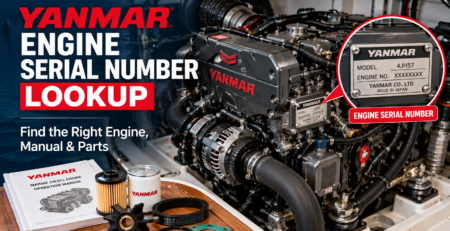
Before researching maintenance requirements or purchasing replacement components, record the complete engine model and serial number.
Yanmar’s official Marine FAQ explains that the serial number is found on the engine information plate and should be accompanied by the model information when seeking identification assistance.
Coastal Wave Marine’s Yanmar engine serial number lookup guide can help you understand the identification process.
10 Signs Your Yanmar Marine Engine May Be Wearing Out
An engine that develops a problem is not necessarily at the end of its useful life. Many symptoms can have several possible causes, including faults that are repairable without rebuilding the engine.
The key is to recognize changes early and investigate them properly.
1. Hard starting
An engine that becomes difficult to start may have a battery, starter, fuel-delivery, air-supply, or compression-related problem.
Hard starting alone does not establish that the engine is worn out. Start with the appropriate diagnostic checks and investigate recurring problems.
2. Increased oil consumption
If the engine begins using more oil than usual, record the change and investigate the cause.
The possible explanations vary, and accurate diagnosis may require professional inspection. Repeatedly adding oil without understanding why the level is dropping is not a complete solution.
3. Unusual exhaust smoke
Changes in exhaust smoke can provide useful clues about engine operation, but smoke color alone is not a definitive diagnosis.
Operating conditions, engine temperature, fuel-system behavior, and other factors can affect exhaust appearance. Persistent or unusual smoke should be investigated in context.
4. Repeated overheating
Recurring overheating deserves prompt attention because excessive temperature can damage engine components.
Follow the correct cooling-system troubleshooting procedure and avoid continuing to operate an engine with an unresolved high-temperature condition.
5. Unusual mechanical noises
New knocking, rattling, grinding, or other abnormal sounds should not be ignored.
Stop the engine if necessary for safety and seek qualified assistance. The source of the noise must be established before deciding whether the engine needs a repair, overhaul, or replacement.
6. Loss of power
Reduced performance can result from fuel-delivery restrictions, air-supply problems, propulsion-system loading, or mechanical faults.
Compare the symptoms with the engine’s normal behavior and investigate the underlying cause instead of assuming that internal wear is responsible.
7. Abnormal oil pressure
Oil pressure outside the manufacturer’s specified operating range requires attention.
Follow the applicable operating instructions and seek professional assistance where necessary. Do not continue operating the engine in the hope that the reading will return to normal.
8. Metal particles in the oil
Unexpected metal particles may indicate abnormal wear, although the significance depends on the material, quantity, engine history, and inspection findings.
A qualified technician may recommend oil analysis or further mechanical inspection before determining the extent of the problem.
9. Recurring leaks or coolant loss
Repeated fluid loss may indicate deteriorated hoses, seals, connections, or another fault.
Investigate the source rather than repeatedly topping up the fluid. Persistent coolant loss is particularly important to address if the engine also shows signs of overheating.
10. Increasing repair frequency
When repairs become more frequent, review the complete service and repair history.
The important question is whether the engine has a series of isolated, manageable faults or a more serious underlying problem. A professional assessment can help establish likely repair requirements and whether continued investment makes sense.

When should you arrange a professional inspection?
Arrange an inspection if symptoms persist, the engine has a history of serious overheating, oil pressure is abnormal, or internal mechanical damage is suspected.
Depending on the symptoms, a technician may recommend compression testing, other appropriate diagnostic tests, or a closer examination of the lubrication, cooling, fuel, or propulsion systems.
No single test establishes every aspect of an engine’s remaining service life. Findings must be interpreted alongside the model, operating history, and overall condition.
How to Extend the Life of a Yanmar Marine Engine
You cannot control every factor that affects engine longevity. Components wear, operating conditions change, and even properly maintained engines can develop faults.
Maintenance intervals, fluid specifications, and inspection procedures can differ between Yanmar engine families. Before following a generic service recommendation, consult the appropriate engine manual and the official Yanmar Marine maintenance and service guidance for model-specific information.
However, a consistent maintenance routine can help reduce avoidable problems and give you better information when making repair decisions.
Follow the correct maintenance schedule
Use the service intervals specified for your exact engine. Oil changes, filter replacement, cooling-system inspections, and other maintenance tasks should follow the applicable manufacturer documentation.
Yanmar’s official Marine FAQ explains that each engine’s operation manual includes a periodic maintenance section. The applicable schedule depends on the engine, so avoid applying a generic interval to every model.
If you’re unsure where to begin, consult Coastal Wave Marine’s Yanmar marine engine maintenance schedule and verify the requirements in your engine’s manual.
Keep a detailed engine-hour and service log
A service log is useful for current owners and prospective buyers alike.
Record:
- Engine hours at each service
- Service dates and work completed
- Oil and filter changes
- Cooling-system maintenance
- Repairs and replacement components
- Overheating alarms or recurring symptoms
- Inspection and diagnostic findings
Yanmar’s YM Series manual specifically recommends keeping records of engine hours, daily checks, repairs, and parts used. That documentation helps establish a clearer maintenance history and can make future troubleshooting more efficient.
When selling a boat, a complete service history also gives prospective buyers more information to evaluate than an hour-meter reading alone.
Maintain the cooling system
Inspect the appropriate cooling-system components according to the engine’s design and maintenance schedule.
Depending on the model, this may involve the seawater intake, strainer, impeller, pump, heat exchanger, coolant, hoses, and related components.
Investigate changes in temperature or cooling-water discharge promptly. Never open a hot, pressurized coolant system, and do not continue operating an engine with an unresolved high-temperature alarm.
Use appropriate replacement parts and fluids
Replacement components should match the engine’s specifications and configuration.
The wrong impeller, thermostat, seal, or other part can create installation or operating problems. Coolant and lubricant requirements must also be verified against the correct documentation.
Yanmar provides information on its Marine Service & Parts resources, including genuine parts and maintenance kits. Coastal Wave Marine’s Yanmar marine engine parts guide is another useful starting point when researching replacement components.
Prepare the engine for storage
If your boat will be unused for an extended period, follow the manufacturer’s storage recommendations.
Depending on the engine and environment, preparation may involve fuel-system considerations, corrosion protection, battery care, fluid checks, and other model-specific procedures.
When returning the engine to service, inspect it and follow the recommended recommissioning procedure. Low engine hours do not eliminate the need for maintenance.
Buying a Used Boat With a Yanmar Marine Engine? What to Check
If you’re considering a used boat, engine longevity should be part of your purchasing decision.
The objective isn’t simply to find an engine with the lowest hour reading. It’s to understand what you’re buying, identify potential problems, and estimate the maintenance or repair work that may be required.
Check engine hours and service records
Ask for available service logs, invoices, maintenance records, and details of previous repairs.
Compare those records with the hour-meter reading, but remember that documentation may be incomplete. If the engine’s history is uncertain, treat that uncertainty as something to investigate rather than assuming the engine is either good or bad.
Inspect for corrosion, leaks, and cooling problems
Look for visible corrosion, fluid leakage, damaged hoses, deteriorated connections, and other maintenance concerns.
Pay particular attention to any reported history of overheating or recurring mechanical faults.
A visual inspection can identify warning signs, but it cannot establish the complete internal condition of an engine.
Arrange a professional marine-engine inspection
Before committing to a significant purchase, consider an inspection by a qualified marine technician.
Depending on the engine’s condition and history, the inspection may include checking its operation, reviewing maintenance records, examining relevant systems, and conducting additional diagnostic tests where warranted.
The scope should reflect the engine’s age, operating history, symptoms, and the importance of the purchase.
Does an older Yanmar engine automatically need replacing?
No. Age alone is not enough to determine whether an engine should be replaced.
An older engine with a documented history and acceptable inspection findings may remain suitable for its intended use. A newer engine with serious mechanical problems may require significant repairs.
When evaluating an older engine, consider its condition, parts availability, repair costs, reliability requirements, and intended use of the vessel.
Should You Repair, Rebuild, or Replace an Aging Yanmar Marine Engine?
Eventually, an owner may need to decide whether to invest more money in an existing engine or consider a replacement.
There is no universal answer. The right decision depends on the diagnosed problem, the engine’s overall condition, the cost of available options, and how reliably you need the boat to operate.
When a repair may be the better option
If the problem is limited to a serviceable component or a clearly diagnosed fault, repairing the existing engine may be the most practical choice.
Examples include a confirmed cooling-system component failure or a repairable leak. The decision should be based on the actual diagnosis, not an assumption that an older engine is necessarily worn out.
When an overhaul may make sense
A major overhaul may be worth considering when internal wear or other significant mechanical problems have been confirmed and the engine remains a suitable candidate for rebuilding.
Before proceeding, review the expected scope of work, parts availability, labor costs, and the condition of the remaining components.
A rebuild should not be treated as a guarantee of a specific number of additional operating hours. The outcome depends on the engine’s condition, the work performed, and subsequent operation and maintenance.
When engine replacement is worth considering
Replacement may deserve serious consideration when major repairs are uneconomical, reliability requirements have changed, parts availability is limited, or the existing engine no longer suits the vessel.
However, choosing a replacement requires more than matching a horsepower figure.
Consider installation dimensions, engine specifications, vessel requirements, controls, exhaust arrangements, and compatibility with the existing marine gear or saildrive.
For owners researching replacement options, Coastal Wave Marine’s Yanmar marine engine category is a useful starting point.
Before purchasing, confirm the specifications and installation requirements for the intended application.
Frequently Asked Questions About Yanmar Marine Engine Lifespan
How long do Yanmar marine engines last?
There is no universal lifespan for every Yanmar marine engine. Longevity depends on the model, operating conditions, maintenance history, installation, and current mechanical condition. The manufacturer’s documentation and an appropriate inspection provide a better basis for evaluating an individual engine than a general estimate.
How many hours can a Yanmar marine diesel engine run?
The number of hours an engine can accumulate varies by model and how it has been operated and maintained. Engine hours are useful for evaluating usage, but they cannot independently establish the remaining service life of an engine.
Is 2,000 hours a lot for a Yanmar marine engine?
Not necessarily. Whether 2,000 hours is considered high depends on the particular model, its operating history, maintenance records, and inspection results. A lower-hour engine with neglected maintenance may present more concerns than a higher-hour engine that has been properly maintained.
Can a Yanmar marine engine last 5,000 hours or more?
An engine may accumulate substantial operating hours, but whether a specific model reaches that level and what repairs it may require depends on its design, condition, and service history. Avoid treating an operating-hour figure as a guarantee.
What is considered high engine hours on a Yanmar diesel?
There is no single threshold that applies to every Yanmar marine engine. Consider the model, intended application, service records, operating conditions, and findings from an appropriate inspection.
Do Yanmar marine engines last longer with regular maintenance?
Following the appropriate maintenance schedule helps reduce avoidable problems and supports reliable operation. It cannot eliminate all mechanical failures or guarantee a specific lifespan. Follow the requirements for the exact engine model.
Can a Yanmar marine engine be rebuilt after years of use?
Some engines may be suitable for rebuilding, depending on their condition, the nature of the damage, parts availability, and repair economics. A qualified assessment is necessary to determine whether an overhaul is practical.
How do I know whether my Yanmar engine needs replacing?
Recurring major failures, serious internal damage, poor reliability, and uneconomical repair costs may justify evaluating replacement. However, age, operating hours, or an individual symptom alone does not establish that replacement is necessary.
Does saltwater shorten a Yanmar marine engine’s life?
Saltwater exposure creates corrosion-related maintenance challenges, but it does not determine lifespan on its own. The engine’s design, installation, maintenance, and condition all influence its long-term performance.
Where can I find the correct Yanmar maintenance schedule and replacement parts?
Start with the operation manual for your exact engine and verify the model and serial number. Coastal Wave Marine provides a Yanmar marine engine maintenance schedule guide and a Yanmar marine engine parts guide to help owners research maintenance and replacement components.
Final Verdict: Get More Life From Your Yanmar Marine Engine
So, how long do Yanmar marine engines last? The answer depends on the engine you have, how it has been maintained, the conditions in which it operates, and its current mechanical condition.
Don’t judge an engine by its age or hour meter alone. Review its service history, pay attention to warning signs, follow the correct maintenance schedule, and investigate problems before they become more serious.
If you’re buying a used boat, take the time to evaluate the engine’s condition. If you’re maintaining an existing engine, keep accurate service records and use components and fluids that meet the applicable specifications. If repair or replacement is becoming a serious consideration, compare your options based on technical requirements and overall cost.
At Coastal Wave Marine, our goal is to help customers make informed decisions about Yanmar marine engines and replacement parts. Explore the Yanmar marine engine category or contact Coastal Wave Marine when researching your options.
A long service life isn’t determined by the hour meter alone. It starts with understanding the engine, maintaining it correctly, and making informed decisions throughout its working life.
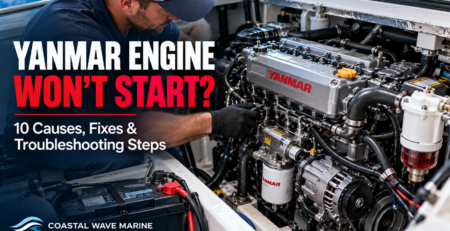
Next Post: Yanmar Marine Engine Overheating? 10 Causes, Fixes & Warning Signs

Leave a Reply