
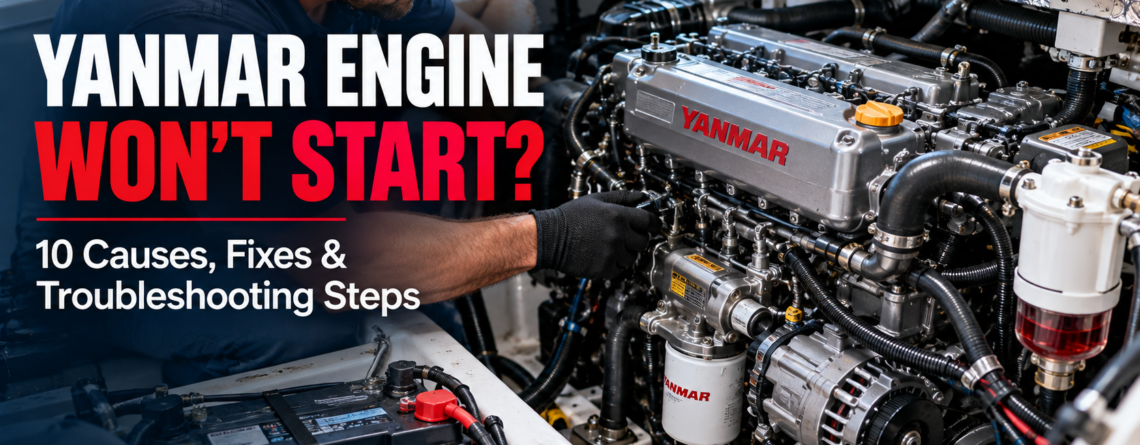
When a marine diesel refuses to start, the first reaction is usually simple: “What went wrong?”
If your Yanmar engine won’t start, don’t jump straight to replacing the starter, fuel pump, injectors, or other expensive components. A no-start condition can originate from several different systems, and the correct troubleshooting path depends heavily on whether the engine does not crank or cranks normally but fails to start.
Yanmar’s own marine troubleshooting documentation reflects this distinction. Depending on the engine series, documented causes include insufficient battery charge, poor electrical connections, starter faults, insufficient fuel, clogged fuel filters, air in the fuel system, fuel-injection problems, intake or exhaust restrictions, and mechanical/compression-related problems.
That is why good troubleshooting starts with identification and diagnosis—not parts replacement.
At Coastal Wave Marine, the most useful information to establish first is the exact Yanmar engine model, serial number, whether the engine cranks, what happened immediately before the problem, and whether any warning or diagnostic information is present.
This guide walks through the most common possibilities and shows you where to start.
Important: Yanmar marine engines differ by series, model, generation, and installation. The procedures in this article are a diagnostic framework, not a substitute for the operation or service documentation for your exact engine. Always follow the applicable Yanmar manual and appropriate safety procedures.
First Question: Does the Yanmar Engine Crank?
Before troubleshooting individual components, determine exactly what happens when you attempt to start the engine.
There are two fundamentally different situations.
The engine does not crank
You turn the key or activate the start control and:
- Nothing happens.
- You hear a click.
- You hear repeated clicking.
- The starter turns very slowly.
- The starter engages but does not rotate the engine normally.
This points you toward the battery, electrical connections, controls, starter circuit, or starter motor.
For example, Yanmar’s BY Series troubleshooting chart lists a discharged battery, blown fuse, defective starter motor, loose wiring connections, and a tripped electrical-panel breaker among possible causes when the engine does not crank.
The engine cranks but will not start
Here, the starter is turning the engine, but combustion isn’t occurring.
The diagnostic path changes.
You now need to consider:
- Fuel level
- Fuel quality
- Fuel filtration
- Fuel delivery
- Air in the fuel system
- Fuel injection
- Applicable starting systems
- Intake or exhaust restrictions
- Engine controls
- Compression or other mechanical problems
Yanmar’s 4LV Series operation manual, for example, identifies insufficient fuel priming, a clogged fuel-inlet filter, low fuel level, a closed fuel cock, clogged fuel piping, fuel-supply-pump problems, injector faults, air in injection lines, compressed-air leakage, intake/exhaust restrictions, and controller faults among possible causes of difficult starting.
That simple distinction—doesn’t crank versus cranks but doesn’t start—should be the foundation of your troubleshooting.
10 Common Reasons a Yanmar Engine Won’t Start
1. The Battery Is Discharged or Unable to Deliver Enough Cranking Power
A weak battery is one of the first things worth checking when a Yanmar engine refuses to crank properly.
Marine diesel engines require substantial cranking power. A battery may still operate lights, electronics, or other relatively small loads while being unable to provide sufficient power to the starter.
You may notice:
- A single click.
- Repeated clicking.
- Slow starter rotation.
- The starter beginning to turn and then stopping.
- A complete lack of starter operation.
Yanmar troubleshooting documentation identifies insufficient battery charge as a potential cause of starting problems on applicable engines. Its 4LV documentation, for example, lists insufficient battery charge among causes associated with the starter failing to rotate the engine.
What should you check?
Start with the battery according to the testing procedure appropriate for your installation.
Then inspect:
- Battery terminals
- Positive cable
- Negative cable
- Engine ground
- Battery switch
- Starter connections
Do not automatically conclude that the battery itself has failed.
A poor connection can create enough resistance to cause a starting problem even when the battery itself is serviceable.
The bigger lesson
If a battery repeatedly becomes discharged, replacing it may only treat the symptom.
You should also determine why it is losing charge.
That may involve the battery, charging system, electrical connections, vessel electrical loads, or another problem within the installation.
2. Loose, Damaged, or Corroded Electrical Connections
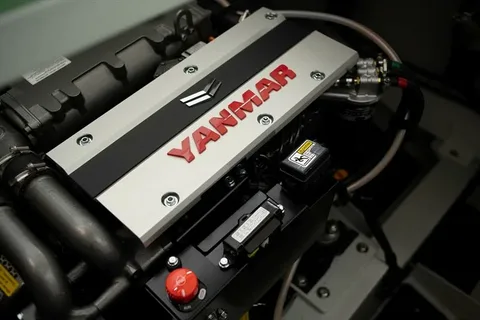
A marine engine operates in an environment where moisture, vibration, heat, and corrosion can affect electrical connections.
That makes the electrical path between the battery and starter an important part of Yanmar marine engine troubleshooting.
A connection can look acceptable at first glance and still deserve closer inspection if the starter is not receiving adequate power.
Pay attention to
- Battery terminals
- Ground connections
- Starter terminals
- Battery-switch connections
- Relevant wiring
- Fuses and circuit protection where applicable
Yanmar’s troubleshooting documentation identifies loose or poor electrical connections as possible causes of starting problems. The BY Series manual, for example, lists loose wiring connections among causes of an engine that will not crank.
This is why replacing the battery should not automatically be your first repair.
If the connection is the problem, a new battery does not solve the underlying fault.
A practical diagnostic principle
Think of the starting system as a chain:
Battery → cables/connections → controls → starter circuit → starter motor → engine
A failure anywhere along that chain can produce a no-crank symptom.
3. The Fuel Filter Is Clogged or Restricted
If the engine cranks normally but refuses to start, move your attention toward fuel delivery.
A restricted fuel filter can reduce the amount of fuel reaching the engine.
Yanmar documentation specifically identifies clogged fuel filters or fuel-inlet filters as possible causes of starting problems on applicable engines. The BY Series troubleshooting chart, for example, instructs owners to check the fuel filter/water separator and clean or replace a clogged fuel filter.
Possible symptoms
A fuel-filter problem can be associated with:
- Cranking without starting
- Difficult starting
- Stalling followed by failure to restart
- Poor engine operation before the no-start condition
- Starting problems after prolonged operation
However, don’t replace a filter simply because “fuel must be the problem.”
Look at the entire fuel-delivery picture.
What about water separators?
Many marine installations use fuel/water separation equipment. Yanmar’s troubleshooting documentation specifically includes checking the fuel filter/water separator on applicable engines.
If contamination is found, the problem may extend beyond the filter itself.
That is when the fuel system may need a more complete inspection.
4. Air Has Entered the Fuel System
Air in the fuel system is another documented cause of starting problems on Yanmar engines.
Yanmar’s GM Series operation manual specifically explains that if an engine fails to start after several attempts, air may be present in the fuel system and can prevent fuel from reaching the injection pump. The manual provides a model-specific bleeding procedure.
This can happen in connection with certain maintenance procedures or fuel-system issues.
Possible clues
You may experience:
- Normal cranking without ignition
- Difficult restarting
- Starting and then stopping
- Problems occurring after fuel-system work
- Problems after filter replacement
Don’t assume every Yanmar uses the same bleeding procedure
There is no universal procedure that should be applied blindly to every Yanmar marine engine.
The appropriate procedure depends on the engine design.
Use the manual for your exact model.
For example, Yanmar’s GM documentation provides a specific sequence involving the fuel/water separator, fuel filter, injection pump, feed pump, and air-vent points.
If you are unfamiliar with the system, or the procedure does not match your engine, stop and obtain the correct documentation rather than improvising.
5. There Is Not Enough Fuel—or the Fuel Is Incorrect or Contaminated
Sometimes the engine isn’t the problem.
The fuel supply is.
Yanmar troubleshooting tables identify no fuel, improper fuel, low fuel level, closed fuel valves, and fuel-system contamination as possible contributors to starting problems on applicable engines.
If your engine was operating normally and suddenly developed a starting problem, consider what changed.
Ask yourself:
- Is there actually enough fuel in the tank?
- Was the vessel recently refueled?
- Has the boat been sitting for an extended period?
- Is there evidence of water or contamination?
- Was the fuel system recently serviced?
- Is the fuel shutoff valve open where applicable?
These questions can sometimes narrow the problem much faster than immediately dismantling engine components.
Why fuel quality matters
Diesel engines rely on precise fuel delivery and combustion.
Contaminated or unsuitable fuel can interfere with the fuel system and engine operation.
Yanmar advises owners to follow the fuel requirements specified in the operation manual for the particular engine rather than treating all diesel fuel situations as interchangeable.
6. The Applicable Starting Aid or Cold-Starting System Isn’t Working Correctly
Starting-system design varies across Yanmar engine families.
Therefore, this should be treated as an engine-specific diagnostic area, not a universal explanation for every Yanmar.
If your engine has a starting aid or cold-start system specified in its documentation, a problem there may contribute to difficult starting under particular conditions.
Potential clues include:
- Difficulty starting when cold
- Extended cranking before ignition
- Abnormal exhaust smoke during attempted starting
- Different starting behavior between cold and warm conditions
One important warning
Do not assume that using an aftermarket starting aid is an acceptable solution.
For example, Yanmar’s GM Series documentation specifically warns against using engine starting aids such as ether and notes that starting-aid use can have warranty implications.
The safest approach is to follow the starting procedure specified for your exact engine.
7. The Starter Motor or Starting Circuit Is Faulty
If your Yanmar engine won’t turn over, the starter system deserves attention.
Potential causes can include:
- Starter motor fault
- Starter-switch problem
- Solenoid-related fault
- Poor battery connection
- Excessive cable resistance
- Wiring problems
- Relevant safety devices
- Circuit-protection problems
Yanmar’s 4LV troubleshooting chart provides several examples, including loose battery/starter terminals, poor starting-switch contact, starter-coil faults, worn brushes, excessive resistance between the battery and starter, and insufficient battery charge.
Don’t confuse “clicks” with a confirmed starter failure
A click tells you that something happened in the starting circuit.
It does not, by itself, prove that the starter motor is defective.
The battery, cables, control circuit, solenoid, and starter all need to be considered.
That is exactly why a systematic diagnosis is more useful than guessing.
8. The Engine Controls or Starting Conditions Are Incorrect
A marine engine doesn’t exist independently of the boat.
It interacts with controls, transmission systems, electrical equipment, and other installation components.
Depending on the particular installation, check whether:
- The transmission is in the required position.
- The stop control is correctly positioned.
- The relevant control system is functioning.
- A safety or interlock condition is preventing starting.
- The control panel is behaving normally.
Yanmar documentation for certain marine engines identifies transmission/neutral position as part of starting-related troubleshooting. One Yanmar troubleshooting guide, for example, lists the reverser lever not being in neutral as a cause of hard-starting/no-start symptoms on the applicable engine.
The exact configuration varies.
That is another reason model and installation information matters.
9. The Air Intake or Exhaust System Is Restricted
A diesel engine needs the correct conditions for combustion, and airflow is part of that equation.
Yanmar documentation includes clogged intake or exhaust components among potential causes associated with starting or engine-operation problems on applicable engines. The 4LV troubleshooting chart, for example, lists clogged intake or exhaust piping among possible causes requiring correction.
What should you look for?
Depending on your engine and installation:
- Obvious intake obstruction
- Dirty or restricted intake components
- Damaged hoses
- Exhaust restriction
- Other visible installation problems
Do not assume an airflow problem simply because the engine won’t start.
Work through the diagnostic sequence.
If fuel delivery and electrical starting conditions are normal and the problem remains unresolved, airflow and mechanical condition become more relevant.
10. Fuel Injection, Compression, or Another Mechanical Problem
This is the point where you need to resist the temptation to become an engine surgeon with a toolbox and a YouTube video.
A serious mechanical diagnosis requires the correct specifications and equipment.
Possible causes can include:
- Fuel-injection problems
- Injector faults
- Compression loss
- Valve-related problems
- Internal mechanical wear
- Damaged components
- Other engine-specific faults
Yanmar’s 4LV troubleshooting documentation lists injector faults, fuel-injection-system faults, compressed-air leakage, valve-related issues, piston-ring problems, and other mechanical conditions among possible causes of difficult starting.
These are not problems you should automatically diagnose from a single symptom.
If the basic electrical and fuel checks do not explain the failure, appropriate technical diagnosis is the next step.
Yanmar Engine Won’t Start but Cranks Normally: What Should You Check?
If the search you’re performing is specifically Yanmar engine won’t start but cranks, you can narrow the diagnostic path considerably.
Use this sequence:
1. Confirm fuel availability
Make sure the engine actually has fuel available and that applicable fuel valves are open.
2. Consider fuel condition
Think about recent refueling, prolonged storage, contamination, and other changes.
3. Check fuel filtration
Inspect the applicable fuel filter/water separator according to the engine’s maintenance procedure.
4. Consider air in the fuel system
This is especially relevant following certain fuel-system maintenance.
5. Follow the correct starting procedure
Don’t assume the procedure for one Yanmar model applies to another.
6. Check applicable intake and exhaust conditions
Look for obvious restrictions.
7. Escalate when necessary
If fuel delivery appears normal but the engine still refuses to start, professional diagnosis may be required for injection, compression, electronic controls, or other model-specific systems.
This approach is far more useful than replacing multiple components at random.
Yanmar Engine Won’t Turn Over: What Should You Check?
If your problem is specifically Yanmar engine won’t turn over, focus on the starting system before moving into fuel diagnosis.
A logical sequence is:
Battery
↓
Battery terminals
↓
Ground
↓
Battery switch
↓
Starter controls
↓
Relevant safety/interlock systems
↓
Starter circuit
↓
Starter motor
Yanmar’s troubleshooting information supports this general diagnostic separation, with battery, wiring, starter and control-related causes appearing in no-crank troubleshooting tables.
If the engine cannot be rotated appropriately, or there is reason to suspect mechanical seizure or internal damage, stop attempting repeated starts and obtain appropriate technical assistance.
Why the Yanmar Engine Model and Serial Number Matter
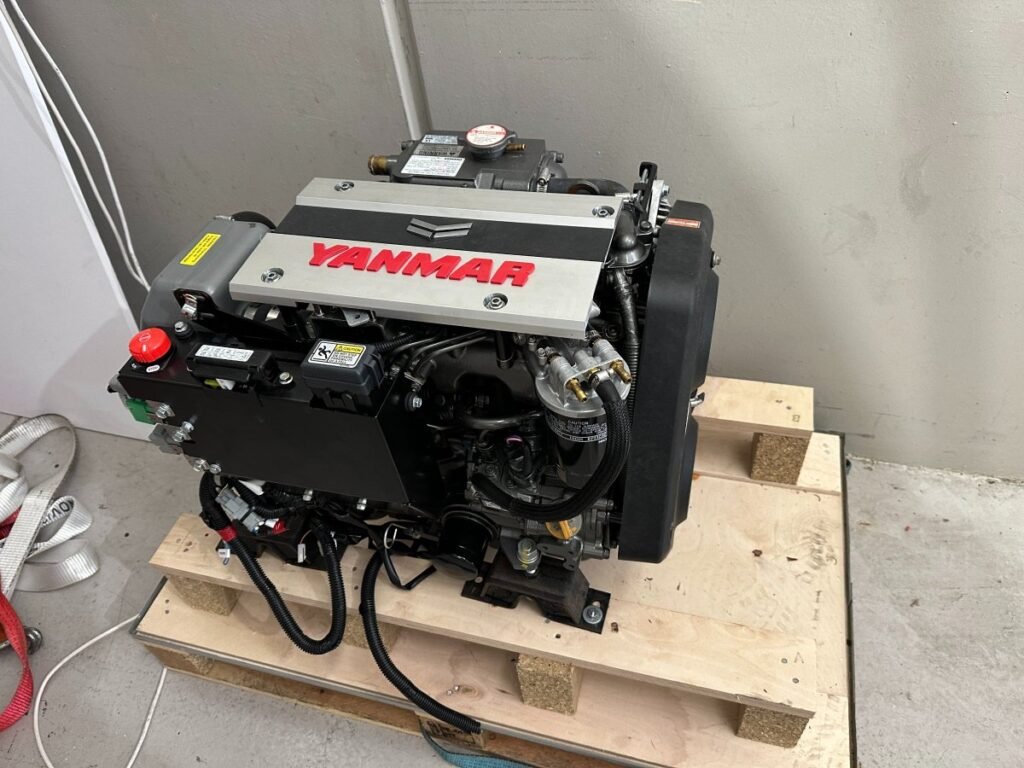
This is one of the most important lessons when ordering Yanmar marine engine parts.
“It’s a Yanmar 40-horsepower engine” is not necessarily enough information to identify the correct component.
Yanmar explicitly states that, because of its large product range, engine/product identification may require the complete model number and serial number.
So before ordering a replacement part, collect as much of the following information as possible:
- Complete engine model
- Serial number
- Horsepower
- Engine configuration
- Marine gear/transmission
- Saildrive, where applicable
- Boat/application
- Existing part number
- Photos of the engine
- Photo of the identification plate
This information can make the difference between identifying the correct component and ordering something that looks similar but isn’t appropriate for your engine.
Why the Serial Number Is More Than an Identification Label
The serial number can help connect an engine to the correct documentation and parts information.
Yanmar’s parts FAQ specifically says that complete model and serial information is needed for identification, while Yanmar’s broader service network provides model-specific parts and support.
That is why Coastal Wave Marine should not treat “Yanmar” as sufficient identification when helping a customer find a component.
The objective is correct identification first.
Use the Correct Yanmar Marine Engine Manual
If you’re troubleshooting a Yanmar marine engine, the correct operation manual should be one of your first references.
Yanmar’s Marine FAQ explains that operation manuals are available by engine model through its online product information, while its support network can assist with manuals and parts information.
The manual can provide model-specific information about:
- Starting procedures
- Fuel requirements
- Maintenance
- Service intervals
- Warning indicators
- Troubleshooting
- Cooling-system requirements
- Oil specifications
- Fuel-system procedures
- Seasonal maintenance
This matters because a generic internet article can explain principles, but your engine manual tells you what applies to your engine.
Don’t Replace Parts Before Confirming the Diagnosis
This is where good troubleshooting saves money.
Suppose your engine won’t start.
You replace:
- Battery
- Starter
- Fuel filter
- Fuel pump
- Injector
…and the engine still doesn’t start.
Now you’ve spent money without necessarily solving the problem.
A more disciplined process is:
Symptom → Identify engine → Consult documentation → Diagnose → Verify failed component → Order correct part → Repair
That is the process we recommend for a serious marine-engine parts decision.
The goal isn’t to sell five parts.
The goal is to identify the component that actually belongs in the repair.
Finding the Right Yanmar Marine Engine Parts
Once the failed component has been identified, the next challenge is finding the right Yanmar marine engine parts.
Depending on your engine and maintenance requirements, relevant components can include:
- Fuel filters
- Fuel-system components
- Oil filters
- Impellers
- Thermostats
- Belts
- Gaskets
- Electrical components
- Maintenance components
- Other model-specific replacement parts
Yanmar says its Genuine Parts are manufactured to its quality standards and maintains a parts portfolio covering current and previous engine models through its distribution and dealer network.
Yanmar also states that Genuine Parts are manufactured under ISO 9001 processes using the same materials, machinery, and production methods as original-equipment parts.
That doesn’t mean every aftermarket component is automatically unsuitable.
It does mean that buyers should understand exactly what they are purchasing and verify compatibility with their specific engine.
Most importantly:
Do not choose a Yanmar part based solely on a photograph or generic description.
Use the engine identification information.
Yanmar Maintenance Kits Can Also Be Relevant
Not every no-start problem is solved by replacing one component.
Sometimes the underlying issue is connected to overdue maintenance.
Yanmar’s Marine service information describes maintenance kits containing model-specific Genuine Parts intended for scheduled maintenance intervals.
Depending on the engine range, maintenance components can include items such as:
- Fuel filtration
- Oil filtration
- Impellers
- Gaskets
- Thermostats
- Other service components
A maintenance kit is not automatically the answer to a no-start problem, but it can be relevant when troubleshooting reveals overdue routine service.
Again, the correct kit depends on the engine.
What If the Problem Is Bigger Than a Single Part?
Sometimes troubleshooting reveals that an engine is not suffering from a simple service-component failure.
If there is significant internal damage, severe wear, recurring major failures, or a vessel repower project, it may be appropriate to compare repair and replacement options.
That is where the broader Yanmar marine engine category becomes relevant.
But don’t select a replacement engine based only on horsepower.
A marine repower involves more than an engine’s advertised output.
Consider:
- Vessel requirements
- Installation dimensions
- Propulsion system
- Marine gear
- Saildrive where applicable
- Shaft arrangement
- Cooling system
- Exhaust arrangement
- Electrical requirements
- Controls
- Manufacturer installation requirements
The correct replacement is the one that fits the application—not merely the one with a similar horsepower number.
Different Yanmar Marine Engine Models Require Different Diagnostic Thinking
A common mistake would be to write one giant troubleshooting paragraph and pretend it applies equally to every Yanmar engine.
That is not technically responsible.
Yanmar produces multiple marine engine series and configurations.
For example, searchers may be looking for information about engines such as:
- Yanmar 1GM10
- Yanmar 2YM15
- Yanmar 3YM30
- Yanmar 3JH40
- Yanmar 4JH45
- Yanmar 4JH110
But these engines should not automatically be assumed to have identical starting systems, controls, service procedures, or parts.
That’s why Yanmar marine engine models should always be considered when diagnosing a starting problem.
The exact model is part of the diagnosis.
What If Your Yanmar Engine Displays a Diagnostic Code?
If your engine has an electronically controlled system and displays an alarm or diagnostic code, record the information before clearing it.
Yanmar explains that electronically controlled engines can generate diagnostic trouble codes through the Yanmar panel and that some codes can be found in the operation manual’s troubleshooting section. Yanmar recommends contacting an authorized dealer when a code cannot be resolved from the available documentation.
A diagnostic code is useful information.
Don’t treat it as an inconvenience to be erased.
It can help narrow down the system that requires investigation.
A Practical Yanmar Engine Won’t Start Checklist
If you’re standing beside your boat right now, use this as a starting framework.
If the engine does not crank
- Check battery condition.
- Check battery terminals.
- Check ground connections.
- Check the battery switch.
- Confirm applicable controls/interlocks.
- Check relevant fuses or breakers.
- Inspect the starter circuit.
- Have the starter professionally evaluated if necessary.
If the engine cranks but doesn’t start
- Confirm fuel level.
- Check applicable fuel valves.
- Consider fuel quality.
- Check the fuel filter/water separator.
- Look for evidence of air in the fuel system.
- Follow the model-specific bleeding procedure if applicable.
- Follow the correct starting procedure.
- Check applicable intake/exhaust conditions.
- Investigate injection or mechanical causes if simpler causes have been eliminated.
If an alarm or diagnostic code appears
- Record the code.
- Consult the correct manual.
- Do not assume the code identifies a single failed component.
- Obtain qualified assistance if the code cannot be resolved through the applicable documentation.
When Should You Stop Troubleshooting?
Knowing when to stop is part of being a responsible engine owner.
Professional technical assistance is appropriate when:
- Internal engine damage is suspected.
- Compression problems are suspected.
- Fuel injection requires specialized testing.
- Electronic diagnostics require specialized equipment.
- You have an unexplained electrical fault.
- The engine has experienced overheating.
- There is significant fuel contamination.
- You are unsure about a fuel-system procedure.
- A safety-critical system is involved.
Yanmar’s own support information directs owners toward authorized dealers for various technical repairs and emphasizes the importance of the authorized support network.
You don’t get extra points for turning a small troubleshooting problem into a major repair.
The goal is a safe, accurate diagnosis.
What to Give Coastal Wave Marine When Asking About a Yanmar Engine or Part
If you contact Coastal Wave Marine because your Yanmar engine won’t start, the more information you provide, the easier it becomes to understand the problem.
If possible, provide:
- Complete Yanmar engine model
- Engine serial number
- Horsepower
- Boat make and model
- Marine gear or saildrive
- Whether the engine cranks
- Whether it cranks slowly or normally
- What happened immediately before the failure
- Recent maintenance performed
- Any diagnostic or alarm code
- Photos of the engine
- Photo of the identification plate
- Existing part number, if available
Yanmar itself emphasizes complete model and serial identification when determining what engine or product a customer has.
That same principle makes parts identification much more reliable.

Final Takeaway: Diagnose Before You Replace
A Yanmar engine won’t start problem doesn’t automatically mean you need a new engine.
It doesn’t automatically mean you need a new starter.
And it certainly doesn’t mean you should start replacing components one by one until something works.
Start with the symptom.
If it doesn’t crank
Think:
Battery → connections → controls → starting circuit → starter
If it cranks but doesn’t start
Think:
Fuel → filtration → fuel delivery → air → applicable starting system → injection → mechanical condition
Then identify the exact engine.
Model + serial number → correct manual → correct diagnostic procedure → correct part
That final step is particularly important when you’re purchasing Yanmar marine engine parts.
At Coastal Wave Marine, the objective should be straightforward: help customers identify the equipment they actually need, understand the relevant engine information, and make a more informed purchasing decision.
If you are looking for Yanmar marine engine parts, Yanmar marine engine manuals, a specific Yanmar marine engine model, or a replacement marine engine, start with accurate engine identification.
Because when a diesel engine won’t start, guessing is expensive.
Diagnosis is cheaper.
Frequently Asked Questions About a Yanmar Engine That Won’t Start
Why won’t my Yanmar engine start but the battery is good?
A healthy battery does not eliminate other starting-system problems. Depending on the engine, possible causes can include poor electrical connections, starter-circuit faults, insufficient fuel, clogged fuel filtration, air in the fuel system, fuel-injection problems, or mechanical issues. Yanmar troubleshooting documentation lists different possibilities depending on the engine series.
Why does my Yanmar engine crank but won’t start?
A Yanmar engine that cranks but won’t start may have a fuel-supply or fuel-quality problem, clogged filtration, air in the fuel system, fuel-injection trouble, or another engine-specific fault. Yanmar’s BY and 4LV documentation provides several examples of these conditions.
Why won’t my Yanmar engine start after sitting?
After extended inactivity, investigate fuel condition, fuel availability, battery condition, fuel filtration, and the possibility of air or contamination in the fuel system. Follow the maintenance and starting procedure for the exact engine rather than assuming every Yanmar requires the same process.
Can a clogged fuel filter cause a Yanmar engine not to start?
Yes. Yanmar’s marine troubleshooting documentation identifies clogged fuel filtration as a possible cause of starting problems on applicable engines.
Can air in the fuel system prevent a Yanmar engine from starting?
Yes. Yanmar’s GM Series documentation specifically explains that air in the fuel system can prevent fuel from reaching the injection pump and provides a model-specific air-bleeding procedure.
Why does my Yanmar engine turn over but not start?
If the starter is rotating the engine normally but combustion isn’t occurring, investigate fuel availability, fuel quality, fuel filtration, fuel-system priming, applicable fuel-injection systems, and other engine-specific causes. Yanmar’s troubleshooting charts show that the exact possibilities vary by engine.
How do I find my Yanmar engine serial number?
Locate the engine identification information and record the complete model and serial number. Yanmar states that because of its broad product range, identifying an engine or product from serial information requires the complete model number and serial number.
Do I need the Yanmar engine serial number to order parts?
It can be essential for accurate identification. Yanmar specifically advises that complete model and serial information is required to determine what engine or product a customer has.
Where can I find a Yanmar marine engine manual?
Yanmar says operation manuals are available by model through its marine product information and support network. Its Marine FAQ also directs customers to the appropriate distributor or dealer for manuals and parts information.
Should I replace my Yanmar engine if it won’t start?
Not necessarily. A no-start condition can come from relatively straightforward electrical or fuel-system issues. Diagnose the problem first before making a repair-versus-replacement decision.
Are Yanmar Genuine Parts necessary?
Yanmar recommends Genuine Yanmar Parts for its marine engines and states that they are designed specifically for Yanmar products and manufactured under its quality standards. Yanmar also notes that aftermarket parts exist but says it cannot recommend or defend their use in the same way.
When should I call a marine-engine professional?
If you suspect internal engine damage, compression loss, fuel-injection problems, complex electrical faults, electronic-control issues, or you are uncertain about a model-specific repair procedure, professional technical assistance is appropriate.
Coastal Wave Marine: Start With the Right Diagnosis
A marine diesel starting problem becomes much easier to approach when you stop treating “Yanmar engine won’t start” as the diagnosis.
It is the symptom.
The real question is:
Which system is preventing the engine from starting?
Once you establish that, identify the exact model and serial number, consult the correct Yanmar documentation, diagnose the suspected system, and only then select the required component.
Whether the solution turns out to be a maintenance item, Yanmar marine engine part, fuel-system component, electrical component, or a larger engine repair, accurate identification should come first.
That is the foundation of a better repair—and a much smarter purchase.
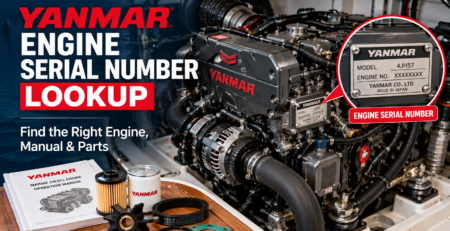
Next Post: Yanmar Engine Serial Number Lookup: Find the Right Engine, Manual & Parts
Leave a Reply