
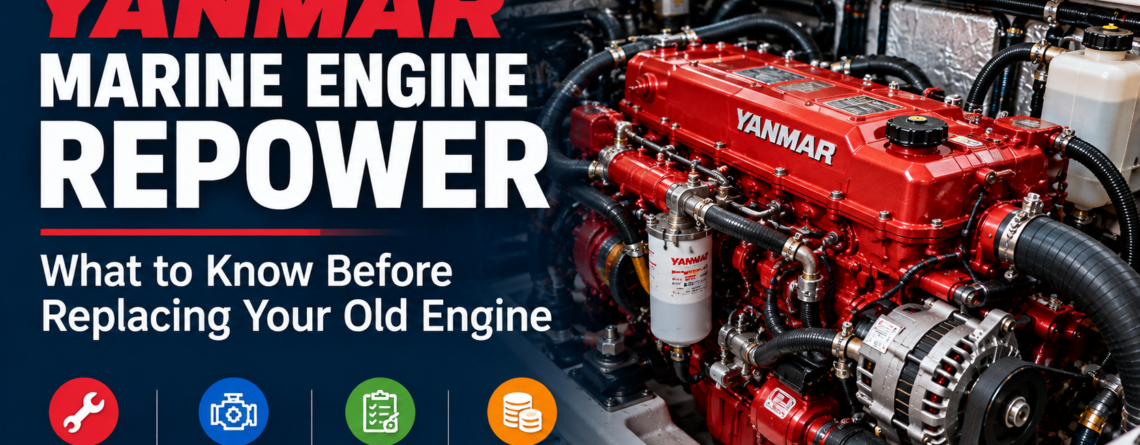
Replacing an ageing marine diesel engine is a major decision. You are not simply buying another engine; you are choosing a propulsion system that must work with your boat, gearbox, propeller, electrical installation, cooling arrangement, and intended operating conditions.
For owners of older Yanmar-powered vessels, the decision often begins with a familiar problem. The engine has become increasingly expensive to maintain, certain parts are difficult to source, performance has deteriorated, or a major mechanical failure has raised questions about whether another repair is worthwhile.
At that point, a Yanmar marine engine repower may deserve serious consideration.
However, choosing a replacement is not as simple as finding an engine with similar horsepower. Two engines can have comparable rated outputs but different dimensions, operating speeds, gearbox requirements, mounting arrangements, and installation needs. A replacement that looks suitable on paper may require significant changes before it can operate correctly in your vessel.
At Coastal Wave Marine, we believe buyers should understand these considerations before committing to an engine purchase. The right replacement should meet the vessel’s propulsion requirements, work with the supporting systems, and be appropriate for the way the boat will be used.
This guide explains when to consider repowering, how to evaluate replacement Yanmar marine engines, what compatibility checks matter, and which costs and installation requirements should form part of your decision.
What Is a Yanmar Marine Engine Repower?
A marine engine repower involves replacing an existing propulsion engine with another engine suitable for the vessel. In a Yanmar repowering project, this may involve replacing an older Yanmar diesel with a newer Yanmar model or evaluating another appropriate engine configuration.
The replacement process can involve considerably more than removing one engine and installing another.
The engine must be compatible with the vessel’s propulsion requirements and supporting equipment. Depending on the existing installation, the project may involve inspecting or modifying:
- Engine mounts and mounting positions.
- Marine gearbox and reduction ratio.
- Shaft coupling and propeller shaft.
- Propeller diameter and pitch.
- Fuel supply and filtration.
- Raw-water and freshwater cooling arrangements.
- Exhaust system and back-pressure requirements.
- Electrical wiring, starting and charging systems.
- Engine controls and instrument panels.
Some repowering projects can retain much of the existing installation. Others require more extensive modifications. The actual work depends on the original engine, replacement model, vessel design, and condition of the supporting equipment.
Repowering vs. Rebuilding Your Existing Yanmar Engine
Before buying a replacement, compare repowering with rebuilding the existing engine.
An engine rebuild involves inspecting and restoring the original engine using suitable replacement or reconditioned components. Depending on the damage, the work may involve the cylinder head, pistons, liners, bearings, crankshaft, injectors, fuel system, or other components.
Repowering involves installing another engine rather than restoring the existing unit.
Neither option is automatically the better investment.
A rebuild may make sense when the damage is limited, the engine block and major components remain serviceable, and appropriate replacement parts are available. Repowering may deserve consideration when the existing engine has extensive damage, recurring failures, difficult parts availability, or repair requirements that make continued operation less attractive.
Consider an illustrative situation: an older engine develops a serious internal fault after several years of repeated repairs. The owner receives a quotation for rebuilding it but has not yet checked whether the gearbox, mounts, cooling system, and other supporting components are in suitable condition.
Comparing only the rebuild quotation with the purchase price of a replacement engine would give an incomplete picture. The owner should compare the complete rebuild and repower requirements, including labour, parts, installation modifications, and commissioning.
That is the kind of assessment that helps prevent an expensive decision based on incomplete information.
New, Used, and Remanufactured Replacement Engines
When researching Yanmar marine engines for replacement, you may encounter new, used, and remanufactured units.
Each category requires a different level of verification.
New engines
A new engine should be supplied with the applicable manufacturer documentation, model identification, and warranty information. Buyers should confirm the exact configuration and what equipment is included in the purchase.
Used engines
A used engine has a previous operating history. Before purchasing, investigate its condition, maintenance records, operating hours where documented, previous repairs, model identification, and configuration. Operating hours alone do not establish the engine’s remaining serviceability.
Remanufactured engines
A remanufactured engine should have documentation explaining the work performed, components replaced, inspection procedures, testing, and applicable warranty. Do not assume that every engine described as rebuilt, refurbished, or remanufactured has undergone the same process.
Whichever option you consider, ask what is included, what is excluded, and what documentation accompanies the engine.
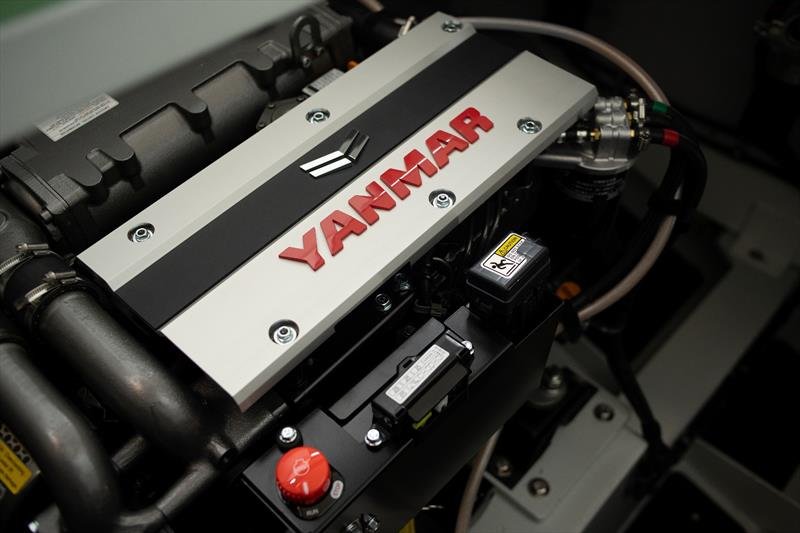
7 Signs Your Old Yanmar Marine Engine May Need Repowering
An engine should not be replaced simply because it is old or has accumulated a particular number of operating hours. Its condition, maintenance history, operating environment, and repairability are more useful indicators.
Nevertheless, several warning signs may justify evaluating a replacement.
1. Frequent Mechanical Breakdowns
Recurring breakdowns can make a vessel difficult to depend on. This is particularly important for commercial operators and boat owners who regularly travel away from their home port.
The important question is whether the failures are isolated problems or evidence of a wider deterioration.
For example, repeated fuel-system problems may require a different solution from extensive internal engine damage. Replacing an engine without identifying the underlying fault could leave the original problem unresolved.
Review repair records and have a qualified marine technician determine whether the recurring failures originate inside the engine or elsewhere in the propulsion system.
2. Increasing Repair and Maintenance Requirements
Routine servicing is essential for marine diesel engines. Oil, filters, cooling-system components, belts, and other service items require attention according to the relevant manufacturer’s maintenance schedule.
However, there is a difference between normal maintenance and repeated major repairs.
If your engine regularly requires expensive work beyond scheduled servicing, review the cumulative repair history. Consider which components have failed, whether the same problems keep returning, and whether suitable parts remain available.
A Yanmar marine engine replacement may be worth investigating if continued repairs are becoming increasingly difficult to justify.
3. Difficulty Sourcing Replacement Parts
Parts availability can affect the practicality of maintaining an older engine.
Some components may be readily available, while others may be difficult to obtain depending on the engine model, production history, and market.
Start by identifying the exact engine model and the part numbers of the components you need. Check whether the required parts are available through appropriate supply channels and whether any approved alternatives exist.
Do not assume that an older engine is unsupported simply because one component is difficult to find. Equally, do not ignore a persistent parts-sourcing problem when evaluating long-term ownership.
Coastal Wave Marine has a dedicated Yanmar marine engine parts guide that can help readers explore relevant parts information.
4. Declining Engine Performance
Reduced power, difficulty maintaining expected speed, poor acceleration, or unusual changes in engine behaviour deserve investigation.
These symptoms do not automatically mean the engine needs replacement.
Possible causes include:
- Restricted fuel filters.
- Contaminated fuel.
- Injector or fuel-pump problems.
- Restricted air intake.
- Exhaust restrictions.
- Cooling-system problems.
- Excessive propeller loading.
- Incorrect engine operating conditions.
- Internal mechanical wear.
For example, an engine that cannot reach its expected operating speed under load may be experiencing excessive propeller loading or another installation-related problem. Replacing the engine without investigating the propeller and drivetrain could reproduce the same difficulty with the replacement.
Start with diagnosis, then evaluate replacement if the engine’s condition or repair requirements justify it.
5. Persistent Smoke or Abnormal Exhaust
Changes in exhaust appearance can indicate combustion or mechanical problems.
Black smoke may be associated with incomplete combustion, excessive loading, restricted air supply, or fuel-system issues. Blue smoke can indicate oil entering the combustion process. Persistent white exhaust may have several causes, including unburned fuel or coolant entering the combustion chamber in certain circumstances.
These are diagnostic clues, not definitive conclusions. Exhaust appearance must be considered alongside engine temperature, load, operating conditions, and other symptoms.
A qualified technician should investigate persistent abnormal exhaust before a replacement decision is made.
6. Unusual Engine Noise and Vibration
New knocking, rattling, excessive vibration, or changes in mechanical noise should be taken seriously.
Importantly, not every vibration originates from the engine itself.
Possible sources include:
- Worn or damaged engine mounts.
- Incorrect shaft alignment.
- Propeller damage or imbalance.
- Gearbox problems.
- Damaged shaft bearings.
- Internal engine faults.
This distinction matters during repowering. If the original problem is caused by a damaged propeller or incorrect alignment, a new engine will not automatically solve it.
7. Major Internal Engine Damage
Extensive cylinder damage, serious bearing failure, crankshaft damage, or a damaged engine block may make rebuilding expensive or impractical.
The decision depends on the extent of the damage, the availability of suitable components, the condition of the remaining engine, and the cost of restoring it.
A professional assessment should establish whether rebuilding or replacing the engine is the more appropriate option.
Is Repowering Your Yanmar Marine Engine Worth It?
There is no universal answer. The decision depends on the existing engine, vessel, repair requirements, replacement options, and expected period of ownership.
When Engine Replacement May Make Financial Sense
Repowering deserves consideration when:
- The existing engine has extensive damage.
- Major mechanical failures are recurring.
- Important replacement components are difficult to source.
- The engine no longer meets the vessel’s requirements.
- Continued repairs are becoming less attractive.
- A suitable replacement can be installed without disproportionate modifications.
The financial comparison should include more than the price of the replacement engine.
Consider the cost of removing the existing engine, purchasing the replacement, adapting supporting systems, installing the unit, and commissioning the completed installation.
When Repairing the Existing Engine May Be Better
If the problem is isolated, the engine remains structurally serviceable, and suitable parts are available, repairing the existing engine may be the more practical option.
For example, a fuel-delivery problem caused by a restricted filter or a defective component should be investigated before concluding that the complete engine needs replacement.
A good repowering decision begins with an accurate diagnosis rather than an assumption that an older engine must be replaced.
Consider Your Vessel’s Future Use
Your intended use of the boat should influence your decision.
A recreational sailboat used occasionally has different operating demands from a commercial vessel that operates regularly.
Consider the vessel’s displacement, expected operating load, typical cruising conditions, service requirements, and how long you intend to keep it.
These details help establish what type of replacement is appropriate.
How to Choose the Right Yanmar Replacement Marine Engine
This is where careful technical evaluation becomes particularly important.
The most common mistake is choosing a replacement solely because its advertised horsepower is similar to that of the existing engine.
Horsepower is only one part of marine engine compatibility.
A suitable replacement must also meet the vessel’s propulsion requirements and work with the supporting systems.
1. Identify the Existing Engine Correctly
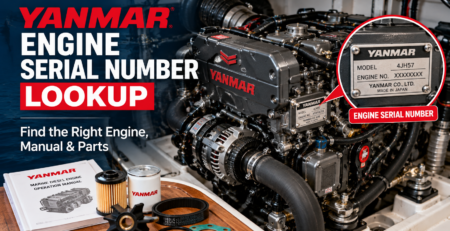
Start by recording the complete engine model designation and serial number.
Do not rely only on the brand name or a general series description. Different versions within an engine family may have different configurations, specifications, and installation requirements.
The identification information helps when checking the correct technical documentation, parts information, and possible replacement options.
Coastal Wave Marine’s Yanmar engine serial number lookup guide provides additional information about identifying an existing engine.
2. Match Engine Output to the Vessel
Check the existing engine’s rated output, rated RPM, and application.
The replacement should be appropriate for the vessel’s design, displacement, operating conditions, and propulsion requirements.
A more powerful engine is not automatically a better replacement. The vessel, drivetrain, and supporting equipment must be suitable for the proposed output.
Engine selection should follow the relevant manufacturer’s application and installation guidance.
3. Understand Rated RPM and Gearbox Reduction Ratio
The engine’s rated speed and the gearbox reduction ratio work together to determine propeller shaft speed.
For a conventional reduction gearbox:
Propeller shaft RPM = Engine RPM ÷ Gearbox reduction ratio
For example, if an engine operates at 3,000 RPM and the gearbox has a 2:1 reduction ratio, the resulting shaft speed is approximately 1,500 RPM.
This is an illustrative calculation, not a recommendation for a particular Yanmar engine or vessel.
Why does it matter? If a replacement engine has a different rated speed or uses a different gearbox ratio, the existing propeller may no longer be appropriate.
This is why gearbox compatibility and propeller evaluation should form part of the repowering assessment.
4. Check Engine Dimensions and Mounting Arrangements
A replacement engine must fit the available installation space and be supported correctly.
Compare:
- Overall length, width, and height.
- Engine mounting positions.
- Mounting height and support requirements.
- Clearance around belts and moving components.
- Access to filters and service points.
- Space for hoses, wiring, and exhaust connections.
- Access for installation and future removal.
Do not assume that two engines from the same manufacturer have identical mounting dimensions.
A replacement may require changes to the mounting arrangement or engine compartment. These should be identified before purchase rather than discovered during installation.
5. Evaluate Gearbox, Shaft, and Propeller Compatibility
The engine is only one component of the propulsion system.
The gearbox must be suitable for the engine’s output and operating speed. Its reduction ratio, capacity, mounting configuration, and output arrangement must also be considered.
The shaft and propeller need similar attention.
Propeller selection depends on several interacting factors, including engine output, rated speed, gearbox ratio, vessel characteristics, and operating conditions.
A propeller that creates excessive load may prevent an engine from reaching its intended operating range. An unsuitable propeller can also affect propulsion performance and engine loading.
Before ordering a replacement, have the existing gearbox, shaft arrangement, and propeller evaluated against the proposed engine.
You can also explore Coastal Wave Marine’s Yanmar marine gearbox range when investigating compatible drivetrain equipment.
6. Review Cooling, Fuel, and Exhaust Requirements
Different engine models may have different cooling, fuel, and exhaust installation requirements.
Cooling system: Confirm the required cooling arrangement, seawater supply, heat exchanger connections where applicable, hose specifications, and installation requirements.
Fuel system: Check the supply lines, filtration, connections, and requirements of the replacement engine’s fuel system.
Exhaust system: Evaluate exhaust diameter, routing, back pressure, water injection arrangements where applicable, and installation clearances.
Ventilation: Confirm that the engine compartment meets the replacement engine’s air supply and ventilation requirements.
These systems must be suitable for the selected engine. Retaining existing components should be based on inspection and compatibility, not convenience alone.
7. Check Electrical and Control System Compatibility
Modern replacement engines may have different electrical and monitoring requirements from older installations.
Depending on the model, the repowering project may involve reviewing:
- Starter and alternator connections.
- Battery and charging arrangements.
- Wiring harnesses.
- Instrument panels.
- Warning alarms and monitoring equipment.
- Engine controls.
- Electronic communication interfaces where applicable.
Before ordering, establish which existing components can be retained and which need to be replaced or adapted.
8. Verify Documentation and Manufacturer Requirements
Technical documentation is essential when selecting and installing a replacement.
Yanmar provides model-specific product information and documentation through its official marine engine range.
For applicable JH-CR models, the Yanmar JH-CR Operation Manual provides manufacturer operating and maintenance guidance.
Remember that a manual for one engine series does not automatically apply to every Yanmar model. Confirm that the documentation matches the exact engine being considered.
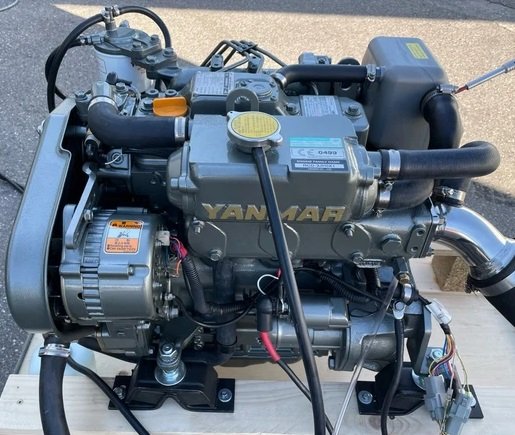
Popular Yanmar Marine Engine Families to Consider
Yanmar offers different marine diesel engine families for different vessel types and operating requirements. The following are examples of product families worth investigating when researching Yanmar marine engines for sale.
They are not interchangeable replacement recommendations. Each model must be evaluated against the vessel and installation.
Yanmar JH Series Marine Engines
The JH series includes models such as the 3JH40, 4JH45, and 4JH57. For model-specific technical information, review the Yanmar 4JH45 engine specifications before comparing its suitability with your vessel’s requirements.
These models have different output specifications and configurations. Even within the same family, buyers should compare rated output, rated speed, engine dimensions, gearbox arrangements, and installation requirements.
For example, the official Yanmar product information identifies the 4JH45 and 4JH57 as different engine models. Their suitability as replacements must be established using the actual vessel requirements, not simply their shared series designation.
Yanmar 4LV Series Marine Engines
The 4LV family provides options for suitable recreational powerboat applications.
When considering a 4LV engine, review the specific model’s output, operating speed, dimensions, installation requirements, and application guidance.
A model that suits one powerboat may not be suitable for another with different displacement or propulsion requirements.
Yanmar 6LY Series Marine Engines
The 6LY family is relevant to buyers investigating higher-output marine propulsion options.
Pay particular attention to the vessel’s design, gearbox capacity, propeller arrangement, installation space, and expected operating demands.
The correct replacement is determined by the complete application rather than engine power alone.
Yanmar 8LV Series Marine Engines
The 8LV family provides additional options for suitable higher-powered recreational marine applications.
As with other engine families, evaluate the specific model and configuration. Confirm the installation requirements and supporting systems before treating an 8LV engine as a potential replacement.
How to Narrow Down Your Replacement Options
Before requesting a quotation, collect the following:
- Existing engine manufacturer, model, and serial number.
- Rated horsepower and RPM.
- Vessel make, model, and displacement.
- Current gearbox model and reduction ratio.
- Available installation dimensions.
- Shaft and propeller details.
- Cooling, fuel, and exhaust arrangements.
- Electrical and control system information.
- Intended vessel operating conditions.
Providing these details makes it easier to evaluate potential Yanmar marine engine replacement options and identify questions that need technical confirmation.
You can start by exploring the Yanmar Marine Engines category at Coastal Wave Marine.
What Does a Yanmar Marine Engine Repower Involve?
Once a suitable replacement has been identified, the next step is planning the installation.
The exact process varies by vessel, but a properly organised project generally involves several stages.
1. Inspect the Existing Installation
The existing engine, mounts, gearbox, shaft, propeller, cooling system, exhaust, fuel supply, and electrical arrangements should be inspected.
The purpose is to identify problems that could affect the replacement.
For example, if the original vessel has damaged engine mounts or incorrect shaft alignment, those issues should be addressed as part of the repowering project.
2. Plan the Removal of the Old Engine
Engine removal requires a suitable lifting and access plan.
Depending on the vessel, the work may involve disconnecting fuel lines, electrical wiring, cooling hoses, exhaust connections, controls, gearbox components, and mounting hardware.
The removal method should protect the vessel and surrounding equipment.
3. Prepare the Engine Compartment
After removal, inspect the compartment for corrosion, damaged supports, leaks, deteriorated hoses, and other issues.
Check whether the existing mounting arrangement is suitable for the replacement engine.
Any necessary modifications should be planned before installation begins.
4. Position and Mount the Replacement Engine
The replacement must be installed according to the manufacturer’s instructions.
Mounting support, engine positioning, alignment, clearance, and access all matter.
Incorrect alignment between the engine, gearbox, and shaft can contribute to vibration, wear, and drivetrain problems.
5. Connect the Supporting Systems
The installation team must connect the required fuel, cooling, exhaust, electrical, charging, starting, monitoring, and control systems.
Each connection should meet the requirements of the selected engine model.
6. Commission and Test the Installation
Starting the engine does not, by itself, establish that the repower has been completed successfully.
Commissioning should follow the manufacturer’s requirements and include the necessary checks of the installation and supporting systems.
The technician should verify operating conditions, inspect connections, check for leaks, and confirm that the engine and drivetrain operate as intended.
The vessel should only return to normal operation after the installation has been properly inspected and commissioned.
After installation, the replacement engine should be commissioned and operated according to the manufacturer’s instructions. Owners and technicians working with applicable JH-CR models can consult the Yanmar JH-CR operation manual for model-specific operating and maintenance guidance.
How Much Does a Yanmar Marine Engine Repower Cost?
The cost of a Yanmar marine engine repower depends on the engine, vessel, installation complexity, and supporting equipment required.
There is no single price that accurately represents every repowering project.
Replacement Engine Purchase Cost
The engine purchase price depends on the selected model, configuration, availability, and whether the unit is new, used, or remanufactured.
Compare the exact engine models and included equipment rather than comparing general product descriptions.
Installation and Labour
Labour may include removing the old engine, preparing the compartment, installing the replacement, connecting supporting systems, aligning the drivetrain, and commissioning.
Vessel accessibility and the amount of modification required can affect the work involved.
Gearbox and Drivetrain Modifications
A replacement engine may require a different gearbox or changes to the existing shaft and propeller arrangement.
These requirements should be evaluated before purchase because they can affect the total project budget.
Cooling, Electrical, and Exhaust Work
Existing systems may need inspection, repair, or modification to meet the replacement engine’s requirements.
The condition of the vessel’s current equipment is an important part of the cost assessment.
Shipping and Additional Equipment
For an internationally sourced engine, confirm shipping charges, transport arrangements, dispatch estimates, transit times, and any applicable importation costs.
Also confirm whether the quotation includes the gearbox, instrument panel, wiring harness, engine mounts, accessories, or other supporting components.
What to Request in a Repowering Quotation
Before ordering, ask for a quotation that identifies:
- Exact engine model and configuration.
- Included equipment and accessories.
- Gearbox arrangements, if applicable.
- Items that must be purchased separately.
- Warranty coverage and conditions.
- Shipping method and charges.
- Estimated dispatch time.
- Expected transit time.
A clear quotation helps you understand what you are purchasing and what additional expenses may be involved.
Common Mistakes to Avoid When Repowering a Yanmar Marine Engine
A replacement engine can be a suitable product and still become an expensive mistake if compatibility and installation are not properly evaluated.
Avoid these common errors.
Choosing an Engine Based Only on Horsepower
Similar horsepower does not guarantee compatibility. Compare rated RPM, torque characteristics, dimensions, gearbox requirements, and the vessel’s propulsion needs.
Ignoring Gearbox and Propeller Compatibility
The engine, gearbox, shaft, and propeller work together. Changing one component may affect the requirements of the others.
Overlooking Installation Dimensions
Confirm the replacement engine’s dimensions, mounting positions, clearance, and service access before purchasing.
Assuming Existing Supporting Systems Can Be Reused
Inspect the cooling, fuel, exhaust, electrical, and mounting arrangements. Reuse components only when their condition and compatibility have been established.
Purchasing Without Verifying the Exact Model
Different Yanmar models and configurations can have different technical requirements. Confirm the full model designation and documentation.
Ignoring Warranty Conditions
Understand the applicable warranty, installation requirements, exclusions, and documentation before purchasing.
Yanmar provides official information through its marine warranty guidance. Warranty coverage should always be confirmed for the specific engine, seller, market, and purchase arrangement.
Underestimating the Total Project Cost
The engine price is only one part of the project. Include removal, installation, modifications, additional equipment, shipping, and commissioning in your budget.
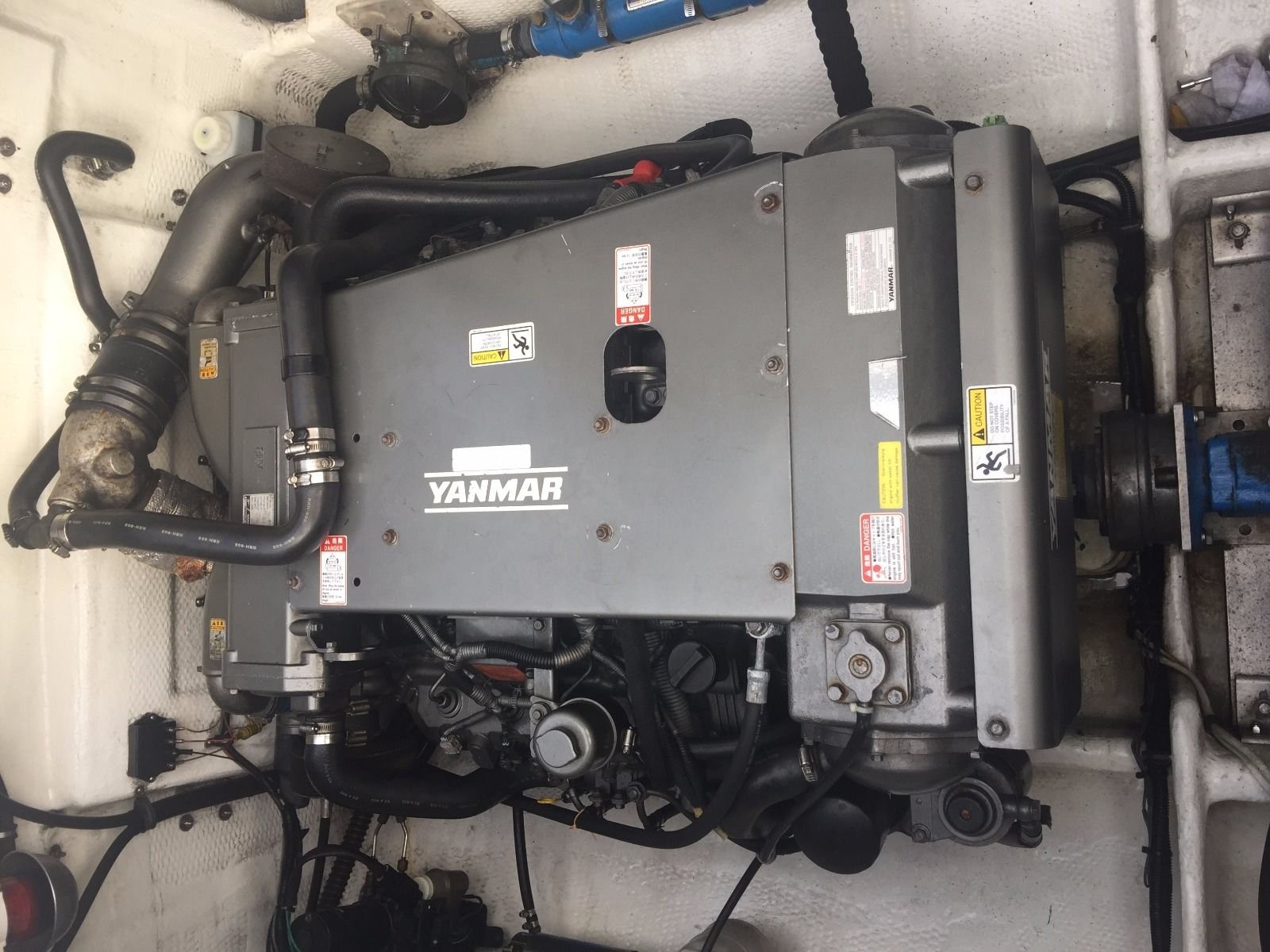
Why Choose Coastal Wave Marine for Your Yanmar Replacement Engine?
Choosing a replacement engine requires accurate product information and a clear understanding of the vessel’s requirements.
At Coastal Wave Marine, our Yanmar marine engine range provides buyers with a starting point for researching suitable marine propulsion options.
When evaluating a replacement, the important details include the existing engine model, vessel specifications, required output, installation arrangement, and supporting equipment.
Our product categories also allow customers to explore related marine equipment, including Yanmar marine gearboxes.
Before placing an order, buyers should confirm the exact model, configuration, included accessories, documentation, applicable warranty, and shipping arrangements.
If you are unsure which engine may suit your vessel, contact Coastal Wave Marine with your existing engine details and boat specifications. These details provide a more useful starting point than selecting an engine based on horsepower alone.
Frequently Asked Questions About Yanmar Marine Engine Repowering
1. What is a Yanmar marine engine repower?
A Yanmar marine engine repower involves replacing an existing propulsion engine with another engine suitable for the vessel. Depending on the installation, it may also require gearbox, propeller, shaft, mounting, cooling, exhaust, fuel, or electrical modifications.
2. When should I replace my old Yanmar marine engine?
Consider replacement when the engine has extensive mechanical damage, recurring failures, difficult parts availability, or repair requirements that make continued operation less attractive. A professional assessment should establish whether repair or replacement is appropriate.
3. Can I replace my old Yanmar engine with a newer model?
Yes, a newer model may be suitable, but compatibility must be confirmed. Engine dimensions, rated output, RPM, gearbox, propeller, mounting, cooling, exhaust, and electrical requirements all matter.
4. Can I install a more powerful Yanmar engine in my boat?
Possibly, but the vessel and its propulsion system must be suitable for the proposed engine. Higher horsepower does not automatically mean better performance or compatibility.
5. Do I need to replace my gearbox when repowering?
Not necessarily. Whether the existing gearbox can be retained depends on its condition, capacity, reduction ratio, mounting arrangement, and compatibility with the replacement engine.
6. How do I choose the correct horsepower for a replacement marine engine?
Start with the vessel’s specifications, existing engine information, displacement, propulsion arrangement, and intended operating conditions. The replacement must meet the vessel’s requirements and the manufacturer’s application guidance.
7. How much does a Yanmar marine engine repower cost?
The total cost depends on the replacement engine, installation labour, gearbox requirements, supporting-system modifications, shipping, and commissioning. Request a complete quotation rather than considering the engine purchase price alone.
8. How long does a marine engine repower take?
The timeframe depends on engine availability, vessel access, installation complexity, parts availability, and the amount of modification required. A replacement involving extensive drivetrain or engine-room changes may take longer than one with fewer modifications.
9. Can I reuse my existing propeller and shaft after repowering?
Possibly. Their suitability depends on the replacement engine’s output, rated speed, gearbox ratio, propeller characteristics, shaft arrangement, and vessel requirements. A technical assessment should establish whether existing components can be retained.
10. Should I rebuild my old Yanmar engine or replace it?
Rebuilding may be appropriate when the damage is limited, suitable parts are available, and the engine remains serviceable. Replacement may be worth investigating when damage is extensive or recurring repairs make continued operation less attractive.
11. Where can I buy a Yanmar marine replacement engine?
You can explore the Yanmar marine engines available through Coastal Wave Marine. Confirm the exact model, configuration, compatibility, included equipment, warranty, and shipping arrangements before ordering.
Make an Informed Decision Before Repowering Your Boat
Replacing an ageing marine engine is a significant investment. The best results begin with a proper assessment of the existing engine and the complete propulsion installation.
Start by identifying the engine model and serial number. Review its maintenance and repair history, investigate recurring problems, and establish whether continued repairs remain practical.
Next, evaluate potential replacements against the vessel’s actual requirements. Compare rated output, RPM, dimensions, mounting arrangements, gearbox reduction ratio, propeller compatibility, cooling, exhaust, fuel, and electrical systems.
Finally, establish the complete purchase and installation requirements before committing to an order.
A suitable replacement is not simply an engine with similar horsepower or a model that fits into the available space. It must be appropriate for the vessel and its propulsion system.
If you are considering a Yanmar marine engine repower, explore the Coastal Wave Marine Yanmar Marine Engines category or contact our team to discuss your replacement requirements.
Making the right decision starts with understanding your existing engine, your vessel, and what the replacement will actually require.
Next Post: Yanmar Marine Engine Fuel Consumption: How Much Diesel Does Your Engine Use?

Leave a Reply