
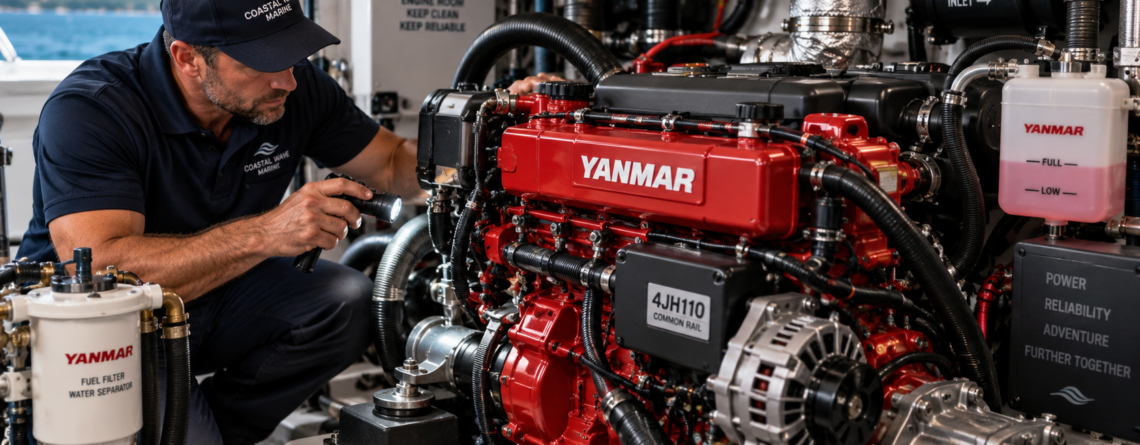
If you’ve spent enough time around boats, you eventually learn something important about marine diesel engines:
The engine usually gives you a warning before it gives you a bill.
It may be a little harder to start. The temperature may creep higher than normal. Black smoke may appear when you push the throttle. The engine may stop reaching the RPM it used to reach easily. Or perhaps there’s a new vibration or sound that wasn’t there last season.
Those changes matter.
At Coastal Wave Marine, we look at Yanmar marine engine problems from both sides of the equation: what could be causing the symptom, and whether the existing engine still makes sense for the vessel.
That second question is important because not every engine problem means you need a new engine. Sometimes the answer is maintenance or replacement of a relatively small component. Other times, repeated failures, corrosion, wear, parts availability, or an outdated installation can make a complete Yanmar marine engine replacement or repower the more sensible long-term decision.
Yanmar’s own marine documentation emphasizes regular checks of seawater discharge, exhaust smoke, vibration, abnormal noises, leaks, and other operating conditions. Yanmar also recommends appropriate professional service for maintenance that requires specialized equipment or expertise.
So let’s look at the most common problems, what they can tell you, and what we would consider when helping a customer evaluate a repair, replacement, or repower.
What Are the Most Common Yanmar Marine Engine Problems?
The most common issues aren’t necessarily failures of the engine’s internal components.
Many problems begin in the systems that allow a marine diesel engine to operate properly.
Common concerns include:
- Hard starting or failure to start
- Engine overheating
- Loss of power
- Failure to reach expected RPM
- Black, white, or blue exhaust smoke
- Low oil pressure
- Unusual engine noise or vibration
- Fuel contamination or fuel-delivery problems
- Cooling-system restrictions
- Exhaust-system deterioration
- Battery, starter, or charging-system problems
The important thing is to avoid treating the symptom as the diagnosis.
For example, Yanmar marine engine overheating can involve the cooling system rather than the engine’s internal mechanical components. Similarly, black smoke can be associated with increased load, improper propeller matching, a restricted air intake, fuel issues, or other conditions. Yanmar’s own operation manuals specifically identify increased load, improper propeller matching, dirty intake components, improper fuel, and injector-related problems among possible causes of abnormal black smoke.
That’s why good marine-engine troubleshooting starts with context.
What engine model is it?
How old is it?
What changed?
When does the symptom occur?
Does it happen at idle, under load, at cruising RPM, or only when accelerating?
Those questions often tell us more than the symptom alone.
1. Hard Starting or Failure to Start
A Yanmar that doesn’t start is one of the fastest ways to ruin an otherwise enjoyable morning on the water.
But “the engine won’t start” isn’t really a diagnosis.
It is the beginning of an investigation.
What does a Yanmar marine engine that won’t start look like?
The symptoms may include:
- The starter doesn’t turn
- The starter turns slowly
- The engine cranks normally but doesn’t fire
- The engine starts and then stalls
- Starting becomes progressively slower
- The engine is more difficult to start when cold
Those symptoms point toward different areas.
Yanmar’s marine troubleshooting documentation lists insufficient battery charge, poor cable-terminal contact, starter-switch issues, safety-switch problems, and other electrical conditions among possible causes when an engine turns slowly or fails to crank normally.
If the engine cranks normally but won’t fire, fuel delivery and combustion-related causes become more relevant.
Fuel problems can look like engine problems
A marine diesel depends on clean, properly delivered fuel.
Air in the fuel system, contaminated fuel, restricted filtration, or injector-related problems can interfere with starting and running performance.
Yanmar’s documentation specifically notes that air in the fuel system can prevent fuel from reaching the injection pump on applicable engines.
That’s one reason we don’t recommend simply replacing parts at random.
First determine whether you’re dealing with an electrical starting problem, a fuel-delivery problem, or an actual mechanical problem.
When should you take hard starting seriously?
If your Yanmar has gradually become more difficult to start, don’t wait until it refuses to start completely.
A change in starting behavior is useful diagnostic information.
For a commercial operator, it can also be an early warning about reliability and downtime.
For model-specific technical problems, Yanmar recommends working with its dealer and support network.
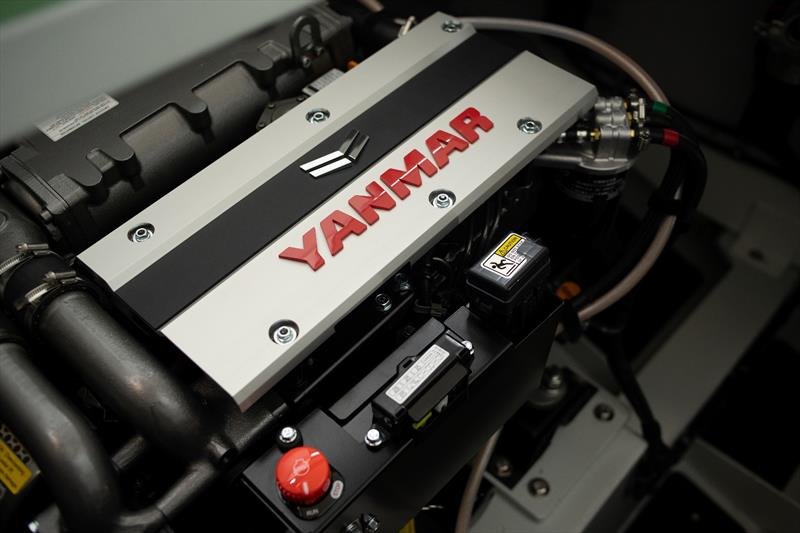
2. Yanmar Marine Engine Overheating
If there’s one symptom I would encourage boat owners not to ignore, it’s overheating.
A marine diesel engine can tolerate normal operating heat because its cooling system is designed to manage that heat.
It cannot safely operate indefinitely when the cooling system isn’t doing its job.
What are the symptoms of Yanmar marine engine overheating?
You might notice:
- Higher-than-normal temperature
- Temperature alarms
- Reduced performance
- Abnormal exhaust-water discharge
- Steam or excessive heat
- Temperature rising under load
- Temperature appearing normal at idle but climbing at higher RPM
That last symptom is particularly useful.
A cooling system can appear adequate when the engine is lightly loaded and then struggle when the engine is producing substantially more power.
What causes Yanmar marine engine overheating?
Depending on the specific engine, possible areas include:
- Restricted seawater intake
- Insufficient raw-water flow
- Raw-water pump problems
- Impeller condition
- Heat-exchanger restrictions
- Thermostat issues
- Coolant circulation problems
- Cooling-system contamination
- Belt or drive-system issues
Yanmar’s maintenance guidance specifically notes that a loose or failed V-belt can reduce cooling and contribute to overheating, while regular maintenance of filters and other components is important for reliable operation.
Yanmar also instructs operators to check seawater discharge after starting and to stop the engine if discharge is insufficient.
Why marine cooling deserves special attention
Marine engines operate in an environment where saltwater, debris, deposits, corrosion, and marine growth can affect components.
That’s why Yanmar marine engine cooling system problems should be approached systematically rather than by simply replacing whichever component looks suspicious.
If the engine repeatedly overheats, find the cause.
Don’t just keep resetting the alarm.
3. Loss of Power or Failure to Reach Rated RPM
This is another complaint we hear frequently:
“The engine runs, but the boat doesn’t perform like it used to.”
Sometimes the engine feels sluggish.
Sometimes it cannot reach the RPM the owner expects.
Sometimes black smoke appears as the throttle is increased.
These symptoms deserve a complete propulsion-system evaluation.
What causes Yanmar marine engine power loss?
Potential contributors include:
- Restricted fuel filters
- Fuel contamination
- Air-intake restrictions
- Exhaust restrictions
- Injector-related problems
- Incorrect propeller matching
- Excessive vessel or propeller loading
- Engine wear
- Other propulsion-system issues
Yanmar’s own troubleshooting material specifically identifies increased load and improper propeller matching as possible contributors to black smoke.
That matters because an engine doesn’t operate independently.
It works with the transmission, shaft or saildrive, propeller, hull, and vessel loading.
Don’t automatically blame the engine
Suppose an engine is mechanically healthy but the propeller is not correctly matched to the application.
The engine may be overloaded.
The result could be poor RPM, smoke, higher operating stress, and disappointing vessel performance.
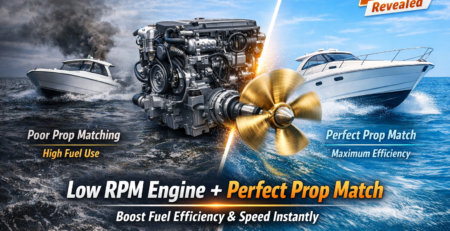
This is why marine engine and propeller matching should be considered when evaluating persistent performance problems.
At Coastal Wave Marine, we look at the complete application when discussing a replacement or repower rather than simply asking, “How many horsepower do you want?”
4. Black, White, or Blue Smoke From a Yanmar Marine Engine
Exhaust smoke can provide useful information.
It can also be misunderstood.
The first question should always be:
Is this a normal operating characteristic, or has something changed?
What does black smoke from a Yanmar marine engine mean?
Black smoke can be associated with excessive loading or an imbalance between fuel and available air.
Yanmar’s marine documentation identifies increased load, improper propeller matching, dirty intake components, improper fuel, and fuel-injector issues among possible causes depending on engine model.
That gives us an important practical lesson.
If an engine suddenly produces more black smoke under load, don’t assume that the engine itself has failed.
Check the entire operating picture.
What causes white smoke from a Yanmar diesel engine?
White smoke can have several possible causes depending on engine model and operating conditions.
Yanmar documentation identifies improper fuel, injector spray problems, and injection-timing issues among possible causes on applicable engines.
Persistent white smoke deserves investigation rather than being dismissed as “normal diesel smoke.”
What does blue smoke mean?
Blue smoke is generally associated with oil entering the combustion process.
If blue smoke is persistent, particularly when accompanied by increased oil consumption or other performance changes, the engine deserves a more thorough assessment.
The key is the change
A little smoke during a specific operating condition is not necessarily equivalent to continuous abnormal smoke.
What matters is the engine’s normal baseline and what has changed.
That distinction is one of the reasons model-specific operation and maintenance documentation matters.
5. Low Oil Pressure
Oil pressure is not a warning light to ignore until the next service.
If a genuine low-oil-pressure condition develops, continued operation can result in serious mechanical consequences.
What can cause low oil pressure?
Potential causes can include:
- Insufficient oil
- Incorrect oil condition or specification
- Lubrication-system problems
- Excessive internal wear
- Sensor or gauge problems
The challenge is determining which one you’re dealing with.
A faulty sensor isn’t the same problem as genuine low oil pressure.
Why maintenance matters
Yanmar’s maintenance information highlights the consequences associated with inadequate lubrication and poor maintenance, including abnormal oil-pressure conditions and serious internal wear.
That’s why Yanmar marine engine low oil pressure should be treated as a real diagnostic issue rather than something to work around.
If an alarm occurs, follow the operating manual for the specific engine and seek qualified service where appropriate.
6. Unusual Engine Noise or Vibration
Every experienced boat owner eventually learns the normal sound of their engine.
That’s why a new noise gets your attention.
A tapping sound.
A rattle.
A vibration at a particular RPM.
A sound that disappears when you reduce throttle.
Those details are useful.
What can cause abnormal Yanmar engine noise?
Potential sources include:
- Fuel-injection problems
- Mechanical wear
- Engine mounting issues
- Shaft alignment
- Transmission-related problems
- Propeller issues
- Hull or engine resonance
Yanmar’s marine operation guidance specifically tells operators to monitor abnormal vibration and noise and to avoid operating in speed ranges where heavy vibration occurs.
Don’t assume every vibration comes from the engine
This is a common mistake.
The engine, mounts, transmission, shaft, coupling, and propeller form a connected propulsion system.
A vibration can therefore originate outside the engine itself.
If the vibration is new or increasing, it’s worth investigating before assuming you need an engine replacement.
7. Fuel-System Problems
Diesel engines need clean fuel and reliable fuel delivery.
That sounds obvious.
Yet fuel-related problems remain an important source of starting and performance complaints.
Symptoms of Yanmar fuel-system problems
You may notice:
- Hard starting
- Stalling
- Poor acceleration
- RPM fluctuations
- Loss of power
- Excessive smoke
- Rough operation
Why fuel filtration matters
Yanmar states that fuel filters remove particles and deposits from diesel fuel and recommends regular replacement because contamination can reduce combustion efficiency and engine performance.
That’s a good example of why preventative maintenance matters.
A relatively inexpensive filtration component can play an important role in protecting a much more expensive fuel-injection system.
Fuel contamination isn’t something to guess about
If you suspect contaminated fuel or water in fuel, follow the engine-specific maintenance procedure and use appropriate professional assistance where necessary.
Modern marine diesel fuel systems can operate at high pressures, and Yanmar warns against checking high-pressure fuel leaks with your hands.
That is one area where “I’ll just have a quick look” can be a very bad idea.
8. Cooling-System Problems Beyond Overheating
Not every cooling problem immediately produces a dramatic temperature alarm.
Reduced seawater flow, deteriorating components, or restricted passages can develop gradually.
Components that matter
Depending on the Yanmar engine, the cooling system can involve:
- Seawater intake
- Seawater pump
- Rubber impeller
- Heat exchanger
- Thermostat
- Freshwater coolant circuit
- Belts and associated components
The exact configuration varies by model, so the correct operation and maintenance manual should always take priority over generic advice.
Why model-specific information matters
This is particularly important when you’re working with Yanmar’s different engine families.
A Yanmar 4JH110, for example, isn’t simply a generic “110 HP diesel.”
Yanmar lists the 4JH110 as a 2.0-liter, four-cylinder, direct-injection, Bosch common-rail, turbocharged and intercooled marine diesel engine rated at 110 mhp at 3,200 RPM. Its published package information also includes a seawater pump and freshwater expansion tank.
Those details matter when discussing installation, compatibility, maintenance, and replacement.
9. Exhaust-System Deterioration and Corrosion
Marine exhaust components operate under demanding conditions.
Heat, moisture, exhaust gases, and the marine environment can all contribute to deterioration.
Signs worth investigating
These may include:
- Visible corrosion
- Exhaust leakage
- Changes in exhaust appearance
- Abnormal engine-room odors
- Changes in temperature
- Performance changes
The important point is that exhaust components shouldn’t be evaluated in isolation.
If you’re considering replacing an older Yanmar engine, the condition of the surrounding installation—including exhaust, mounts, cooling arrangements, transmission, and controls—can influence the scope of the repower project.
10. Electrical, Starting, and Charging Problems
Sometimes an engine problem isn’t really an engine problem.
It’s electrical.
A weak battery, poor terminal connection, starter issue, charging-system fault, or related electrical problem can make a perfectly serviceable diesel engine appear unreliable.
Yanmar’s troubleshooting information specifically identifies insufficient battery charge, poor cable-terminal contact, safety-switch issues, and starter-switch problems among possible causes of slow or failed cranking.
Why this distinction matters
Imagine replacing a marine diesel engine because it “won’t start,” only to discover that the original engine’s basic mechanical condition was fine and the real problem was in the starting circuit.
That’s an expensive way to diagnose a battery problem.
A proper assessment starts with evidence.
Repair or Replacement? The Question Every Older Yanmar Eventually Faces
This is where our experience as a marine-equipment vendor becomes particularly useful.
A customer may arrive asking for a replacement engine because the existing one has become unreliable.
Our first question shouldn’t necessarily be:
“Which engine do you want?”
It should be:
“What is happening with the current engine, and what does the vessel actually need?”
When repair may make sense
Repair can be sensible when:
- The underlying engine is in good condition
- The failure is isolated
- Replacement parts are available
- Repair costs are reasonable
- The existing engine remains appropriate for the vessel
- The repair restores dependable service
When replacement becomes more attractive
A replacement or repower deserves consideration when:
- Major failures keep recurring
- Internal wear is extensive
- Corrosion is significant
- Parts are difficult to source
- Downtime is becoming expensive
- Repair costs continue accumulating
- The current engine no longer fits the vessel’s operating requirements
- A newer propulsion package offers a meaningful operational advantage
There’s no magic number that says, “At X hours, replace the engine.”
Engine condition depends on maintenance history, operating environment, loading, installation, service, and many other factors.
The better question is:
What is the most sensible total cost of ownership from this point forward?
Choosing a Yanmar Marine Engine Replacement
This is where many buyers make their first mistake.
They search for:
“110 HP marine engine.”
Then they choose an engine based on horsepower alone.
That’s not enough.
A proper Yanmar marine engine replacement needs to consider the complete installation.
Important factors include:
- Required power
- Rated operating RPM
- Engine dimensions
- Dry weight
- Mounting arrangement
- Transmission
- Shaft or saildrive configuration
- Propeller
- Vessel displacement
- Hull characteristics
- Intended cruising profile
- Available engine-room space
- Exhaust arrangement
- Cooling configuration
- Controls and instrumentation
The manufacturer itself provides model-specific technical drawings and compatible gear information for its engines.
For example, Yanmar’s official 4JH110 information lists compatible gear/drives and provides drawings for configurations involving the KM4A2, KMH4A, KMH50V and ZF25 families. Yanmar also notes that dimensions can vary depending on the marine gear and elbow configuration.
That is exactly why engine replacement should be treated as an engineering and installation decision—not a simple horsepower purchase.
Yanmar 4JH110: An Example of Why Specifications Matter
One Yanmar model that illustrates this point well is the Yanmar 4JH110.
According to Yanmar’s current product information, the 4JH110 produces 80.9 kW / 110 mhp at 3,200 RPM. It has four cylinders, approximately 2.0 liters of displacement, direct injection through a Bosch common-rail system, turbocharging with intercooling, and a 12V 125A alternator. Yanmar lists a dry weight of 229 kg without gear and dimensions of 909 × 613 × 675 mm.
Those numbers aren’t just product-page decoration.
They’re part of the compatibility conversation.
A buyer considering the Yanmar 4JH110 marine diesel engine needs to determine whether the engine’s dimensions, weight, mounting, gear configuration, controls, cooling, exhaust, and power characteristics are suitable for the intended vessel.
Yanmar also publishes technical drawings and compatible gear information for the 4JH110, which makes those details particularly useful during a repower evaluation.
For Coastal Wave Marine, this is the kind of information we want customers to have before requesting a quotation.
Why Propeller Matching Matters When Replacing a Yanmar Engine
Here’s a mistake worth highlighting:
More horsepower doesn’t automatically mean better propulsion.
The engine, transmission, propeller, shafting, and vessel need to work together.
Yanmar’s own troubleshooting documentation lists improper propeller matching as a possible contributor to black smoke on applicable engines.
So if you’re replacing an older engine, don’t ask only:
“Can I install a larger engine?”
Ask:
“Can the complete propulsion system use that engine correctly?”
That difference can save a lot of money.
How to Prevent Common Yanmar Marine Engine Problems
The best repair bill is often the one you never receive.
That doesn’t mean a marine engine will never fail.
It means paying attention to the conditions that increase the likelihood of failure.
Follow the engine-specific maintenance schedule
Yanmar publishes maintenance guidance and recommends regular servicing based on the engine and operating conditions. Its marine FAQ directs owners to the applicable operation manual and recommends authorized Yanmar service for maintenance requiring specialized equipment.
Don’t ignore changes in temperature
A small change can be useful information.
If an engine begins running hotter than it normally does, investigate.
Pay attention to exhaust smoke
A noticeable change in smoke color or quantity can provide a clue about loading, fuel, air supply, or combustion.
Monitor vibration and sound
You know what your engine normally sounds like.
If that changes, pay attention.
Protect the fuel system
Fuel filtration and proper maintenance help protect the injection system and overall engine performance. Yanmar specifically emphasizes regular fuel-filter replacement and maintenance.
Keep the entire propulsion system in mind
Engine reliability isn’t only about the engine block.
The transmission, propeller, shaft, cooling system, exhaust, controls, and electrical system all matter.
When Does Yanmar Marine Repowering Make Sense?
Sometimes repairing an old engine is the right answer.
Sometimes it’s simply postponing the inevitable.
A Yanmar marine engine repower becomes particularly worth evaluating when an older engine is experiencing repeated failures, expensive repairs, difficult parts sourcing, severe corrosion, or installation limitations.
But repowering should be planned properly.
A proper repower evaluation should consider:
- Existing engine specifications
- Replacement engine output
- Engine dimensions
- Mounting points
- Transmission compatibility
- Shaft alignment
- Propeller selection
- Exhaust routing
- Cooling requirements
- Controls
- Electrical integration
- Engine-room access
- Vessel application
- Expected operating profile
The objective is not simply to install a newer engine.
The objective is to create a reliable propulsion system that makes sense for the vessel.
Why Coastal Wave Marine Takes a Different Approach to Marine Engine Sales
Buying a marine diesel engine is different from buying a generic industrial product online.
The engine has to fit a vessel, a propulsion system, and an operating requirement.
That’s why Coastal Wave Marine’s approach should begin with the application.
Whether you’re searching for Yanmar marine engines, a specific Yanmar model, a replacement marine diesel, or a complete repower solution, the important information includes more than horsepower.
We want to understand the vessel, the existing engine, the transmission or drive, the intended application, and the installation requirements.
That makes the quotation process more useful and helps reduce the risk of choosing an engine that looks right on paper but creates compatibility problems during installation.
For international buyers, freight and shipping requirements also need to be considered as part of the purchasing process.
A marine engine purchase should therefore be treated as a project—not simply a product transaction.
Frequently Asked Questions About Common Yanmar Marine Engine Problems
What are the most common Yanmar marine engine problems?
Common problems include hard starting, overheating, loss of power, abnormal exhaust smoke, low oil pressure, unusual vibration or noise, fuel-system problems, cooling-system restrictions, exhaust deterioration, and electrical starting or charging issues. The exact causes vary by Yanmar engine model and operating conditions.
Why is my Yanmar marine engine overheating?
Possible causes include inadequate seawater flow, raw-water pump or impeller problems, cooling-system restrictions, heat-exchanger issues, thermostat problems, or other cooling-system faults. Yanmar specifically instructs operators to check seawater discharge and stop the engine if discharge is insufficient.
Why won’t my Yanmar marine diesel engine start?
The cause depends on whether the engine fails to crank or cranks without starting. Battery condition, starter circuits, fuel delivery, air in the fuel system, filtration, and fuel-injection issues are among the possible areas to investigate.
Why is my Yanmar marine engine losing power?
Potential causes include fuel restrictions, air-intake problems, exhaust restrictions, injector-related issues, excessive loading, incorrect propeller matching, or engine wear. Because the engine operates as part of a larger propulsion system, the propeller and transmission should also be considered.
What causes black smoke from a Yanmar marine engine?
Depending on the engine, black smoke may be associated with increased load, improper propeller matching, restricted intake air, improper fuel, or fuel-injection problems. Yanmar’s own troubleshooting documentation identifies these among possible causes.
What causes white smoke from a Yanmar diesel engine?
White smoke can have multiple causes. Yanmar documentation identifies improper fuel, injector spray problems, and injection-timing issues among possible causes on applicable engines. Persistent white smoke should be investigated rather than automatically considered normal.
What does blue smoke from a Yanmar marine engine mean?
Blue smoke is generally associated with oil entering the combustion process. Persistent blue smoke, particularly when accompanied by increased oil consumption or other changes in performance, warrants further investigation.
How long does a Yanmar marine diesel engine last?
There isn’t one reliable lifespan figure for every Yanmar marine diesel engine. Service life depends on the specific model, maintenance history, operating hours, load, installation, environment, and operating practices. Condition and service history are more useful indicators than a generic hour figure.
When should I replace my Yanmar marine engine?
Replacement should be considered when repeated major failures, severe internal wear, corrosion, parts availability, downtime, or repair costs make continued operation less attractive. The vessel’s propulsion requirements should also be reassessed before selecting the replacement engine.
How do I choose a replacement Yanmar marine engine?
Start with the vessel and existing propulsion system. Compare horsepower, rated RPM, dimensions, weight, mounting arrangement, transmission or drive, shaft configuration, propeller requirements, cooling, exhaust, controls, and available installation space.
Is the Yanmar 4JH110 suitable for every 110 HP repower?
No. Horsepower alone does not establish compatibility. Yanmar’s published specifications show that the 4JH110 has specific dimensions, weight, rated speed, mounting characteristics, and compatible gear configurations. Those details need to be compared with the vessel’s existing installation and propulsion requirements.
Final Thoughts: The Best Time to Address a Marine Engine Problem Is Before It Becomes a Breakdown
A marine engine rarely needs to announce its problems with fireworks.
More often, the warning is subtle.
The temperature is a little higher.
The starting time gets longer.
The engine doesn’t reach the RPM it used to.
The exhaust looks different.
A vibration appears at a particular speed.
Or you hear a sound you don’t recognize.
Those are the moments worth paying attention to.
The goal isn’t to assume that every unusual symptom means you need a new engine. Quite the opposite.
The goal is to diagnose the actual problem before spending money on the wrong solution.
Sometimes that means replacing a filter, correcting a cooling-system problem, addressing fuel contamination, or resolving a propulsion-system issue.
Sometimes the engine itself has reached the point where repeated repairs no longer make financial sense.
When that happens, a properly planned Yanmar marine engine replacement or repower can provide a much more reliable path forward.
And that’s where product selection becomes important.
A replacement engine needs to match the vessel—not simply the old engine’s horsepower.
The right decision considers the engine, transmission, propeller, shaft or drive, mounting, cooling, exhaust, controls, available space, and intended operating profile together.
For buyers considering Yanmar marine engines, including models such as the Yanmar 4JH110, Coastal Wave Marine can help frame the purchase around the actual application rather than treating the engine as an isolated component.
Because ultimately, the objective isn’t just to buy a marine diesel engine.
It’s to put the right propulsion system back in the water—and have confidence in it when you leave the dock.
Next Post: What Does a Marine Inboard Diesel Engine Package Includes? Full Breakdown for Buyers
Leave a Reply