
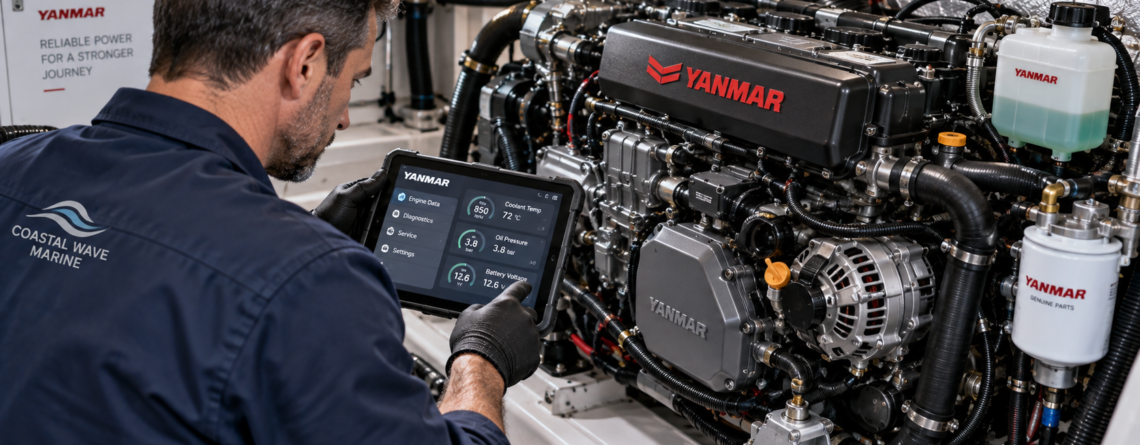
When a marine diesel starts behaving differently, the first instinct is often to blame the engine.
It makes sense. The engine is the heart of the propulsion system, so when the boat won’t start, overheats, loses RPM, smokes, or begins vibrating, the engine gets the blame.
But experienced marine professionals know something important:
A symptom is not a diagnosis.
A Yanmar marine engine that won’t reach its expected RPM could have a fuel restriction, air-intake issue, exhaust restriction, excessive propeller load, or another propulsion-system problem. An overheating engine could have a seawater-flow restriction, cooling-system issue, pump problem, or another fault that needs to be identified before parts are replaced.
That distinction matters because replacing an expensive component without establishing the cause can turn a manageable problem into an unnecessary expense.
At Coastal Wave Marine, our approach to Yanmar marine engine troubleshooting is therefore centered on the complete propulsion system rather than the engine in isolation. Coastal Wave Marine presents itself as a marine-equipment supplier with technical assistance and experienced marine specialists, and its website states 25+ years of experience, 500+ products and customers served across 100+ countries.
This guide is designed to help boat owners, fleet operators, marine technicians and purchasing teams understand the most common Yanmar engine symptoms, what they may indicate, and when repair, replacement or repowering deserves consideration.
Important: The causes below are diagnostic possibilities, not universal diagnoses. Always identify the exact Yanmar model and follow its applicable operation and maintenance documentation. Yanmar itself directs owners to the engine’s Operation Manual for maintenance information and to authorized dealers for parts information and certain diagnostic issues.
What Is Yanmar Marine Engine Troubleshooting?
Yanmar marine engine troubleshooting is the process of identifying the likely source of an engine or propulsion-system symptom before deciding what repair or replacement is required.
That process can involve several systems:
- Fuel delivery
- Air intake
- Exhaust
- Cooling
- Lubrication
- Electrical starting and charging
- Engine controls
- Marine gearbox
- Shaft or saildrive
- Propeller
- Vessel loading
This is particularly important with modern Yanmar engines.
For example, Yanmar’s JH-CR range includes electronically managed common-rail engines, and Yanmar provides dedicated operation manuals, specification sheets and technical drawings for models such as the 4JH80 and 4JH110.
So the right troubleshooting process starts with the exact engine and configuration, not simply the word “Yanmar.”
Before Troubleshooting Your Yanmar Marine Engine, Identify the Symptom
Before replacing a filter, pump, injector, starter, gearbox or engine, establish exactly what has changed.
Ask:
- Does the engine crank?
- Does it start but run roughly?
- Does it overheat only under load?
- Does it lose RPM?
- Has exhaust smoke changed?
- Is oil pressure abnormal?
- Is there a new vibration?
- Is the problem intermittent?
- Did the problem begin after maintenance or installation work?
- Was the vessel recently repowered or re-propped?
These questions are more valuable than immediately guessing which part has failed.
Identify the Exact Yanmar Model
Model identification is essential.
The Yanmar 4JH80 and 4JH110, for example, belong to the JH-CR family. Yanmar lists the 4JH80 at 80 mhp and the 4JH110 at 110 mhp, with both models rated at 3,200 rpm on its current product pages.
The technical datasheet for the 4JH80/110 specifies a four-cylinder, four-stroke, 2.0-liter diesel configuration with turbocharging and intercooling, Bosch common-rail direct injection, electronic engine management, freshwater cooling and seawater cooling through a rubber-impeller seawater pump.
That is why model-specific troubleshooting is so important.
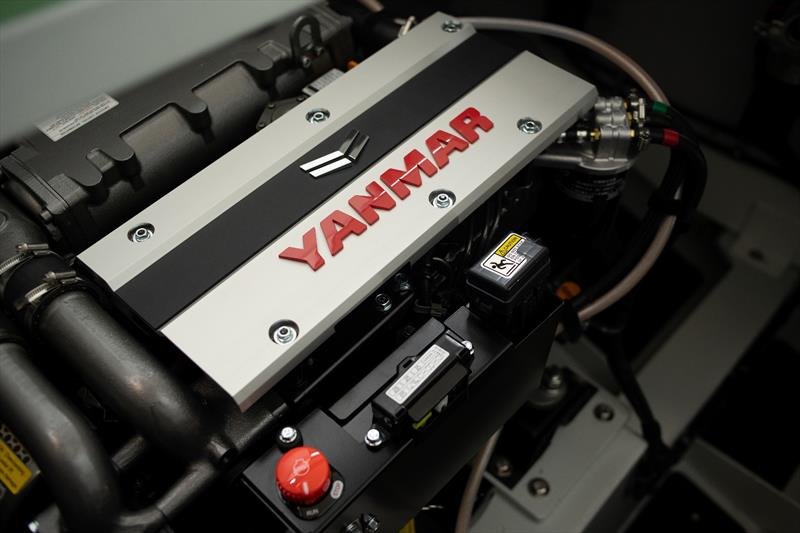
1. Yanmar Marine Engine Won’t Start
A non-starting engine is one of the most common reasons owners begin searching for Yanmar marine engine troubleshooting information.
But “won’t start” can describe several different conditions.
If the Engine Does Not Crank
If the starter doesn’t turn the engine normally, investigate the starting circuit before assuming an internal engine failure.
Potential areas include:
- Battery condition
- Battery terminals
- Battery cables
- Starter motor
- Starter circuit
- Ignition or start switch
- Wiring
- Safety/interlock circuits
The important diagnostic question is:
Is the engine failing to crank, or is it cranking but failing to start?
Those are completely different troubleshooting paths.
If the Engine Cranks but Does Not Start
Now fuel and combustion-related systems become much more relevant.
Potential areas can include:
- Fuel supply
- Fuel-filter condition
- Water or contamination in fuel
- Air entering the fuel system
- Fuel-injection system
- Engine-management system
- Model-specific starting conditions
Modern common-rail systems deserve particular care. The Yanmar 4JH80/110 uses Bosch common-rail direct injection, so fuel-system diagnosis should follow the applicable technical documentation rather than improvised procedures.
2. Yanmar Marine Engine Overheating
Overheating is a symptom that should never be casually dismissed.
A marine engine can operate under significant load for extended periods, so the cooling system has an essential job.
Yanmar’s JH-CR documentation identifies both freshwater cooling and seawater cooling for the 4JH80/110 configuration.
That means troubleshooting should consider the complete cooling system.
Common Signs of Overheating
Look for:
- Increasing coolant temperature
- Temperature alarms
- Temperature rising at higher RPM
- Reduced performance
- Abnormal exhaust-water behavior
- Excessive heat
- Steam or other unusual indications
Potential Causes of Yanmar Marine Engine Overheating
Depending on the model and installation, possibilities can include:
- Restricted seawater intake
- Seawater-flow restriction
- Raw-water pump problems
- Impeller condition
- Cooling-passage restriction
- Heat-exchanger problems
- Thermostat issues
- Coolant circulation problems
- Belt-related problems
- Coolant leakage
The current Yanmar JH-CR Operation Manual specifically includes seawater outlet checks, coolant checks, seawater-pump impeller inspection/replacement, coolant replacement and seawater-passage maintenance within its maintenance schedule.
That is an important point:
Cooling-system maintenance is not optional background work. It is part of engine reliability.
When Overheating Needs Immediate Attention
If temperature continues rising, an alarm occurs, or the engine repeatedly overheats under load, avoid treating the warning as something to work around.
Find the cause first.
3. Yanmar Marine Engine Loses Power or Won’t Reach RPM
An engine that cannot reach its expected operating RPM is telling you something.
But it isn’t necessarily telling you that the engine itself is defective.
This is where understanding the entire propulsion system becomes valuable.
Possible Engine-Related Causes
Depending on the circumstances, investigate areas such as:
- Fuel restriction
- Fuel contamination
- Air-intake restriction
- Exhaust restriction
- Fuel-injection problems
- Turbocharging-related issues
- Mechanical condition
But there is another major area to consider.
Check the Propulsion Load
The propulsion chain can be thought of as:
Engine → Marine Gearbox → Shaft/Saildrive → Propeller → Vessel
A problem anywhere along that chain can affect how the engine performs.
An inappropriate propeller load, for example, can prevent an engine from reaching its expected RPM.
That means Yanmar marine engine losing power isn’t always an engine problem.
Why the Gearbox Matters
Yanmar’s official 4JH80 and 4JH110 product resources identify compatible marine gears and drives, including Kanzaki and ZF options.
The 4JH80/110 technical sheet also lists multiple gear configurations and notes that dimensions vary with the selected gear, drive or elbow configuration.
That becomes particularly important when selecting a Yanmar marine engine replacement.
4. Black, White or Blue Smoke From a Yanmar Engine
Smoke is one of the most visible engine symptoms, but smoke color should be treated as a diagnostic clue rather than a complete diagnosis.
What Can Black Smoke Indicate?
Black smoke can be associated with conditions involving:
- Excessive engine load
- Air-supply restriction
- Fuel delivery
- Injection
- Propeller loading
- Other combustion-related conditions
If black smoke appears together with reduced RPM, look at both the engine and propulsion load.
What Can White Smoke Indicate?
White smoke can have several possible causes depending on operating conditions.
Potential areas can include:
- Fuel and combustion conditions
- Injection-related issues
- Cold-start conditions
- Other model-specific faults
Persistent white smoke deserves proper investigation.
What Can Blue Smoke Indicate?
Blue smoke is commonly associated with oil entering the combustion process.
If it is persistent or accompanied by abnormal oil consumption, the engine should be evaluated rather than simply operated until the symptom becomes worse.
A Better Diagnostic Question
Instead of asking only:
“What color is the smoke?”
Ask:
“When does the smoke appear, and what other symptoms occur at the same time?”
For example:
Black smoke + low RPM + heavy load
is a very different diagnostic picture from:
White smoke + difficult starting + rough running.
5. Yanmar Marine Engine Has Low Oil Pressure
Low oil pressure is one of the symptoms that should be treated conservatively.
The lubrication system exists to protect the engine’s internal components, and a genuine oil-pressure problem can have serious consequences.
Possible Causes
Depending on the model and operating conditions, possibilities can include:
- Low oil level
- Incorrect oil specification
- Lubrication-system fault
- Excessive internal wear
- Sensor or gauge problem
- Other model-specific causes
The Yanmar 4JH80/110 technical data specifies an enclosed forced lubrication system and lists applicable oil specifications for that engine series.
That reinforces an important rule:
Use the oil specification for the actual engine model rather than assuming every diesel uses the same lubricant.
Don’t Assume an Alarm Means One Thing
An alarm or abnormal reading needs to be investigated.
It may involve a sensor or instrumentation issue, but genuine low pressure must not be dismissed.
If the warning persists, follow the applicable Yanmar operating instructions and seek qualified assistance.
6. Yanmar Marine Engine Vibrates or Makes Unusual Noise
Marine engines transmit vibration through the vessel, so diagnosing vibration requires more than listening to the engine itself.
A new vibration can originate from the propulsion system.
Potential Sources of Vibration
Consider:
- Engine mounts
- Shaft alignment
- Propeller
- Coupling
- Marine gearbox
- Shafting
- Engine operation
- Vessel resonance
Yanmar’s maintenance documentation specifically includes propeller-shaft alignment as a maintenance consideration.
That is a useful reminder that propulsion alignment is not merely an installation detail.
Why This Matters
Suppose the engine is mechanically healthy but the shaft alignment is incorrect.
Replacing the engine won’t solve the underlying vibration.
Likewise, a damaged or inappropriate propeller can create symptoms that are incorrectly blamed on the engine.
This is why Yanmar marine engine vibration problems should be evaluated at the propulsion-system level.
7. Yanmar Marine Engine Fuel-System Problems
Fuel quality and fuel delivery are fundamental to diesel-engine performance.
A fuel-related problem can present as:
- Hard starting
- Stalling
- Rough running
- RPM fluctuation
- Loss of power
- Excessive smoke
Start With Fuel Quality and Filtration
Possible areas include:
- Fuel contamination
- Water in fuel
- Restricted fuel filtration
- Fuel-supply problems
- Air entering the fuel system
The Yanmar 4JH80/110 standard package includes a fuel pre-filter with water separator.
That’s significant because fuel cleanliness is an engineered part of the system, not merely a maintenance preference.
Common-Rail Systems Need Proper Diagnosis
The 4JH80/110 uses Bosch common-rail direct injection.
High-pressure fuel systems should not be treated like simple low-pressure mechanical fuel circuits.
When the diagnosis points toward high-pressure injection components, use the correct technical procedure and qualified service.
Yanmar’s own guidance states that certain parts and full parts-list information should be obtained through a local dealer and that genuine Yanmar marine parts are specifically designed for Yanmar engines.
8. Yanmar Marine Engine Cooling-System Problems
The cooling system deserves its own troubleshooting category because overheating is often the final symptom of a problem that started earlier.
Raw-Water Side
Depending on the installation, investigate:
- Seawater intake
- Strainer
- Hoses
- Seawater pump
- Impeller
- Cooling passages
- Heat exchanger
Freshwater Side
Consider:
- Coolant level
- Coolant condition
- Circulation
- Thermostat
- Heat exchanger
- Related components
Yanmar’s maintenance schedule includes coolant checks, seawater-pump impeller maintenance, seawater-passage cleaning and coolant replacement at defined intervals.
The precise interval depends on the applicable manual and operating conditions, so owners should use the maintenance schedule for their actual engine.
Why Preventive Maintenance Matters
The best cooling-system problem is the one you identify before it becomes an overheating event.
That is why maintenance records matter.
If an engine has an unknown maintenance history, don’t assume its cooling system is in perfect condition simply because the temperature is currently normal.
9. Yanmar Marine Engine Exhaust Problems
Exhaust systems are often overlooked because much of the installation isn’t visible during normal operation.
But exhaust condition can influence engine operation, heat management and overall installation safety.
Warning Signs
Look for:
- Changes in exhaust smoke
- Exhaust leaks
- Excessive heat
- Unusual engine-room odors
- Corrosion
- Changes in engine performance
Exhaust Matters During Repowering
When installing a replacement Yanmar marine engine, don’t automatically assume the existing exhaust arrangement will transfer without evaluation.
The 4JH80/110 standard engine package includes an L-type exhaust mixing elbow, with other options available.
A repower evaluation may therefore need to consider:
- Exhaust routing
- Mixing elbow
- Hose arrangement
- Engine position
- Available space
- Connections
- Related installation components
This is one reason professional repowering should be treated as a system-integration project rather than simply an engine purchase.
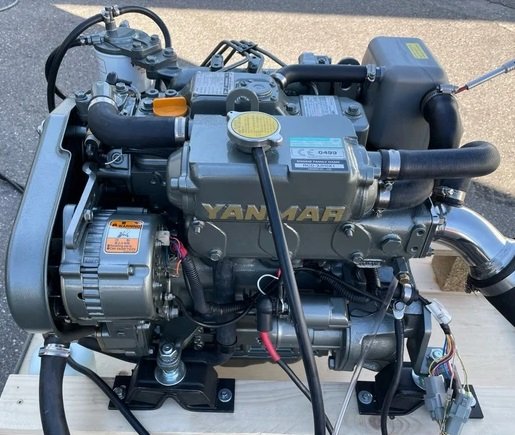
10. Yanmar Marine Engine Electrical and Charging Problems
An engine that doesn’t start isn’t necessarily an engine that has failed.
Sometimes the problem is electrical.
Starting-System Symptoms
Possible areas include:
- Battery
- Battery terminals
- Cables
- Starter
- Wiring
- Switches
- Starting circuit
Charging-System Symptoms
Consider:
- Alternator
- Charging circuit
- Battery condition
- Connections
- Wiring
- System configuration
The 4JH80/110 specification lists a 12V electric starting system and 12V 125A alternator.
That model-specific information matters when troubleshooting.
Modern Engines May Also Provide Diagnostic Codes
Yanmar explains that electronically controlled engines can generate diagnostic trouble codes through the Yanmar panel. Yanmar says these codes can identify potential issues before they contribute to engine failure and recommends consulting the Operation Manual or an authorized Yanmar dealer when a code cannot be located or interpreted.
That is a much better diagnostic pathway than guessing which electrical component to replace.
A Professional Approach to Yanmar Marine Engine Troubleshooting
Good troubleshooting isn’t about changing parts until something works.
It’s about narrowing the possibilities.
Step 1: Define the Symptom
Instead of:
“The engine is bad.”
Document:
“The engine starts normally but loses approximately X RPM under sustained load.”
The second description gives a technician something useful to investigate.
Step 2: Establish the Operating Conditions
Ask:
- Cold or warm?
- Idle or cruising?
- Light load or heavy load?
- Continuous or intermittent?
- After recent maintenance?
- After refueling?
- After a propeller change?
- After an engine or gearbox replacement?
Step 3: Look for Symptom Combinations
Symptoms are more informative when considered together.
For example:
Overheating + reduced RPM
suggests a different investigation than:
Hard starting + white smoke.
Likewise:
Black smoke + failure to reach RPM
may warrant examination of both engine operation and propulsion loading.
Step 4: Check the Complete Propulsion System
Don’t stop at the engine.
Evaluate the relationship between:
Engine → Gearbox → Shaft/Saildrive → Propeller → Vessel
This is particularly important when troubleshooting performance complaints.
Step 5: Use the Correct Documentation
Yanmar provides operation manuals, technical specifications and drawings for its engines.
For the 4JH80 and 4JH110, Yanmar provides a JH-CR Operation Manual covering these models and separate product specification resources.
The manufacturer also provides compatible gear and drive information.
That’s exactly the kind of documentation that should guide model-specific troubleshooting and replacement decisions.
Yanmar Marine Engine Maintenance Is Part of Troubleshooting
Troubleshooting shouldn’t only happen after something fails.
Maintenance records can provide valuable diagnostic context.
Yanmar’s JH-CR maintenance schedule includes recurring checks and service items covering the cooling system, seawater pump impeller, coolant, seawater passages, intake, exhaust mixing elbow, electrical system, fuel/oil/coolant leaks, wiring connectors, valve clearance and propeller-shaft alignment.
That gives owners a practical lesson:
A maintenance history is part of the engine’s diagnostic history.
If an engine has been maintained consistently, a technician has more information to work with.
If maintenance is unknown, more assumptions have to be eliminated.
When Is a Yanmar Marine Engine Problem Serious?
Some symptoms deserve immediate attention rather than continued operation.
These include:
- Persistent overheating
- Low oil-pressure warnings
- Severe or rapidly increasing vibration
- Sudden major power loss
- Significant smoke changes
- Repeated shutdowns
- Abnormal mechanical noises
- Major fuel, oil or coolant leaks
- Persistent starting problems
The objective isn’t to scare the boat owner.
It’s to prevent a small problem from becoming a major one.
When the engine is giving you a warning, diagnosis should come before convenience.
Should You Repair or Replace Your Yanmar Marine Engine?
Not every problematic engine needs replacement.
And not every old engine deserves another expensive repair.
The decision should be based on condition, application, cost and future reliability.
For maintenance requirements and model-specific service intervals, consult the applicable Yanmar Operation Manual.
When Repair May Make Sense
Repair may be reasonable when:
- The engine is fundamentally sound
- The failure is isolated
- Parts are available
- Repair cost is reasonable
- The engine remains suitable for the vessel
- The repair can restore dependable operation
When Replacement May Make More Sense
A Yanmar marine engine replacement may deserve consideration when:
- Major failures keep recurring
- Internal wear is extensive
- Corrosion is significant
- Parts availability is becoming difficult
- Downtime is costly
- Repair costs continue accumulating
- The engine no longer matches the vessel’s requirements
Look Beyond the Repair Invoice
Suppose one repair costs less than replacement.
That doesn’t automatically make repair the better financial decision.
Consider:
Repair cost + labor + downtime + future repairs + reliability
against:
Replacement cost + installation + future operating expectations
That is a much more meaningful comparison.
Choosing the Right Yanmar Marine Engine Replacement
This is where technical expertise becomes particularly important.
A replacement engine should not be selected on horsepower alone.
Horsepower Is Only One Specification
You also need to consider:
- Rated RPM
- Engine dimensions
- Weight
- Mounting
- Gearbox
- Gear ratio
- Shaft or saildrive
- Propeller
- Cooling
- Exhaust
- Controls
- Electrical system
- Vessel displacement
- Engine-room space
- Intended operating profile
Yanmar’s current product resources demonstrate this clearly.
The 4JH80 and 4JH110 have specific dimensions and weights, while available marine gear configurations can change the overall installation dimensions and weight.
Yanmar also publishes technical drawings for different gear configurations.
That is why a professional marine engine replacement assessment should start with the existing installation.
Yanmar 4JH80 and 4JH110: Model-Specific Technical Reference
For buyers researching the Yanmar 4JH80 marine engine or Yanmar 4JH110 marine engine, the manufacturer’s specifications provide useful context.
The 4JH80/110 technical datasheet identifies:
- Four-cylinder configuration
- 2.000-liter displacement
- 84 mm × 90 mm bore and stroke
- Turbocharged and intercooled aspiration
- Bosch common-rail direct injection
- Electronic engine management
- Freshwater cooling
- Seawater cooling through a rubber-impeller pump
- 12V electric starting
- 12V 125A alternator
- 229 kg dry weight without gear
- 909 × 613 × 675 mm listed dimensions
- SAE #4 flywheel housing
Yanmar’s current product information lists the 4JH80 at 80 mhp and the 4JH110 at 110 mhp, with a rated engine speed of 3,200 rpm.
These specifications should be used as a reference point—not as proof that either engine is automatically suitable for a particular vessel.
Why Gearbox and Propeller Compatibility Matters
One of the most common mistakes in repowering is thinking:
“The new engine has the same horsepower, so it should fit.”
Not necessarily.
The engine must work with the propulsion system.
Yanmar’s official 4JH80 and 4JH110 resources identify compatible Kanzaki gears, ZF gears and saildrive options.
That means a replacement-engine assessment may need to examine:
Engine
↓
Marine gearbox
↓
Shaft or saildrive
↓
Propeller
↓
Vessel
A mismatch anywhere in that chain can compromise performance.
For Coastal Wave Marine, this is also where the marine gearboxes category becomes an important part of the purchasing conversation.
Yanmar Marine Engine Repowering: When Is It Worth It?
Repowering is more than installing a newer engine.
It’s about creating a propulsion system that makes sense for the vessel’s next operating cycle.
Signs a Repower May Be Worth Considering
These can include:
- Aging engine
- Repeated failures
- High maintenance costs
- Increasing downtime
- Poor performance
- Parts availability concerns
- Engine no longer suited to the vessel
- Major mechanical failure
What Should Be Evaluated?
A repower assessment can involve:
- Engine
- Marine gearbox
- Mounting
- Shaft or saildrive
- Propeller
- Cooling
- Exhaust
- Controls
- Electrical system
- Engine-room dimensions
The Yanmar 4JH80/110 technical resources even provide different gear and drive configurations, reinforcing why installation details matter.
The goal isn’t simply:
“Will this engine fit?”
The better question is:
“Will this engine and propulsion configuration work correctly in this vessel?”
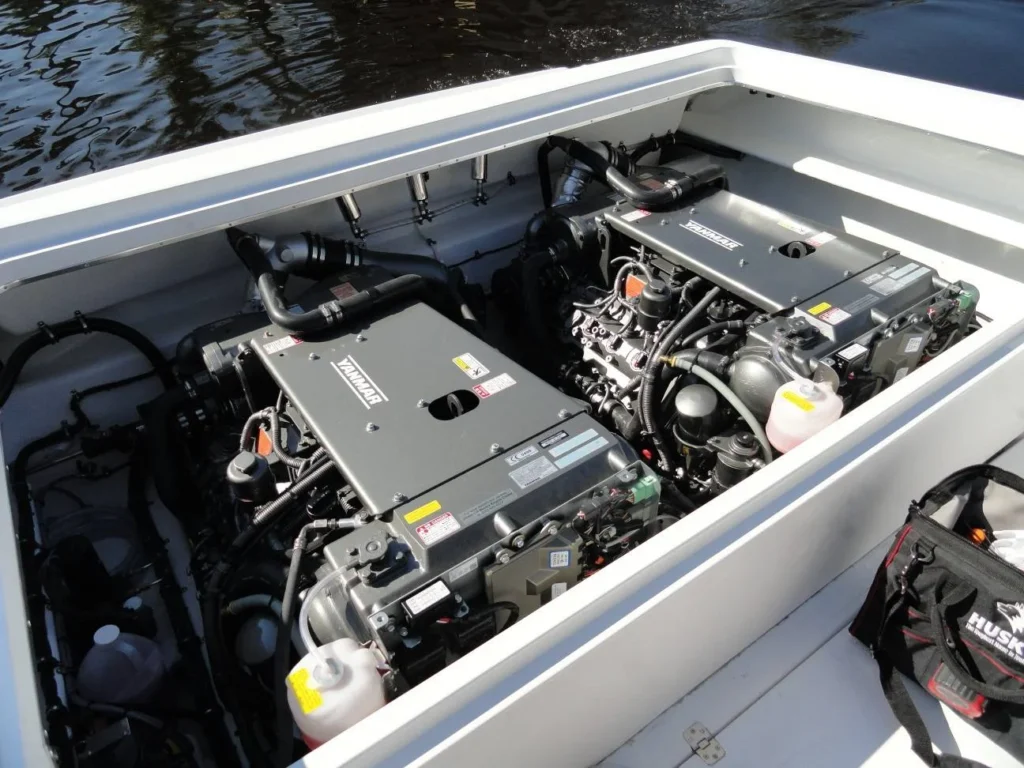
Why Coastal Wave Marine Is Positioned to Help With Yanmar Engine Selection
A technically responsible marine-engine vendor should do more than quote a horsepower figure.
Coastal Wave Marine’s website positions the business around marine engines, generators, genuine parts, worldwide delivery, technical assistance and experienced marine specialists. Its homepage also identifies Yanmar as one of its featured marine-engine brands.
For a Yanmar purchase or repower inquiry, the useful information to provide includes:
- Existing engine make and model
- Vessel type
- Vessel application
- Existing horsepower
- Current RPM
- Existing marine gearbox
- Shaft or saildrive configuration
- Available engine-space dimensions
- Intended operating conditions
- Whether the project is a direct replacement or repower
The more complete the information, the easier it is to evaluate the right Yanmar marine engine rather than simply finding an engine with a similar horsepower rating.
Frequently Asked Questions About Yanmar Marine Engine Troubleshooting
What are the most common Yanmar marine engine problems?
Common symptoms include starting difficulties, overheating, loss of power, failure to reach expected RPM, abnormal smoke, oil-pressure warnings, vibration, fuel-system problems, cooling-system issues, exhaust problems and electrical faults.
The cause of each symptom depends on the specific engine, configuration and operating conditions.
Why won’t my Yanmar marine engine start?
First determine whether it fails to crank or cranks without starting. A no-crank condition points toward the starting/electrical system, while a crank-but-no-start condition can require investigation of fuel delivery and other engine systems.
Why is my Yanmar marine engine overheating?
Potential causes include restricted seawater flow, seawater-pump or impeller problems, cooling-passage restrictions, heat-exchanger issues, thermostat problems, coolant issues or other model-specific faults.
Yanmar’s maintenance documentation specifically includes seawater-pump, coolant and seawater-passage maintenance.
Why is my Yanmar marine engine losing power?
Potential causes include fuel restriction, fuel contamination, air or exhaust restrictions, injection issues, excessive propulsion load, propeller mismatch or mechanical problems.
The engine and propulsion system should be evaluated together.
Why won’t my Yanmar engine reach full RPM?
Possible causes include engine restrictions, fuel problems, air or exhaust issues, excessive propeller load, incorrect propulsion configuration or other mechanical problems.
The expected RPM must be determined from the specification for the actual engine model.
Why is my Yanmar marine engine producing black smoke?
Black smoke can be associated with excessive load, air-supply restriction, fuel-related conditions, injection issues or propulsion-system loading.
The accompanying symptoms matter.
What causes white smoke from a Yanmar diesel engine?
White smoke can have several possible causes depending on engine temperature, fuel and combustion conditions and the specific engine configuration.
Persistent white smoke should be investigated rather than diagnosed solely from color.
What causes blue smoke from a Yanmar marine engine?
Blue smoke is generally associated with oil entering the combustion process. Persistent blue smoke or abnormal oil consumption warrants further evaluation.
What causes low oil pressure on a Yanmar marine engine?
Possible causes include low oil level, lubrication-system problems, internal wear, incorrect oil or an instrumentation issue. Genuine low oil pressure should be treated as a serious warning.
How do I troubleshoot a Yanmar marine diesel engine?
Start with the exact symptom and engine model. Establish when the problem occurs, identify related symptoms, inspect the appropriate systems and consider the complete propulsion system. Then use the applicable Yanmar documentation or qualified technical support.
When should I replace my Yanmar marine engine?
Replacement may make sense when repeated failures, major wear, corrosion, downtime, parts availability or accumulated repair costs make continued operation uneconomical.
The vessel’s installation and propulsion requirements should be evaluated before selecting the replacement.
Is the Yanmar 4JH110 suitable for every 110 HP application?
No.
Horsepower is only one consideration. Engine dimensions, rated speed, weight, mounting, gearbox, shaft or saildrive, propeller, exhaust, cooling, controls and vessel requirements all matter.
Does replacing a Yanmar engine require a new gearbox?
Not necessarily.
The existing gearbox may be reusable if its condition, ratio, compatibility and mounting arrangement are appropriate for the replacement engine.
This should be confirmed as part of the repower assessment.
Final Takeaway: Diagnose First. Replace Second.
The most important lesson in Yanmar marine engine troubleshooting is simple:
Don’t replace an expensive component until you have a reasonable diagnosis.
A Yanmar that won’t start may have a starting-system problem.
A Yanmar that overheats may have a cooling-system problem.
A Yanmar that won’t reach RPM may have a propulsion-load problem.
A Yanmar that smokes may have a fuel, air, exhaust, load or combustion-related issue.
And yes, sometimes the engine itself has reached the point where replacement or repowering is the financially sensible choice.
The difference is knowing which situation you’re actually dealing with.
Start with the symptom.
Identify the exact model.
Review the operating conditions.
Check the relevant systems.
Consider the gearbox, shaft, saildrive and propeller.
Use the manufacturer’s technical documentation.
And when the diagnosis points toward replacement, choose the engine as part of a complete propulsion solution.
For buyers evaluating Yanmar marine engines, including the Yanmar 4JH80, Yanmar 4JH110 and other marine diesel options, Coastal Wave Marine can help move the process from a generic horsepower search toward an application-focused engine selection.
Because the objective isn’t simply to buy another engine.
It’s to select the right engine, the right propulsion configuration and the right long-term solution for the vessel.
Next Post: Common Yanmar Marine Engine Problems: Causes, Symptoms, and Solutions
Leave a Reply