
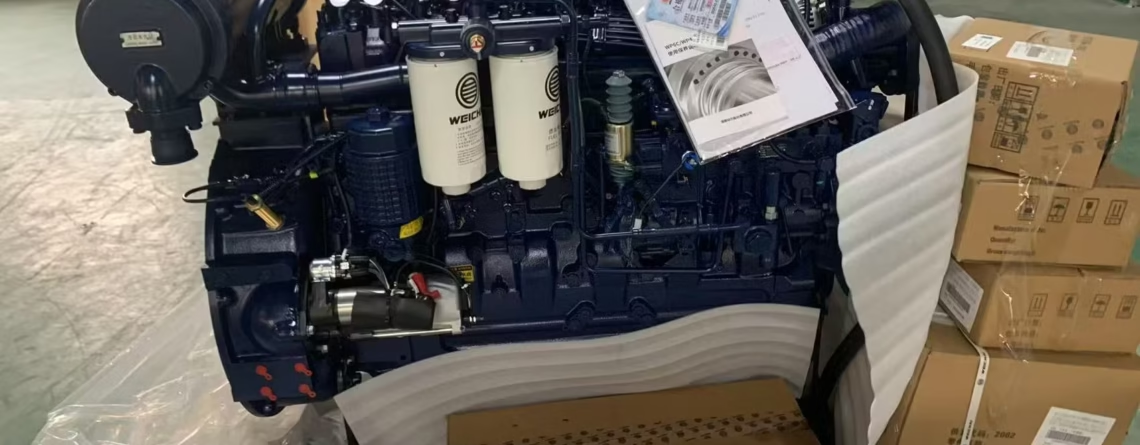
If you’ve ever gone through the process of buying a marine engine, you’ve probably noticed how the conversation usually goes. The dealer focuses heavily on the engine—horsepower, brand, fuel consumption, delivery time. Then, almost as an afterthought, the gearbox comes up.
Sometimes it’s positioned as optional. Sometimes it’s presented as something you can “reuse” or “figure out later.” And most of the time, it’s treated as a separate decision entirely.
From years of working with vessel owners, shipyards, and commercial operators at Coastal Wave Marine, I can tell you this: that separation is where many long-term problems begin.
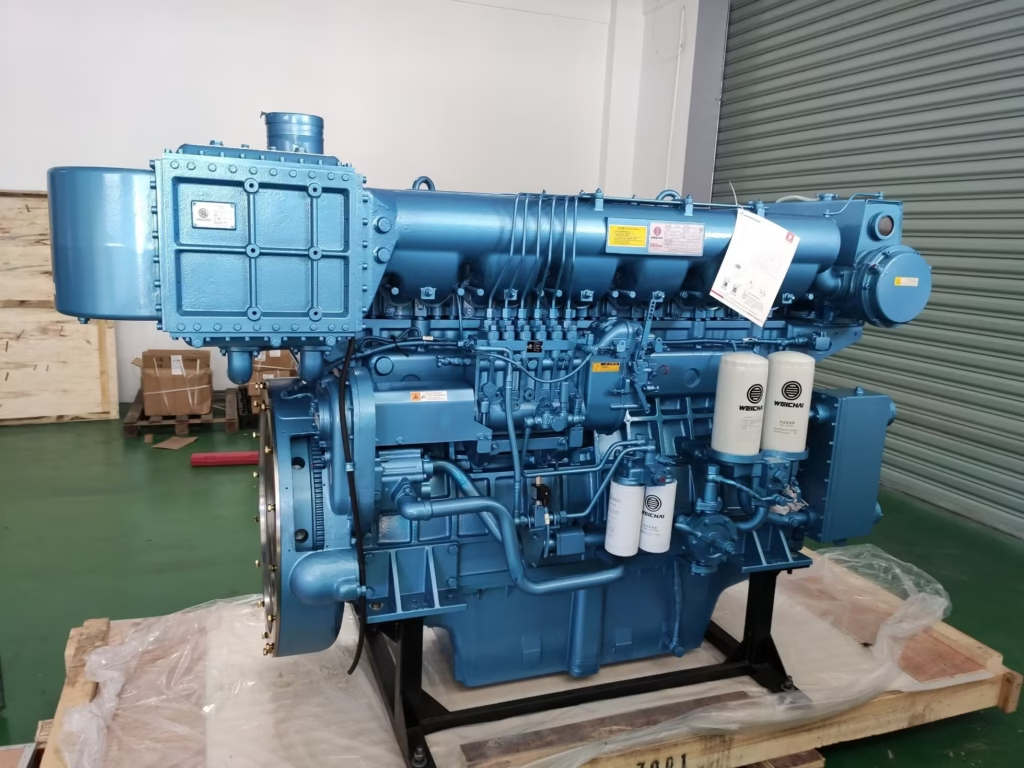
Marine inboard diesel engines with gearbox included aren’t about convenience. They’re about avoiding mechanical mismatches that only show themselves after real hours on the water.
This isn’t a theory piece. It’s written from the side that sees what happens after installation, after sea trials, and after hundreds or thousands of operating hours.
What “Marine Inboard Diesel Engines with Gearbox Included” Actually Means
When we talk about marine inboard diesel engines with gearbox included, we’re talking about a propulsion system that has been selected and matched as a whole—not assembled piece by piece.
In practical terms, that means:
- The engine’s torque curve is known and accounted for
- The gearbox reduction ratio is selected to suit that torque
- Shaft speed, propeller load, and cruising RPM align
- Installation geometry and alignment targets are predictable
- Support and documentation are consistent across the drivetrain
This approach treats the engine and gearbox as partners, not strangers forced to work together.
That distinction matters far more than most buyers realize at the start.
Why Engines and Gearboxes Are Commonly Sold Separately
There’s a simple reason many dealers sell engines on their own: it makes the price look lower.
An engine-only quote is easier to compare, easier to advertise, and easier to close quickly. Gearboxes complicate the discussion. Ratios need to be calculated. Torque limits need to be respected. Installers need to be consulted.
Those steps take time and experience.
Unfortunately, skipping them doesn’t remove the complexity—it just pushes it downstream to the owner or the yard.
We often hear from buyers who say, “The engine was cheaper somewhere else.” When we look closer, what’s missing is rarely obvious at first glance: no gearbox matching, no ratio validation, and no clarity on how the drivetrain will behave under load.
One commercial operator we worked with reused an existing gearbox during a repower to reduce costs. The gearbox wasn’t damaged and wasn’t improperly installed. It simply wasn’t suited to the new engine’s torque characteristics. Vibration and premature wear followed, and the eventual fix cost more than a complete matched package would have in the first place.
That situation is far from rare.
The Advantage That Doesn’t Show Up on the Quote
A gearbox doesn’t just transmit power. It shapes how that power is delivered.
Diesel engines produce torque across a wide RPM range. The gearbox determines where that torque is applied, how smoothly it reaches the propeller, and how hard the rest of the drivetrain has to work to absorb it.
When engines and gearboxes are selected independently, compromises are often made:
- Ratios that are “close enough”
- Gearboxes that can handle peak power but not sustained torque
- Operating RPMs that look acceptable on paper but feel strained in real use
With marine inboard diesel engines with gearbox included, those compromises are removed before the engine ever reaches the vessel. You can read more about diesel engine torque and reduction ratios.
The result is not dramatic. It’s subtle—and that’s exactly why it matters.
How Matched Systems Change the Way a Boat Feels
Owners rarely complain about peak horsepower. What they notice is how the boat behaves in everyday conditions.
Matched engine–gearbox systems tend to deliver:
- Smoother engagement when shifting
- More predictable throttle response
- Better control at low speeds
- Reduced vibration through the drivetrain
These differences are most obvious during docking, maneuvering in tight spaces, and long cruising runs where the engine sits at a steady RPM for hours.
One yacht owner described it after switching to a complete package during a repower: the boat stopped feeling like a collection of parts and started feeling like a single machine. That’s a common reaction, and it usually surprises people who expected only incremental improvement.
Fuel Efficiency Is a System Outcome
Fuel consumption figures are often quoted as engine-only numbers, but in practice, fuel efficiency depends on how the entire drivetrain works together.
We’ve seen identical engines installed in similar hulls produce noticeably different fuel burn simply because of gearbox ratio selection.
With marine inboard diesel engines with gearbox included, the engine is allowed to operate in its most efficient range during normal cruising. That means:
- Lower RPM for the same vessel speed
- More stable engine load
- Less unnecessary fuel use over long runs
The savings may not be dramatic on a single trip, but over a season—or over years of operation—they become very real.
Installation and Commissioning: Where Many Problems Are Avoided
Installers and shipyards tend to appreciate complete engine–gearbox packages for a simple reason: fewer unknowns.
When the gearbox is included:
- Mounting dimensions are known in advance
- Alignment targets are defined
- Shaft speed and propeller behavior are predictable
That translates into fewer adjustments during installation and fewer surprises during sea trials. Instead of troubleshooting, the focus stays on confirming performance.
This also reduces the risk of post-installation disputes about whether an issue belongs to the engine, the gearbox, or the installation itself. learn about marine diesel engine installation best practices.
Reliability Comes from Load Balance, Not Overbuilding
Most drivetrain failures we encounter aren’t caused by weak components. They’re caused by components operating outside their ideal range.
Incorrect ratios and mismatched torque loads lead to:
- Elevated temperatures
- Accelerated bearing wear
- Irregular vibration patterns
Matched systems distribute loads evenly. Gearboxes run cooler. Engines operate where they’re designed to. Over time, this translates into longer service life and fewer unplanned interventions.
That’s one of the quieter advantages of marine inboard diesel engines with gearbox included—nothing dramatic happens, and that’s the point. Try understanding marine engine classification standards.
Maintenance Is Simpler When Responsibility Is Clear
Another benefit that often gets overlooked is clarity.
When the engine and gearbox are supplied as a system:
- Service documentation aligns
- Maintenance intervals make sense together
- Warranty responsibility is clearly defined
There’s no ambiguity about whether a problem is caused by incompatible components. That clarity makes support faster and less frustrating when something does need attention.
Understanding the Real Cost
Complete systems often look more expensive at first glance. That’s true.
But that price already accounts for:
- Proper gearbox selection
- Engineering validation
- Reduced installation risk
- Lower likelihood of early drivetrain issues
Over time, owners typically recover that difference through reduced downtime, fewer repairs, and more predictable operating costs.
We’ve had commercial operators come back after multiple seasons and admit that the numbers only made sense in hindsight. The initial savings of a pieced system rarely survive long-term operation.
Where Engines with Gearbox Included Make the Most Sense
For commercial vessels—fishing boats, workboats, transport vessels—uptime matters more than flexibility. A drivetrain that just works is worth far more than one that offers options.
For recreational boats and yachts, comfort, smoothness, and resale value often drive the decision. In both cases, marine inboard diesel engines with gearbox included tend to deliver a more satisfying ownership experience.
Common Issues We Regularly Help Owners Correct
The same patterns appear again and again:
- Old gearboxes reused without recalculating ratios
- Gearboxes chosen based on availability rather than torque compatibility
- Mixed brands without proper validation
- Operating profiles that were never fully considered
None of these decisions are reckless. They’re usually made with good intentions and limited information. Unfortunately, the consequences only show up later.

How We Approach Matching in Practice
When we evaluate a propulsion setup, the engine is never the starting point.
We look at:
- Vessel type and displacement
- Typical operating speeds
- Expected loads
- Cruising habits
Only after that do we recommend marine inboard diesel engines with gearbox included that suit the application.
That process isn’t about selling more equipment. It’s about avoiding problems that are far more expensive to fix after the fact. You can contact us if looking for an experienced marine engine supplier.
FAQs: Marine Inboard Diesel Engines with Gearbox Included
Is buying an engine with gearbox included always better?
In most cases, yes—especially for reliability and longevity.
Can I reuse my existing gearbox?
Sometimes, but only after proper technical evaluation.
Does an included gearbox affect warranty?
Yes—usually in a positive way, with clearer responsibility.
Are these systems better for repower projects?
Absolutely. Repowers benefit the most from matched systems.
The Takeaway Most Owners Learn Eventually
The real benefit of marine inboard diesel engines with gearbox included isn’t something you see immediately.
It shows up as:
- Fewer mechanical surprises
- Smoother operation
- Lower long-term costs
- Confidence every time the engine is started
Those are the things experienced owners value most—and the things new buyers often only discover after they’ve already made their choice.
Choosing a complete, matched system from the start isn’t flashy. It’s simply the quieter, more reliable path.
And in marine propulsion, quiet reliability usually wins.
Leave a Reply