
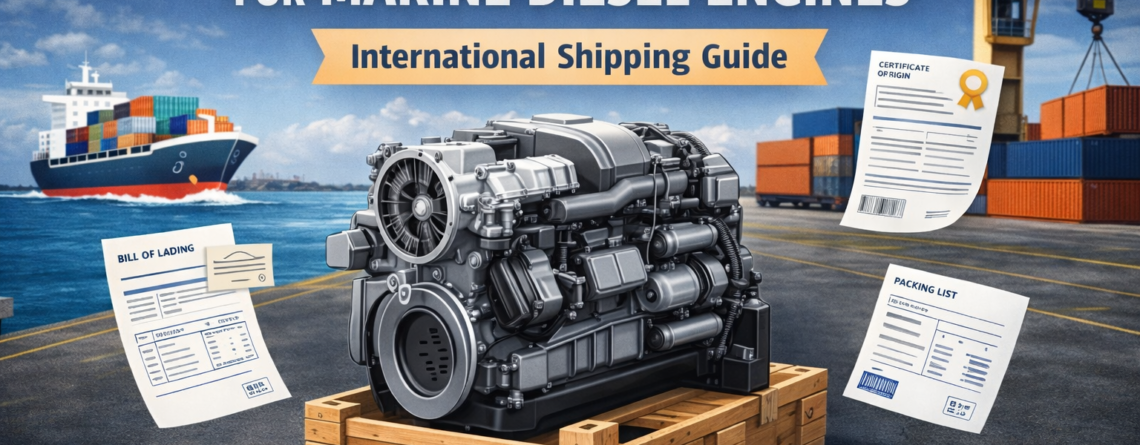
Exporting marine engines across international borders is a process that involves far more than simply loading equipment into a shipping container. For marine dealers, shipyards, and vessel operators, accurate export documentation for marine inboard diesel engines is essential for smooth international trade.
As a marine engine vendor who has coordinated shipments of propulsion systems to ports around the world, I have seen firsthand how proper documentation can determine whether a shipment moves smoothly or becomes stuck in customs for weeks.
Marine engines are high-value industrial assets. Because of this, governments and customs authorities require detailed documentation to ensure the shipment complies with international trade regulations, environmental standards, and maritime safety requirements.
In this guide, we will explain the complete process of preparing export documentation for marine inboard diesel engines, including the required paperwork, compliance requirements, and best practices used by experienced marine engine exporters such as Coastal Wave Marine.
Understanding Export Documentation for Marine Inboard Diesel Engines
International shipping regulations are designed to ensure transparency and safety in global trade. When exporting marine propulsion systems, documentation confirms the origin, value, and specifications of the equipment being transported.
For marine dealers, the correct export documentation for marine inboard diesel engines serves several important purposes:
- Ensuring compliance with international trade regulations
- Allowing customs authorities to verify the shipment
- Protecting buyers and sellers in commercial transactions
- Preventing delays during customs clearance
Without these documents, even the most reliable marine engine shipment can encounter costly delays.
Why Export Documentation Matters in Marine Engine Shipping
Marine diesel engines are classified as heavy industrial machinery. As a result, they must meet strict documentation requirements when crossing international borders.
Authorities typically verify several key factors during the export process:
- Engine model and serial numbers
- Manufacturing origin
- Environmental compliance standards
- Commercial value of the equipment
Marine dealers researching how to export marine diesel engines internationally often discover that documentation accuracy is one of the most important factors in avoiding shipment delays.
From my experience coordinating marine engine exports, even a minor oversight—such as an incorrect classification code—can cause customs authorities to place a shipment on hold.
Essential Export Documentation for Marine Inboard Diesel Engines
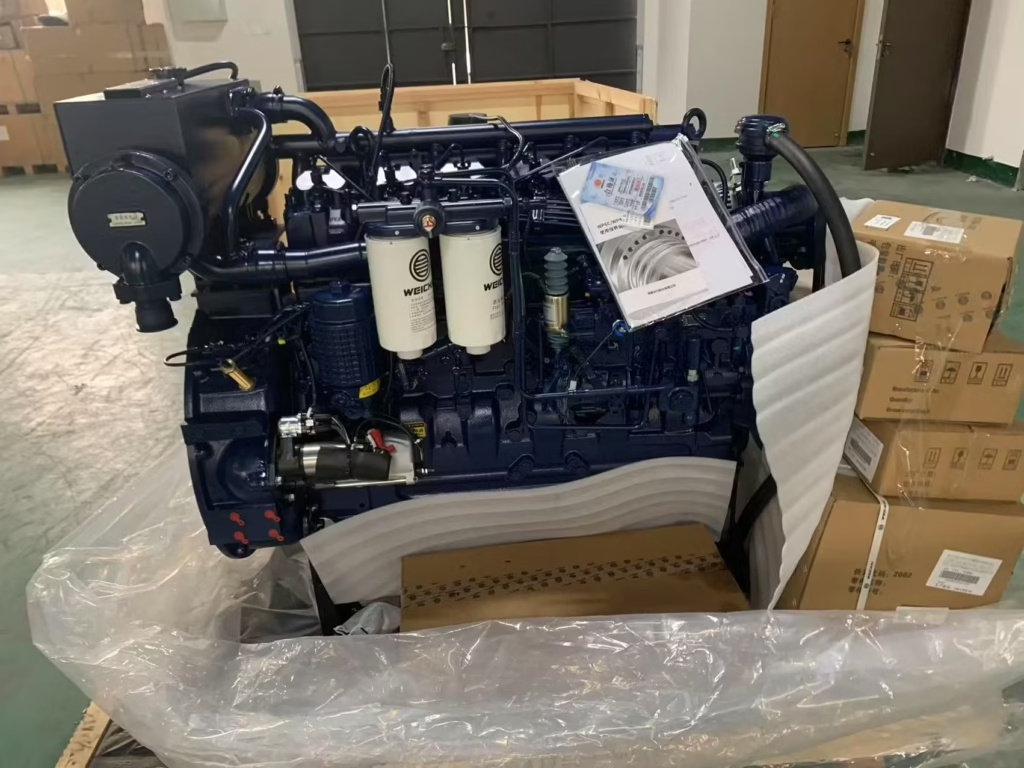
Several documents are required when exporting marine propulsion systems internationally. Each document plays a specific role in verifying the legitimacy and compliance of the shipment.
Commercial Invoice
The commercial invoice is the most important document in international trade. It serves as the official record of the transaction between the buyer and the seller.
For marine engine exports, the invoice should include:
- Engine manufacturer and model number
- Engine serial number
- Horsepower rating and specifications
- Total transaction value
- Buyer and seller information
- Payment terms
Customs officials use the commercial invoice to determine duties and verify the shipment details during the export documentation process for marine inboard diesel engines.
Packing List
The packing list provides detailed information about how the equipment is packaged for transport.
Typical information included in a marine engine packing list:
- Crate dimensions
- Engine weight
- Packaging type
- Number of units shipped
Marine engines can weigh hundreds or thousands of kilograms. Because of this, freight operators rely on packing lists to plan safe handling procedures.
Many marine dealers searching for documentation required to export marine diesel engines internationally underestimate how important the packing list is for cargo handling and logistics.
Bill of Lading
The bill of lading is issued by the shipping carrier and acts as the legal contract for transporting goods.
It confirms:
- The cargo has been received by the carrier
- The shipping route and destination
- The party authorized to receive the cargo
Without a bill of lading, the shipment cannot legally move through international freight networks.
Certificate of Origin
The certificate of origin confirms the country where the marine engine was manufactured.
This document is particularly important because import duties may vary depending on the origin of the equipment.
For example, engines manufactured in certain countries may benefit from reduced tariffs due to international trade agreements.
Dealers exporting engines often encounter questions about certificate of origin requirements for marine diesel engine exports, especially when shipping to the European Union or Asia-Pacific markets.
Export Declaration
Many governments require exporters to submit a declaration before goods leave the country.
This declaration includes:
- Product classification codes
- Export destination
- Shipment value
Submitting an export declaration ensures the shipment is recorded for international trade monitoring.
Technical Documentation for Marine Diesel Engine Exports
In addition to trade paperwork, marine engines require technical documentation to verify their specifications and regulatory compliance.
Engine Specification Documents
Marine engines are complex mechanical systems that must meet strict engineering standards.
Documentation often includes:
- Power output ratings
- Fuel type and consumption data
- Engine displacement
- Serial number verification
Providing these documents simplifies the customs clearance process for marine engine exports.
Environmental Compliance Certificates
Environmental regulations are becoming stricter worldwide. Many countries require proof that imported marine engines comply with emissions standards.
Common compliance documentation includes:
- EPA marine engine certification
- EU emissions compliance documentation
- Manufacturer environmental testing reports
These certificates demonstrate that the engine meets regulatory requirements in the destination country.
Manufacturer Documentation
Buyers often request additional documentation directly from the manufacturer.
Examples include:
- Engine warranty certificates
- Manufacturer authenticity documentation
- Factory test reports
These documents help establish trust and transparency in marine engine transactions, particularly for high-value commercial engines.
Packaging and Shipping Requirements for Marine Engines
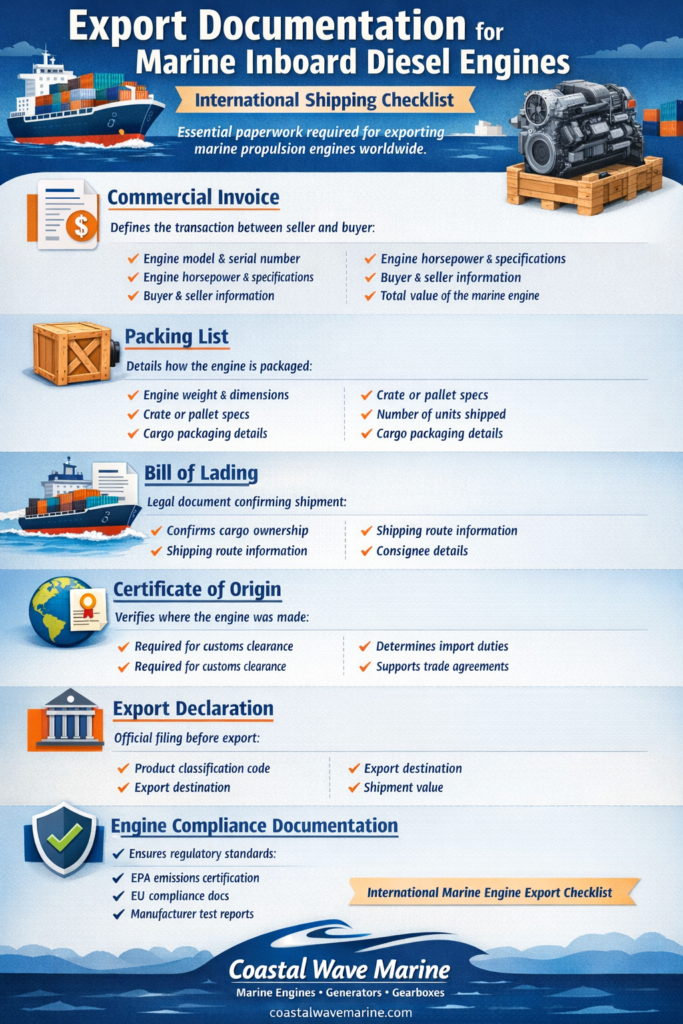
Exporting marine engines safely requires professional packaging designed to protect the equipment during international transport.
Engine Crating Standards
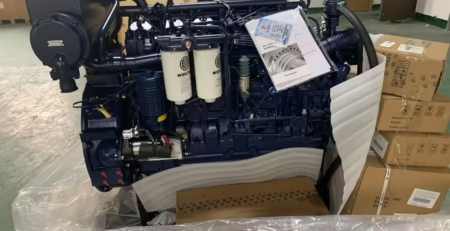
Marine engines are typically packaged in reinforced export crates.
These crates often include:
- Steel-reinforced wooden frames
- Moisture protection materials
- Shock-absorbing mounting systems
Proper packaging significantly reduces the risk of shipping damage when transporting marine inboard diesel engines across international routes.
Choosing the Right Freight Method
Most marine engines are transported using ocean freight due to their weight and size.
However, in some cases air freight may be used for urgent deliveries.
Factors that influence shipping method selection include:
- Engine size and weight
- Delivery timeline
- Shipping distance
- Budget considerations
Experienced marine exporters often work with logistics companies that specialize in heavy industrial cargo.
Common Export Mistakes Marine Dealers Should Avoid
Even experienced exporters occasionally encounter documentation errors. Avoiding these mistakes can significantly reduce the risk of shipment delays.
Incomplete Documentation
Missing paperwork is one of the most common causes of customs delays.
Incorrect Classification Codes
Marine engines must be classified correctly according to international trade coding systems.
Missing Compliance Certifications
Failure to provide emissions or environmental certifications can result in shipment rejection.
Dealers researching international shipping requirements for marine inboard diesel engines often find that regulatory compliance is the most challenging part of the export process.
How Coastal Wave Marine Supports International Marine Engine Buyers
At Coastal Wave Marine, international marine engine shipping is a routine part of our operations.
Our team regularly assists marine dealers, vessel operators, and shipyards with exporting:
- Marine inboard diesel engines
- Marine generators
- Marine propulsion gearboxes
Because we understand the complexity of export documentation for marine inboard diesel engines, we help buyers prepare the required documentation and coordinate freight logistics.
This support allows our customers to focus on vessel operations while we handle the technical details of the export process.
Best Practices for Exporting Marine Diesel Engines
Experienced marine exporters follow several best practices to ensure shipments move efficiently through customs.
Marine Engine Export Checklist
- Confirm engine serial numbers
- Verify documentation accuracy
- Include compliance certificates
- Use professional freight agents
- Insure shipments against transit damage
Following this checklist helps prevent delays when managing export documentation for marine inboard diesel engines.

Frequently Asked Questions
What documents are required to export marine diesel engines?
Exporting marine diesel engines typically requires a commercial invoice, packing list, bill of lading, certificate of origin, and export declaration. Technical documents and compliance certificates may also be required.
How long does marine engine export clearance take?
Customs clearance times vary depending on the destination country, but properly documented shipments often clear within a few days.
Do marine diesel engines require special export permits?
Most marine engines do not require special export permits, but environmental compliance documentation may be necessary depending on the destination country.
Can marine dealers ship engines internationally without freight agents?
While it’s possible, most exporters work with freight agents because they simplify documentation and logistics coordination.
What causes delays in marine engine shipping?
Common delays include missing documentation, incorrect classification codes, and incomplete compliance certificates.
Final Thoughts
Exporting marine propulsion systems internationally requires careful planning and attention to documentation.
Accurate export documentation for marine inboard diesel engines ensures shipments comply with trade regulations, move efficiently through customs, and reach buyers without unnecessary delays.
For marine dealers and vessel operators purchasing high-value propulsion systems, working with experienced suppliers such as Coastal Wave Marine simplifies the process and ensures the equipment arrives safely.
In the marine industry—where engines power commercial vessels, fishing fleets, and offshore operations—efficient shipping is not just important.
It is essential.
Next Post: Low Vibration Marine Inboard Diesel Engine Mounts: The Best Solution for Engine Stability at Sea

Leave a Reply