
If you operate a commercial vessel, you already understand something recreational boat owners don’t:
Your engine is not a convenience.
It is your revenue stream.
At Coastal Wave Marine, we work daily with operators running 2,000 to 6,000+ engine hours per year — commercial fishing fleets, tug operators, offshore support vessels, passenger ferries, patrol craft, and industrial workboats.
And the single most common mistake we see?
Choosing the wrong duty rating.
A properly specified continuous duty marine inboard diesel engine is not just a category — it is a commercial necessity for vessels operating under sustained load.
This guide explains what that means, why it matters, and how to choose the correct commercial marine propulsion systems.
What Is a Continuous Duty Marine Inboard Diesel Engine?
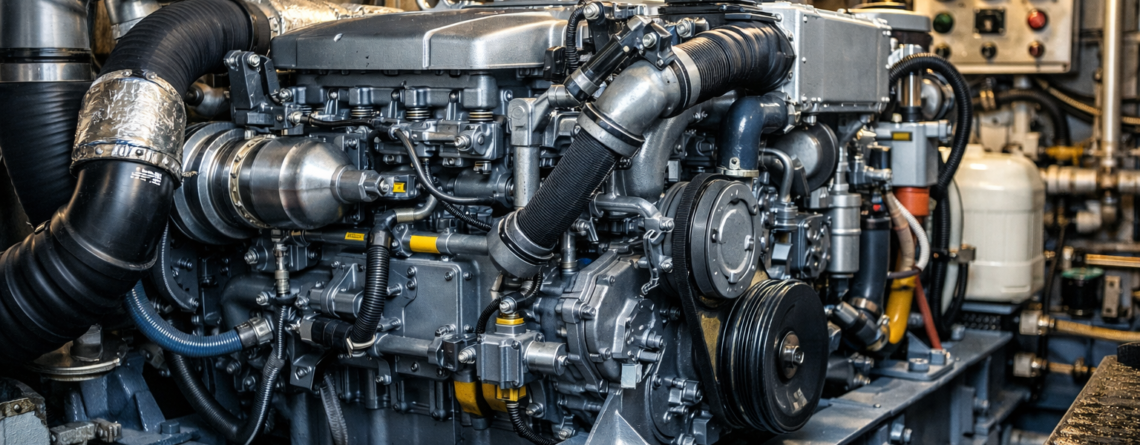
A continuous duty marine inboard diesel engine is engineered to operate at a constant load — often up to 100% rated power — for unlimited hours annually, provided maintenance intervals are respected.
This rating is typically aligned with:
- ISO 3046 performance standards
- IMO emission classifications
- EPA Tier compliance (for regulated markets)
- Commercial class society requirements (where applicable)
Unlike light-duty or intermittent-duty engines, continuous duty engines are built with:
- Lower piston speed for longevity
- Heavier crankshaft assemblies
- Industrial-grade cooling capacity
- Conservative horsepower ratings relative to displacement
In simple terms:
They are designed to work — not sprint.
Real-World Experience: Where Operators Go Wrong
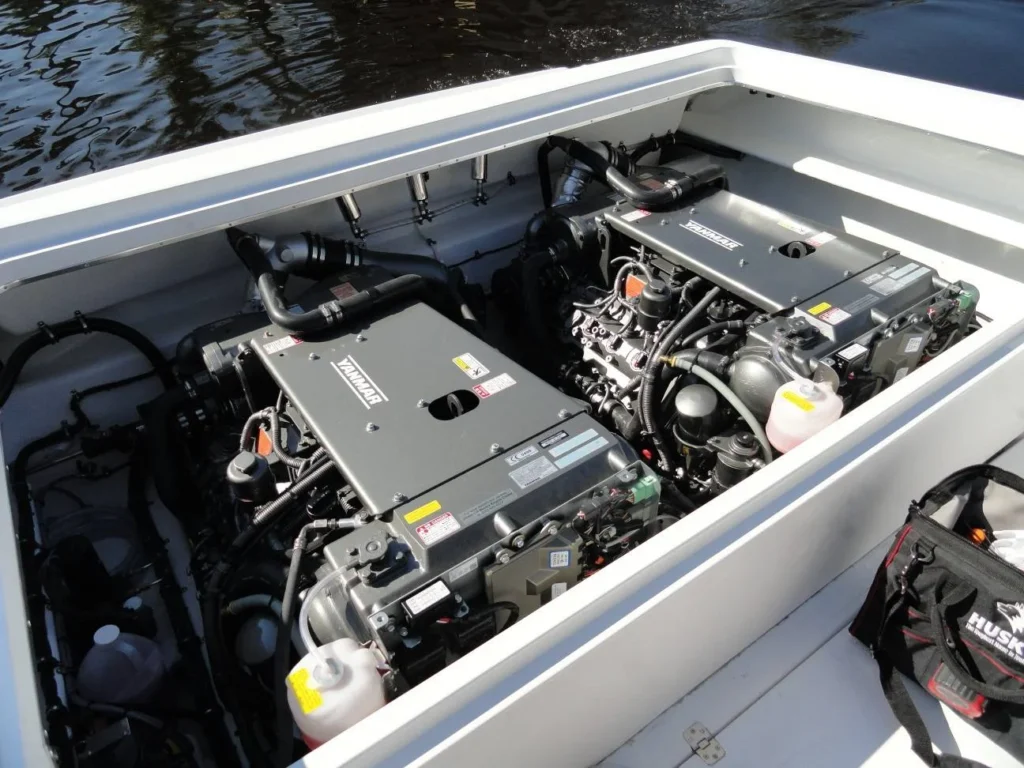
Over the years, we’ve seen commercial operators install high-horsepower recreational engines because they appeared cost-effective.
In nearly every case, the failure pattern is predictable:
- Running at 80–90% load continuously
- Elevated operating temperatures
- Premature bearing wear
- Increased oil consumption
- Reduced overhaul interval
One commercial trawler operator replaced a non-continuous-rated engine after 1,200 hours due to internal fatigue. After upgrading to a properly sized continuous duty marine inboard diesel engine for commercial fishing operations, the vessel surpassed 7,000 hours without major mechanical failure.
The engine wasn’t defective.
It was misapplied.
Duty rating is not marketing terminology. It is engineering reality.
Why Commercial Vessels Require Continuous Duty Rating
1. Sustained Load Tolerance
Commercial vessels often operate at 70–100% load for extended durations.
A properly specified continuous duty marine inboard diesel engine for heavy commercial use maintains:
- Stable exhaust gas temperatures
- Consistent lubrication pressure
- Thermal balance under sustained RPM
This prevents internal stress accumulation that leads to premature overhaul.
2. Lower Lifecycle Cost Per Hour
The initial acquisition cost of a continuous duty engine may be higher.
However, when evaluated across:
- 10,000+ operating hours
- Fuel consumption curves
- Maintenance intervals
- Overhaul frequency
The cost per operating hour is often significantly lower compared to improperly rated engines.
In commercial operations, cost per hour is the only metric that matters.
3. Compliance in Regulated Waters
Operators in North America, Europe, and certain international trade routes must consider emissions compliance.
Many continuous duty marine inboard diesel engines for commercial maritime operations are available in configurations meeting:
- IMO Tier II / Tier III
- EPA Tier 3 / Tier 4
- EU Stage V
Non-compliance can result in operational restrictions or vessel resale complications.
Proper selection protects long-term asset value.
Engineering Characteristics of a Continuous Duty Marine Inboard Diesel Engine
When evaluating a continuous duty marine inboard diesel engine supplier, we assess the following technical elements:
Cooling System Capacity
Continuous duty engines typically feature:
- Oversized heat exchangers
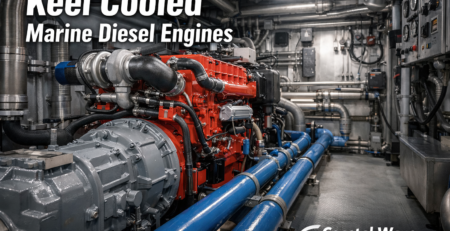
- Keel cooling options for workboats
- High-flow raw water pumps
Sustained heat management is critical to engine longevity. Explore our marine generators for commercial vessels.
Torque Curve Stability
Commercial vessels require predictable torque delivery at working RPM — typically between 1,200–2,100 RPM depending on application.
Unlike high-performance engines, continuous duty models emphasize torque consistency rather than peak speed.
Internal Component Strength
Design features commonly include:
- Forged crankshafts
- Reinforced cylinder liners
- Heavy-duty pistons
- Conservative horsepower-to-displacement ratios
These design decisions reduce internal stress over time.
Serviceability
Long-hour operations demand accessible maintenance.
Continuous duty engines are generally designed for:
- Straightforward filter access
- Service-friendly layout
- Widely available parts networks
Availability of parts globally is a critical consideration for offshore and international operators.
Common Applications
A continuous duty marine inboard diesel engine for commercial fishing vessels is appropriate when:
- Operating 10+ hours daily
- Carrying heavy onboard equipment
- Running consistent RPM under load
Other ideal applications include:
- Tugboats
- Harbor workboats
- Offshore supply vessels
- Passenger ferries
- Patrol and enforcement vessels
- Long-range trawlers
If your vessel generates daily revenue, continuous duty rating should be strongly considered.
Brand Considerations and Vendor Guidance
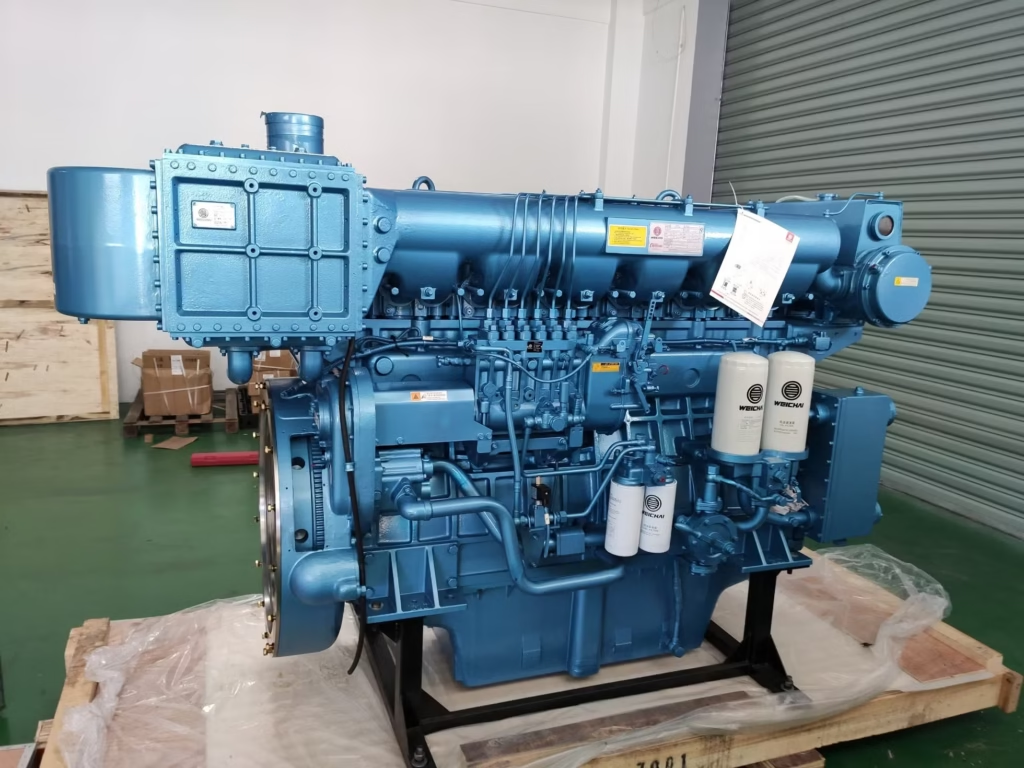
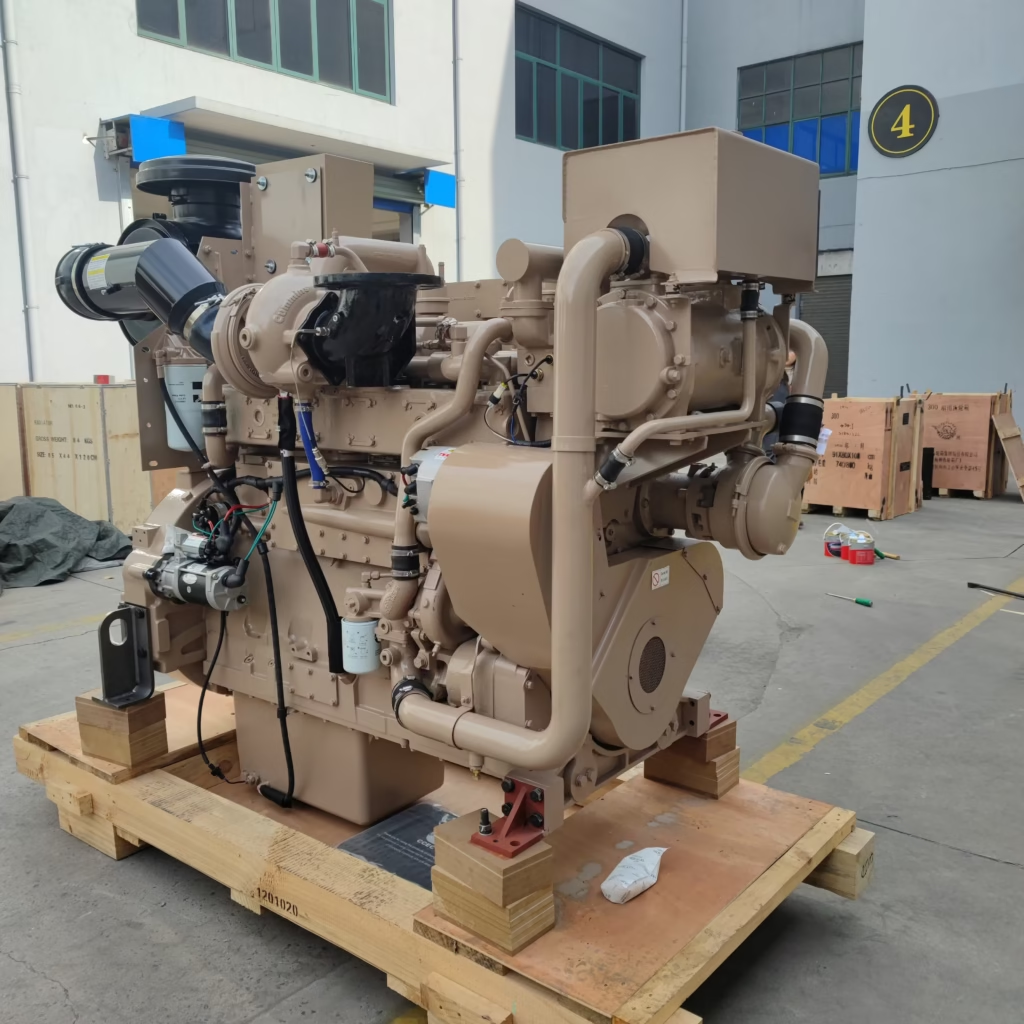
At Coastal Wave Marine, we supply commercial-rated engines from globally recognized manufacturers including:
- Yanmar commercial marine series
- Cummins continuous-duty configurations
- Perkins marine industrial platforms
- Volvo Penta commercial inboard ranges
Each manufacturer offers multiple duty classifications within the same horsepower range.
Selecting the correct configuration requires understanding:
- Intended annual hours
- Propeller load curve
- Gear ratio compatibility
- Cooling system design
- Vessel displacement and hull type
Proper sizing is a technical process, not a catalog selection.
How to Select the Correct Continuous Duty Marine Inboard Diesel Engine
When evaluating a continuous duty marine inboard diesel engine for long commercial operations, we advise operators to consider:
- Realistic Load Percentage
- Actual Annual Operating Hours
- Propeller and Gearbox Matching
- Cooling Method Selection
- Emission Compliance Requirements
- Long-Term Parts Availability
Underspecification leads to premature failure.
Overspecification increases unnecessary cost.
Correct specification protects your investment.
Maintenance and Operational Discipline
Even the most robust continuous duty engine requires:
- Scheduled oil analysis
- Cooling system inspection
- Injector maintenance
- Load management
Continuous duty does not mean “maintenance-free.”
It means engineered for sustained work within proper operating parameters.
Operators who follow recommended service intervals routinely exceed 15,000–25,000 operating hours before major overhaul.
Why Experience Matters When Choosing a Supplier
In high-ticket commercial propulsion, the supplier matters as much as the engine.
At Coastal Wave Marine, we provide:
- Pre-delivery inspection verification
- Commercial documentation support
- International logistics coordination
- Warranty registration guidance
- Technical consultation before and after purchase
A continuous duty marine inboard diesel engine is a long-term asset.
It should be supported accordingly.
Frequently Asked Questions About Continuous Duty Marine Inboard Diesel Engines
How many hours can a continuous duty marine inboard diesel engine run per year?
Technically unlimited, provided maintenance schedules are followed and load parameters remain within spec.
Is a continuous duty marine inboard diesel engine more fuel efficient?
For long-hour steady operations, yes. They are optimized for consistent working RPM efficiency.
What is the lifespan?
With proper maintenance, many exceed 15,000–25,000 operating hours before major overhaul.
Can I convert a recreational engine into continuous duty?
No. Duty rating is determined by design and engineering — not tuning.
Final Perspective: Engineering for Uptime
A commercial vessel cannot afford uncertainty.
Selecting the correct continuous duty marine inboard diesel engine for commercial maritime operations ensures:
- Reduced downtime
- Lower cost per operational hour
- Regulatory compliance
- Long-term reliability
The difference between recreational propulsion and continuous duty engineering is not subtle — it is structural.
If your vessel operates under sustained load, the decision is straightforward:
Choose the engine built for the work.
And choose a supplier who understands how that work is done.
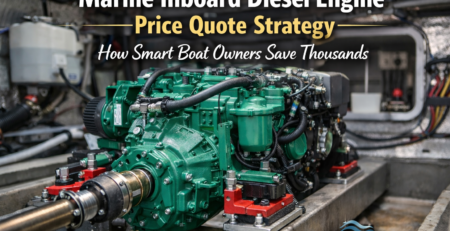
Next Post: Marine Inboard Diesel Engine Price Quote Strategy: How Smart Boat Owners Save Thousands
Leave a Reply