
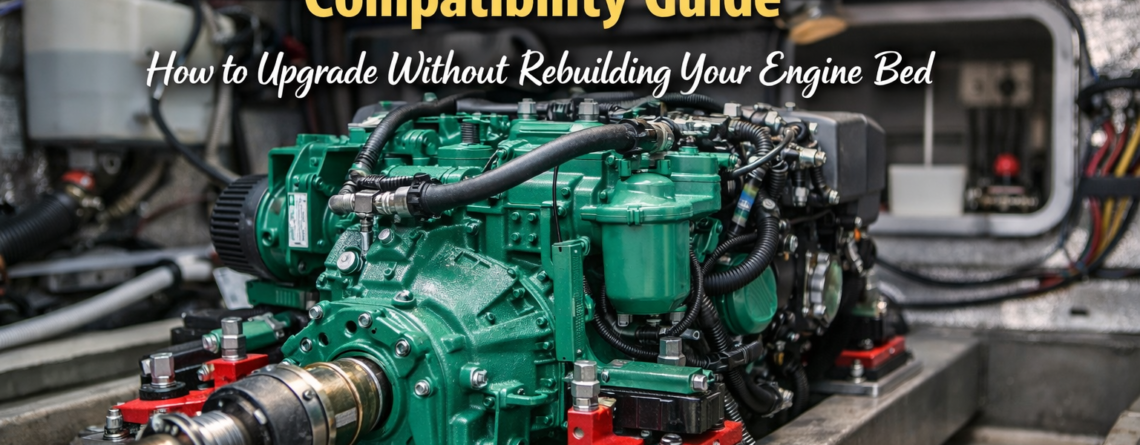
If you’ve ever opened your engine hatch and looked at a tired diesel thinking, “I need reliability, but I don’t want to tear this boat apart,” you’re asking the right question.
After years supplying and advising on inboard diesel repower projects at Coastal Wave Marine, I can tell you this:
Most engine bed rebuilds happen because compatibility wasn’t verified early enough.
Not because they were unavoidable.
This guide is built from real repower evaluations we’ve worked through — sportfishing vessels, commercial boats, cruisers — and it focuses on one goal:
How to execute an inboard diesel engine repower without unnecessary structural modification.
Understanding Engine Bed Compatibility the Right Way
When owners search for repower without modifying engine bed, what they’re really asking is:
“Can I install a new diesel without cutting fiberglass or rebuilding stringers?”
The answer depends on measurable geometry — not guesswork.
True marine engine repower compatibility comes down to:
- Mount footprint dimensions
- Crankshaft centerline height
- Transmission alignment
- Torque load capacity
- Structural integrity of stringers
These are not theoretical concepts. These are numbers we verify on every serious repower inquiry.
Mount Footprint: The First Non-Negotiable Measurement
In our experience evaluating repower projects, front and rear mount spacing determines 80% of structural outcomes.
Every inboard diesel engine has:
- Forward mount center-to-center measurement
- Rear mount center-to-center measurement
- Port-to-starboard mount spacing
If these differ significantly from your existing engine, modification becomes likely.
However — and this is important — many modern marine diesel engines are engineered with repower flexibility.
For example:
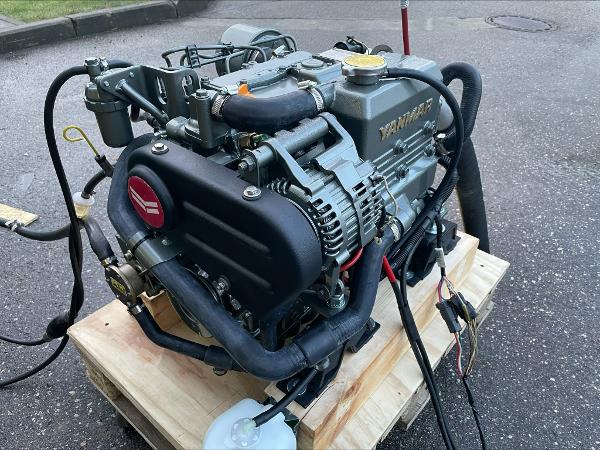
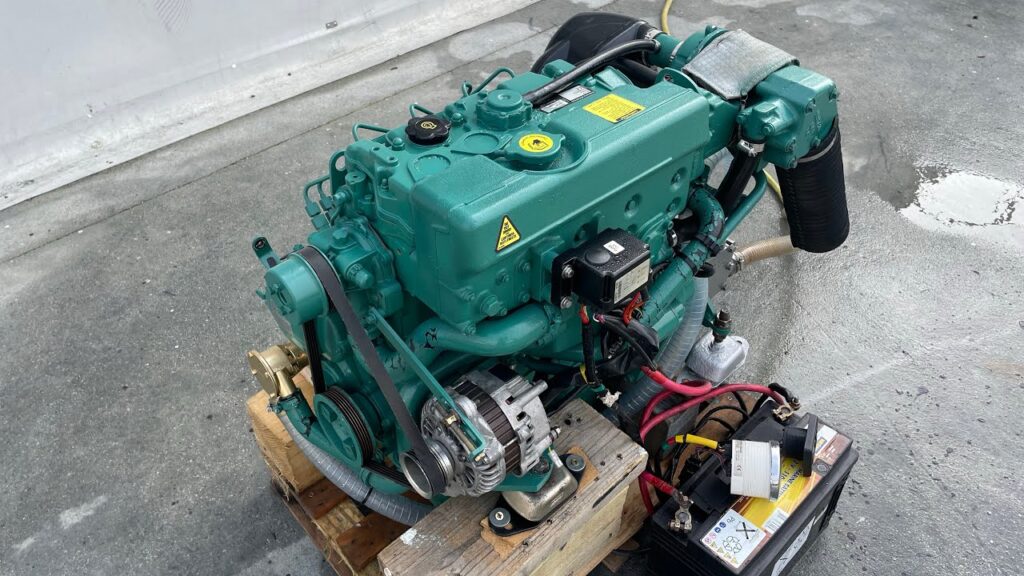
- Volvo Penta models with adjustable repower brackets
- Yanmar engines with compact mounting geometry
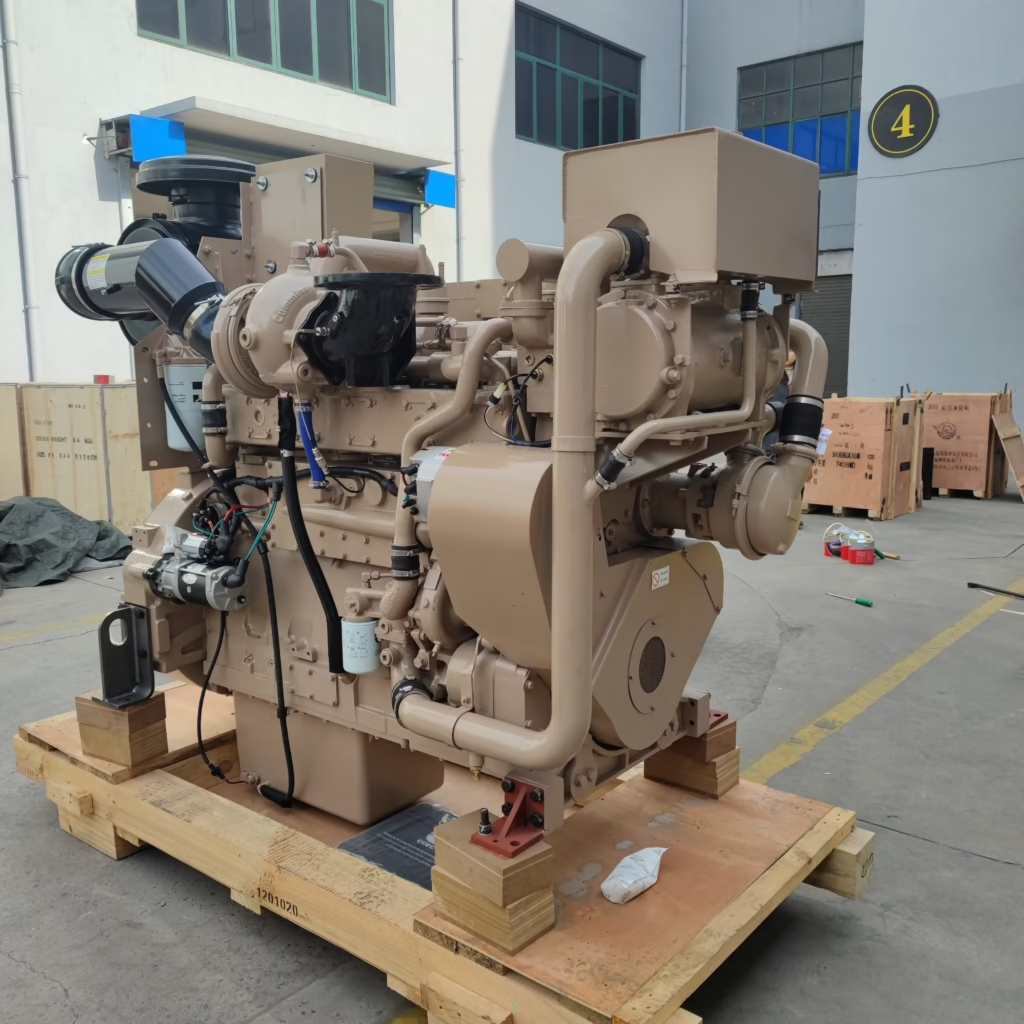
- Cummins marine engines maintaining consistent industrial footprints
We recently worked with a twin-engine cruiser owner replacing older mechanical diesels. After confirming mount centers were within tolerance and crank height aligned within 8mm, the project required only mount adjustment — not stringer reconstruction.
That is what real direct fit marine diesel engine compatibility looks like.
Crankshaft Centerline Height: Where Most DIY Repowers Fail
One of the most common technical mistakes in an upgrading inboard diesel engine project is ignoring crankshaft centerline height.
Your prop shaft alignment depends on it.
If the new engine sits too high or too low relative to the shaft:
- Coupler stress increases
- Vibration occurs
- Bearing wear accelerates
- Transmission seals fail prematurely
In professional repower evaluations, we always confirm:
- Existing shaft angle
- Crank-to-shaft alignment plane
- Adjustability range of new mounts
If the variance exceeds safe mount adjustment range, structural modification becomes necessary.
This is not opinion — it is mechanical reality. Check ABYC alignment standards.
Transmission Compatibility: The Overlooked Risk Factor
Many owners ask:
“Can I do an inboard diesel repower without replacing transmission?”
Often, yes — but only if:
- SAE housing pattern matches
- Gear ratio supports new torque curve
- Transmission torque rating exceeds engine output
- Rotation direction is correct
We have declined repower pairings in the past when torque output would have exceeded gearbox limits.
Why?
Because short-term savings should never compromise drivetrain reliability.
True marine diesel engine mount compatibility includes transmission and torque validation — not just bolt spacing. Read about SAE housing pattern classifications.
Weight & Load Distribution: Structural Integrity Matters
Modern common-rail diesel engines are often lighter than older blocks.
That can reduce static load on stringers.
However, increasing horsepower also increases torque.
And torque is what stresses:
- Shafting
- Couplers
- Engine beds
- Motor mounts
In commercial applications especially, we review:
- Shaft diameter
- Propeller pitch
- Hull load characteristics
This is how responsible marine engine vendors protect vessel longevity. Read more about marine diesel torque characteristics.
When You Can Avoid Rebuilding the Engine Bed
Based on real repower cases, you can usually avoid structural modification if:
- Mount footprint variance is minimal
- Crankshaft height aligns within mount adjustment tolerance
- Stringers are structurally sound
- Torque increase is moderate
- Transmission remains compatible
When these conditions are met, a professional inboard diesel engine repower can be executed efficiently and safely.
When Engine Bed Modification Is Unavoidable
We are transparent with clients when modification is required.
Structural work becomes necessary when:
- Upgrading significantly in horsepower
- Switching engine configuration (inline to V)
- Mount spacing differs substantially
- Stringers show fatigue or water intrusion
- Torque output exceeds shaft rating
Attempting to bypass structural requirements in these cases risks long-term mechanical failure.
Trustworthy marine consultation means saying “no” when necessary.
Hidden Compatibility Factors Many Overlook
From years advising repower projects, here are areas owners often underestimate:
Exhaust System Differences
New engines may require:
- Larger diameter exhaust hose
- Different water injection positioning
- Updated muffler capacity
Ignoring exhaust backpressure specifications can reduce engine lifespan.
Cooling System Requirements
Heat exchanger capacity must match horsepower output.
Raw water intake size and flow rate matter more than many realize.
Electrical & Control Systems
Modern diesel engines use:
- Electronic control modules
- Digital throttle systems
- CAN-bus integration
Repower projects involving mechanical-to-electronic transitions require careful harness planning.
This does not affect engine bed geometry — but it affects project execution.
Professional Compatibility Checklist
Before any engine order is finalized, we recommend confirming:
- Front and rear mount spacing
- Mount width
- Crankshaft centerline height
- Shaft angle
- Transmission model & ratio
- Torque rating
- Engine room clearance
- Exhaust diameter
- Structural condition of stringers
This structured approach prevents unnecessary engine bed reconstruction during a marine diesel engine upgrade.
Why Experience Matters in Repower Projects
Repower projects are not simply product purchases.
They are mechanical integrations.
At Coastal Wave Marine, our marine diesel engine category supports:
- Recreational vessel repower
- Commercial marine upgrades
- Twin-engine conversions
- Long-range cruising applications
We review dimensional data before recommending engines because mechanical fitment is not negotiable.
That process protects:
- Vessel value
- Drivetrain longevity
- Owner investment
Contact Coastal Wave Marine to request a repower compatibility review.
Frequently Asked Questions
Can I repower without replacing my transmission?
Often yes, if torque and housing pattern match. Always confirm compatibility first.
How do I know if my engine bed is reusable?
Inspect for structural integrity, measure mount spacing, and compare with new engine specs.
What engines are easiest for direct repower?
Compact diesels with similar mount geometry and crankshaft height are typically easiest.
Will upgrading horsepower damage my shaft?
If torque exceeds shaft rating, yes. Shaft diameter and prop sizing must match output.
How long does a diesel repower take?
Direct-fit installations can take days to a couple weeks. Structural modification extends timelines.
Final Perspective: Compatibility Before Horsepower
An inboard diesel engine repower should begin with measurements — not horsepower ambitions.
When geometry aligns, repower can be efficient and cost-controlled.
When geometry is ignored, projects escalate quickly.
Compatibility is not marketing language.
It is engineering discipline.
And when handled correctly, it allows boat owners to upgrade reliability and performance without unnecessary structural reconstruction.
Next Post: Marine Inboard Diesel Engines with Gearbox Included — The Hidden Advantage Dealers Rarely Explain



Leave a Reply