
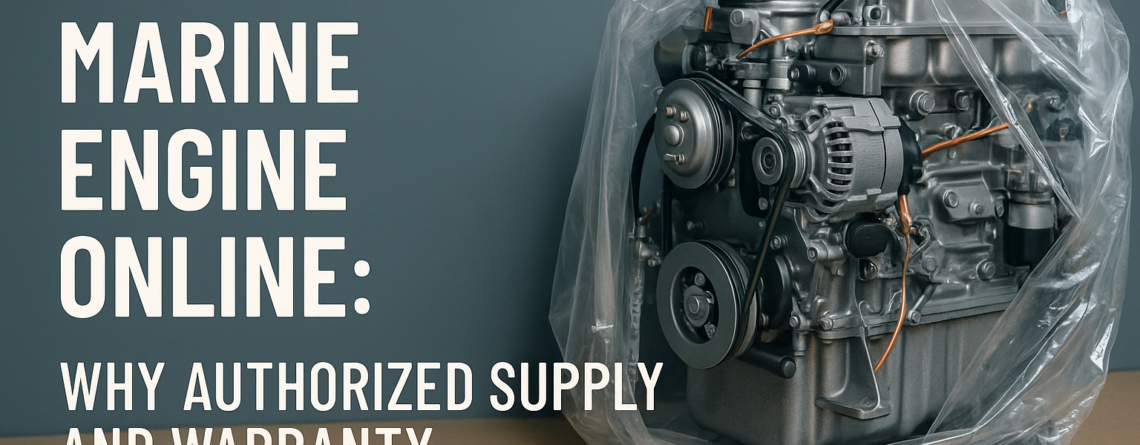
Purchasing a marine engine is not the same as buying ordinary equipment online. Marine engines are high-value, technically complex, and governed by manufacturer and export requirements that directly affect warranty validity, compliance, and long-term reliability.
Yet today, many buyers are faced with a growing number of online listings offering “new” engines with instant checkout and unclear sourcing. Understanding how a marine engine is supplied—and who stands behind it—has never been more important.
This article explains why authorized supply, correct documentation, and warranty registration are critical when purchasing a marine engine online.
Marine Engines Are Not Standard Retail Products
Unlike consumer goods, marine engines are:
- Serialized equipment
- Subject to manufacturer allocation and dealer controls
- Covered by strict warranty registration rules
- Often exported across borders with regulatory documentation
An engine that is incorrectly sourced, misconfigured, or improperly registered may appear legitimate at purchase but can result in:
- Delayed or denied warranty claims
- Installation compatibility issues
- Problems with customs clearance
- Difficulty obtaining manufacturer support later
This is why professional marine engine suppliers do not treat engines as “click-and-buy” items.
The Difference Between Reselling and Authorized Supply
There is a fundamental difference between:
- Reselling equipment, and
- Supplying engines through authorized channels
A reseller typically sells what is available to them—sometimes from mixed inventory, clearance stock, or secondary markets. While this can work for spare parts or low-value items, it carries risk for complete engines.
An authorized supply process, on the other hand, includes:
- Engine allocation through approved dealer or OEM networks
- Verification of engine specification and application
- Pre-delivery inspection (PDI)
- Manufacturer-compliant warranty registration
- Proper export and shipping documentation
This process protects both the buyer and the engine investment.
Why Warranty Registration Is Not Optional
Manufacturer warranties are not automatic.
For most marine engines, warranty coverage depends on:
- Correct engine allocation
- Accurate customer and installation details
- Registration within the manufacturer’s system
- Compliance with regional and export rules
Engines sold without proper registration may:
- Carry no valid warranty
- Be restricted to specific regions
- Require additional verification at the time of service
Professional suppliers ensure that warranty documentation is prepared before shipment, not after a problem arises.
Why Quotation-Based Ordering Is Standard in Marine Supply
Buyers sometimes ask why marine engines are not sold through instant online checkout like consumer products.
The reason is simple:
Every marine engine order is unique.
Factors such as:
- Gearbox selection
- Control systems
- Electrical configuration
- Emissions and regional compliance
- Shipping method and destination
must be verified before an engine is released.
A quotation-based process ensures:
- Correct engine configuration
- Transparent pricing
- Clear delivery scope
- Proper documentation
- Full traceability of the transaction
This approach reduces risk and avoids costly mistakes.
International Shipping Requires More Than a Courier
Marine engines are frequently shipped internationally and require:
- Commercial invoices
- Packing lists
- Bills of lading
- Export declarations
- Compliance or origin certificates (where applicable)
Incorrect paperwork can result in:
- Customs delays
- Unexpected duties or penalties
- Storage charges
- Rejected shipments
An experienced marine supplier coordinates these requirements as part of the supply process—not as an afterthought.
What to Look for in a Marine Engine Supplier
Before committing to a purchase, buyers should ask:
- Is the engine brand-new and traceable?
- Will the supplier handle warranty registration?
- Are pre-delivery checks performed?
- Is export documentation included?
- Is the order supported by a formal quotation and invoice?
Clear answers to these questions are a sign of a structured, professional supplier.
How Coastal Wave Marine Approaches Engine Supply
At Coastal Wave Marine, we operate as a marine engine supply and export specialist, not a retail trader.
Our process includes:
- Sourcing engines through authorized channels
- Allocating and reserving engines upon order confirmation
- Completing pre-delivery inspection
- Preparing manufacturer warranty documentation
- Managing export logistics and paperwork
This ensures that each engine we supply is properly documented, supported, and ready for long-term service.
Final Thoughts
Buying a marine engine online can be safe and efficient—but only when done through a supplier who understands the technical, legal, and manufacturer requirements behind the product.
Price alone should never be the deciding factor.
Correct supply, documentation, and warranty support protect your investment long after delivery.
If you are considering a new marine engine and would like guidance on configuration, supply, or export, working with a structured marine supplier can make all the difference.
Leave a Reply