
In the marine engine business, you don’t need market reports to know when something is changing. You see it in the questions buyers ask — and the ones they stop asking.
At Coastal Wave Marine, we supply marine inboard diesel engines to commercial operators, fleet managers, and vessel owners who care about long-term reliability, operating costs, and regulatory exposure. Over the past several years, one pattern has become impossible to ignore:
Buyers are no longer asking if hybrid assist works.
They’re asking why they wouldn’t use it.
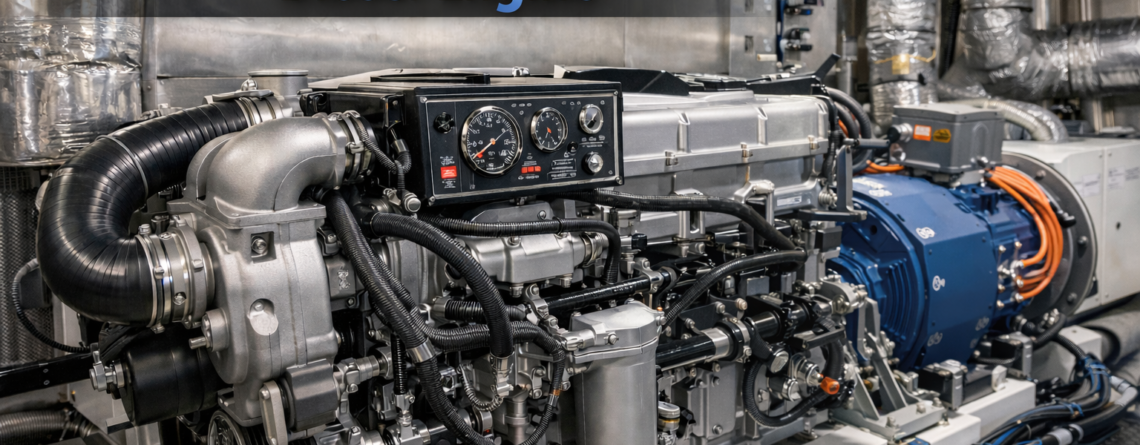
That shift explains why the hybrid assist marine inboard diesel engine is no longer viewed as experimental technology. It’s now a practical upgrade that solves real operational problems diesel-only systems struggle with.
How We Know Hybrid Assist Has Reached a Turning Point
Early on, hybrid assist conversations were cautious. Operators worried about complexity, serviceability, and reliability. Those concerns were valid at the time.
But today, the discussions sound very different.
We routinely hear questions like:
- “Where will electric assist reduce my diesel run hours?”
- “How does hybrid assist affect fuel burn at low load?”
- “What does this mean for long-term maintenance and resale?”
Those are not curiosity questions. Those are ownership questions.
They come from buyers who understand their vessels, track operating data, and make decisions based on lifecycle cost — not marketing claims.
That’s the clearest indicator that hybrid assist marine inboard diesel engines have moved into mainstream professional use.
What a Hybrid Assist Marine Inboard Diesel Engine Really Is
Let’s define this clearly, because misunderstanding leads to bad decisions.
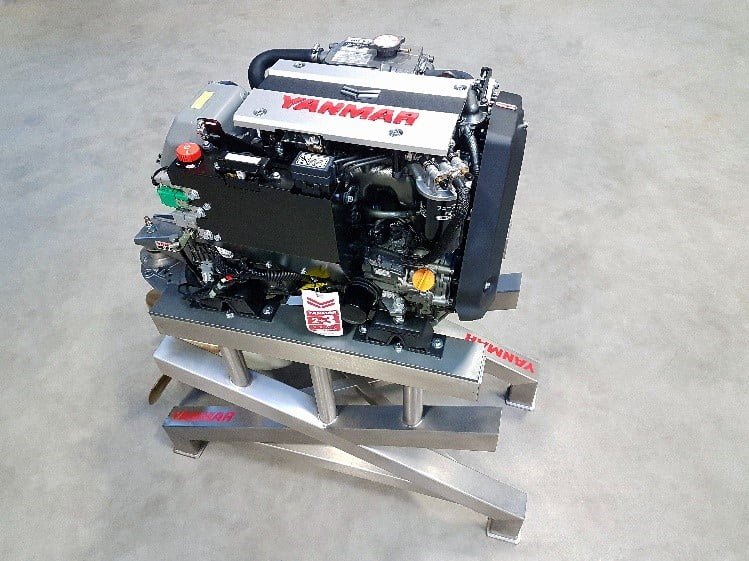
A hybrid assist marine inboard diesel engine is still a diesel propulsion system. The diesel engine remains the primary source of propulsion and range. The electric system exists to support the diesel — not replace it.
That distinction is critical.
Hybrid Assist vs Other Hybrid Concepts
- Hybrid assist marine inboard diesel engine
Diesel drives propulsion; electric motor assists during inefficient or high-load phases. - Full hybrid systems
Diesel and electric alternate as primary propulsion. - Electric-only propulsion
No diesel propulsion capability.
For most commercial and long-range vessels, hybrid assist offers the best balance of efficiency, reliability, and operational flexibility without introducing range anxiety or dependence on charging infrastructure.
Why Diesel-Only Systems Are Hitting Efficiency Limits
Diesel engines are proven, durable, and well understood — but they are not efficient across all operating conditions.
From real vessel data we review with clients, the least efficient operating phases are:
- Low-speed maneuvering
- Station keeping
- Variable load transitions
- Extended idle periods
In these conditions, diesel engines burn fuel without producing proportional propulsion. That’s not a defect — it’s a design reality.
This is exactly where hybrid assist marine inboard diesel engines for commercial vessels deliver measurable gains.
How Hybrid Assist Improves Real-World Efficiency
Electric Assist Where Diesel Performs Worst
Hybrid assist systems are designed to take over during operating phases where diesel efficiency drops:
- Docking and undocking
- Slow harbor transits
- Acceleration spikes
- Load smoothing during variable demand
Instead of forcing the diesel engine to operate inefficiently, electric assist absorbs those loads. The diesel stays closer to its optimal operating range.
This approach reduces fuel consumption and mechanical stress — two outcomes that matter more over time than peak horsepower numbers.
Keeping the Diesel in Its Optimal Operating Band
Diesel engines last longest and perform best when they operate within stable RPM and load ranges.
Hybrid assist allows:
- Fewer abrupt load changes
- Reduced low-RPM inefficiency
- More consistent combustion conditions
Over time, operators often see:
- Longer service intervals
- Lower maintenance costs
- More predictable engine behavior
Those benefits explain why hybrid assist marine inboard diesel engine efficiency upgrades are being adopted without regulatory pressure. You can check the marine engine emissions standards.
What We See Consistently as a Marine Engine Supplier
From a supplier standpoint, the strongest signal of adoption is not sales volume — it’s buyer evaluation behavior.
Where buyers once compared engines primarily by:
- Horsepower
- Brand name
- Initial price
They now evaluate:
- Duty cycle compatibility
- Fuel burn across operating modes
- Idle hours vs propulsion hours
- Total cost of ownership of hybrid assist marine inboard diesel engines
That shift reflects a more informed buyer — and it favors hybrid assist systems almost every time they are technically appropriate.
Fuel Savings: What’s Realistic and What Isn’t
Responsible vendors avoid exaggerated fuel-savings claims.
Actual savings depend on:
- Vessel type and displacement
- Operating profile
- How often electric assist is engaged
- System configuration
That said, vessels with high idle time or variable load profiles consistently report meaningful fuel reductions after implementing a hybrid assist marine inboard diesel engine system.
More importantly, these reductions are observable in fuel logs and maintenance records — not just projections.
Noise, Vibration, and Crew Fatigue
One benefit operators often underestimate is improved onboard experience.
Electric assist significantly reduces:
- Engine noise at low speeds
- Vibration transmitted through the hull
- Crew fatigue during long operating hours
For vessels with frequent harbor operations or extended duty cycles, this improvement alone can justify the upgrade.
Where Hybrid Assist Marine Inboard Diesel Engines Make the Most Sense
Commercial and Workboat Applications
Hybrid assist is particularly effective for:
- Tugs and pushboats
- Patrol and service vessels
- Ferries
- Offshore support craft
These vessels operate under variable loads and spend substantial time outside diesel’s efficiency sweet spot.
That makes hybrid assist marine inboard diesel engines for workboats a logical choice rather than a technological gamble.
Yachts and High-End Recreational Vessels
In recreational applications, owners prioritize:
- Quiet operation near port
- Reduced fuel consumption
- Future-ready propulsion
- Comfort without sacrificing range
Hybrid assist delivers these benefits while preserving diesel reliability and cruising autonomy.
Understanding Long-Term Operating Costs
Upfront Investment vs Lifecycle Economics
Hybrid assist systems do involve higher initial investment. That’s not controversial.
What matters is how that investment performs over time:
- Fuel savings
- Reduced diesel wear
- Maintenance predictability
- Asset resale value
When evaluated holistically, hybrid assist marine inboard diesel engine total cost of ownership often compares favorably to conventional diesel systems.
Battery Systems: Practical Expectations
Modern marine battery systems are:
- Designed for harsh environments
- Built with redundancy and monitoring
- Predictable in service life
They are not maintenance-free, but they are not fragile. Replacement timelines can be planned and budgeted — which is what professional operators care about. You can check the hybrid marine propulsion technology.
Common Misconceptions We Still See
“Hybrid Assist Is Too Complex”
Most hybrid assist systems are designed with fail-safe logic. If the electric system is unavailable, the diesel continues operating normally.
This redundancy is why hybrid assist marine inboard diesel engines are accepted even in mission-critical commercial applications.
“Hybrid Assist Only Works on New Builds”
While new builds are ideal, hybrid assist marine inboard diesel engine retrofits are possible in many cases.
Feasibility depends on space, electrical capacity, and operating profile — not assumptions.
How Coastal Wave Marine Approaches Hybrid Assist Projects
Our role is not to push technology. It’s to match solutions to reality.
At Coastal Wave Marine, we focus on:
- Understanding how the vessel actually operates
- Evaluating whether hybrid assist delivers measurable benefit
- Selecting systems that integrate cleanly and predictably
- Planning for long-term ownership, not just installation
Sometimes hybrid assist is the right answer. Sometimes conventional diesel remains the better choice. Honest assessment builds trust — and prevents costly mistakes.
Frequently Asked Questions About Hybrid Assist Marine Inboard Diesel Engines
Does hybrid assist reduce range?
No. Diesel remains the primary propulsion source.
What happens if the electric system fails?
The diesel engine continues operating normally.
Is maintenance more complicated?
Hybrid assist often reduces diesel wear, which can lower overall maintenance demands.
Is hybrid assist future-proof?
Yes. It aligns with evolving efficiency, emissions, and operational expectations.
Why Hybrid Assist Is Becoming a Permanent Upgrade Path
From our position in the supply chain, this is not a passing trend.
A hybrid assist marine inboard diesel engine addresses diesel’s real weaknesses without compromising its strengths. It improves efficiency, reduces wear, lowers operational noise, and prepares vessels for evolving regulatory and economic pressures.
That combination is why adoption continues to grow — not because operators are forced, but because it makes operational sense.
Once vessel owners experience hybrid assist in daily operation, very few choose to return to diesel-only propulsion.
Next post: Why IMO Emissions Compliant Marine Inboard Diesel Engines Are Replacing Older Power Systems
Leave a Reply