
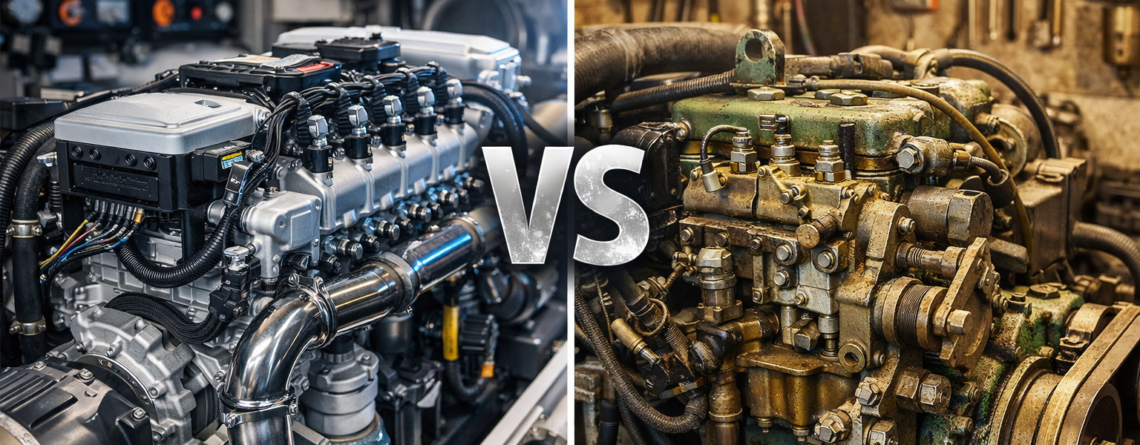
If you’ve been researching marine engines seriously—talking to shipyards, mechanics, or suppliers—you’ve probably heard this exact question more than once:
common rail marine inboard diesel engine vs mechanical — which one is actually better?
As a marine engine vendor, I can tell you something upfront:
Anyone who gives you a one-line answer is oversimplifying a decision that can affect years of operating cost, reliability, and downtime.
At Coastal Wave Marine, we don’t just sell engines. We support owners before the purchase, during installation, and long after the engine has gone to work. That means we hear the full story—what performs well, what breaks, what’s expensive to maintain, and what owners wish they had chosen differently. You can browse our store if looking for marine inboard diesel engines for sale.
This article is written from that real-world perspective.
Why This Comparison Matters (From the Field, Not the Brochure)
Fifteen years ago, most buyers never asked this question. Mechanical marine diesel engines were the standard. Today, common rail marine inboard diesel engines dominate new production.
The problem is that technology moved faster than buyer education.
I’ve personally handled cases where:
- A modern common rail engine was installed on a vessel operating in fuel-inconsistent regions
- A mechanical engine was chosen for a luxury yacht where smoothness and fuel efficiency mattered more than field repair
In both cases, the engine itself wasn’t the problem—the application mismatch was.
That’s why understanding common rail marine inboard diesel engine vs mechanical isn’t about trends. It’s about suitability.
What Is a Common Rail Marine Inboard Diesel Engine? (Practically Explained)
A common rail marine inboard diesel engine uses an electronically controlled fuel injection system that stores fuel in a shared, high-pressure rail. Injection timing and quantity are managed by an ECU using real-time sensor data.
What This Means in Real Use
From our experience supplying these engines:
- Power delivery is smoother across RPM ranges
- Fuel atomization is more precise
- Noise and vibration are noticeably reduced
This matters most on:
- Modern yachts
- High-speed or performance-oriented vessels
- Boats running long cruising hours where fuel efficiency compounds over time
In a common rail marine inboard diesel engine vs mechanical comparison, this is where common rail immediately feels more refined. You can read more about the common rail fuel injection technology.
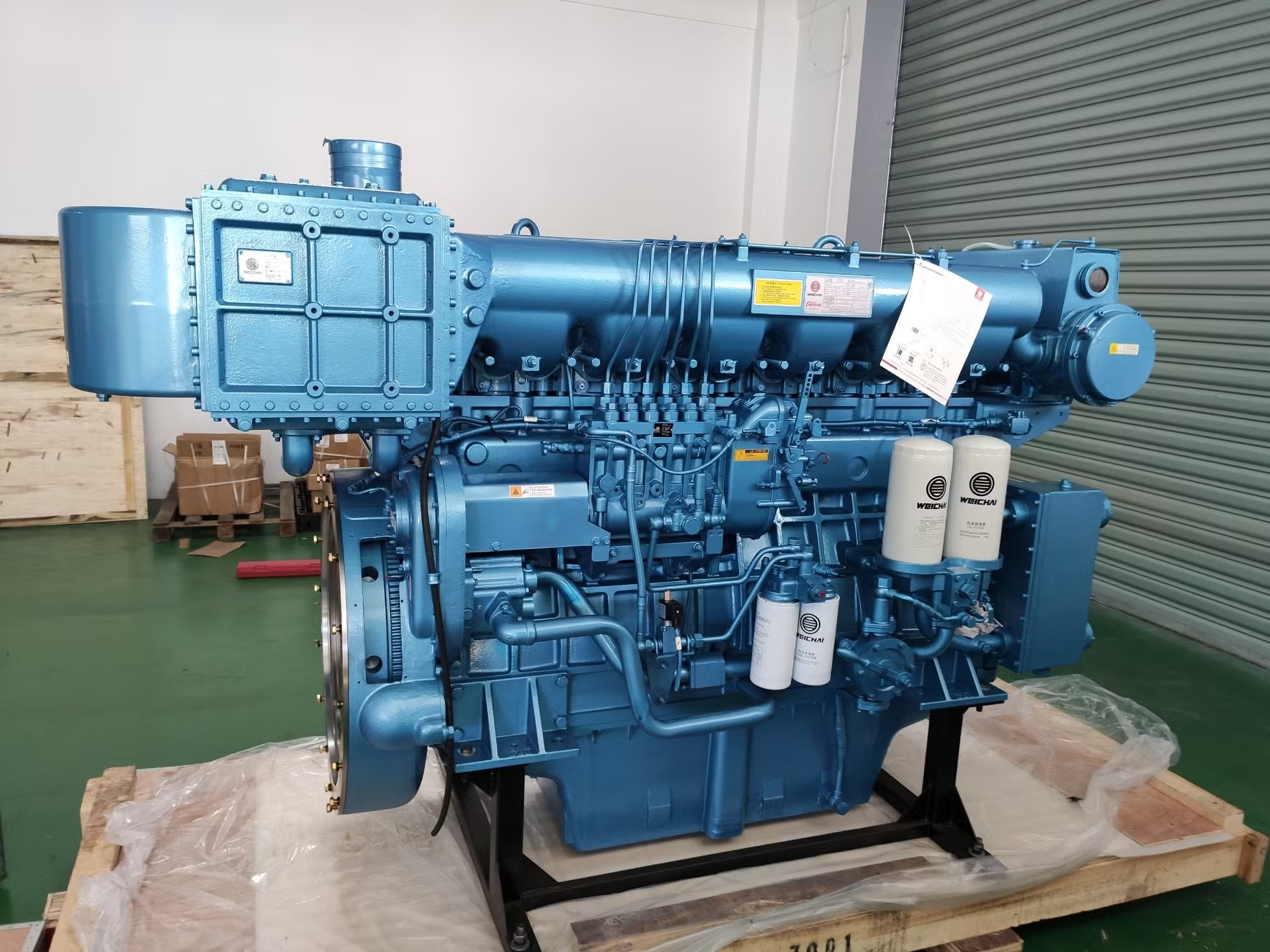
What Is a Mechanical Marine Inboard Diesel Engine? (Why It Still Matters)
A mechanical marine inboard diesel engine relies on a mechanically driven injection pump. There’s no ECU, no sensor-based correction, and minimal electronics.
Why This Is Still Relevant in 2026
In our supply and support history:
- Mechanical engines tolerate inconsistent fuel far better
- Repairs can often be performed without specialized diagnostic equipment
- Downtime risk is lower in remote regions
That’s why mechanical engines remain dominant in:
- Commercial fishing
- Workboats
- Offshore and developing regions
Simplicity isn’t outdated—it’s strategic.
Performance Comparison: Common Rail vs Mechanical (What Owners Notice)
Throttle Response and Load Handling
Common rail marine inboard diesel engines:
- Respond faster to throttle input
- Maintain smoother torque curves
- Adjust dynamically under varying load
Mechanical engines:
- Deliver consistent, predictable power
- Feel more “direct” and mechanical
- Lack adaptive correction but rarely surprise you
Neither system is objectively superior. They’re designed for different operational philosophies.
Fuel Use: Where Numbers Meet Reality
Fuel efficiency is one of the most misunderstood parts of the common rail marine inboard diesel engine vs mechanical debate.
Common Rail Fuel Behavior
In controlled and real-world conditions, common rail systems:
- Reduce fuel waste at partial throttle
- Improve efficiency during long cruising
- Offer measurable fuel savings over time
Mechanical Fuel Behavior
Mechanical systems:
- Consume more fuel under variable RPM
- Remain stable and predictable
- Avoid efficiency loss due to sensor or ECU faults
From a vendor standpoint, fuel savings only matter if the engine stays operational.
Maintenance: The Part Most Buyers Underestimate
Maintaining a Common Rail Marine Inboard Diesel Engine
From service feedback we receive:
- Fuel cleanliness is non-negotiable
- Injector replacement is precise and costly if neglected
- Diagnostics require trained technicians
When maintained correctly, common rail engines perform exceptionally. When ignored, repair costs escalate quickly.
Maintaining a Mechanical Marine Inboard Diesel Engine
Mechanical engines:
- Allow field repairs
- Tolerate imperfect maintenance schedules
- Are easier to keep running under pressure
This difference alone has saved some of our commercial clients weeks of downtime per year. You can read more about marine diesel engine maintenance standards.
Reliability and Longevity (What Lasts in the Real World)
We track engines not just at sale, but years later.
Common Rail Longevity
With proper service and clean fuel:
- Long engine life
- Reduced internal wear
- Consistent performance over time
Mechanical Longevity
Mechanical engines excel when:
- Conditions are harsh
- Service intervals vary
- Long-term survivability matters more than refinement
I’ve personally seen mechanical engines remain operational long after the vessel around them was refitted. You need to understand marine engine classification requirements.

Cost Breakdown: Purchase vs Ownership (Vendor Transparency)
Upfront Costs
- Common rail engines cost more initially
- Installation may require electronic integration
Long-Term Costs
- Common rail: lower fuel cost, higher service precision
- Mechanical: higher fuel cost, lower repair complexity
The “cheapest” option depends entirely on how the vessel is used.
Which Engine Should You Choose?
Choose Common Rail If:
- You operate a modern yacht
- Fuel efficiency and comfort matter
- Professional service is readily available
Choose Mechanical If:
- You operate commercially
- You work in remote regions
- Reliability under imperfect conditions is critical
This is exactly how we guide buyers at Coastal Wave Marine—based on usage, not assumptions.
Common Buyer Mistakes We See (And Correct)
- Buying horsepower without considering torque curves
- Ignoring fuel quality realities
- Choosing technology without service access
- Underestimating long-term operating costs
Every one of these mistakes shows up later as downtime or expense.
Vendor Perspective: Why Neutral Advice Matters
We supply marine inboard diesel engines, generators, and gearboxes globally. Our reputation depends not on selling the most expensive engine—but on supplying the right one.
That’s why we’re transparent about both systems.
Final Verdict: Common Rail Marine Inboard Diesel Engine vs Mechanical
There is no universal winner in the common rail marine inboard diesel engine vs mechanical discussion.
- Common rail offers efficiency, refinement, and modern performance
- Mechanical offers durability, simplicity, and operational confidence
The right choice is the one aligned with how your vessel actually works, not how a brochure describes it.
Choosing with Confidence
At Coastal Wave Marine, our role is to help buyers make informed decisions—before money is spent and before problems appear. You can contact us if looking for an expert marine engine supplier.
When chosen correctly, both common rail and mechanical marine diesel engines are excellent solutions.
The difference is not the engine.
It’s the application.
Next Post: Hybrid Assist Marine Inboard Diesel Engine: The Power Upgrade Redefining Marine Efficiency
Leave a Reply