
If you operate a commercial vessel, you already understand something recreational boaters don’t:
Downtime is not an inconvenience.
It’s a liability.
At Coastal Wave Marine, we supply commercial marine inboard diesel engines and propulsion systems to operators in fishing, offshore support, cargo transport, and government service. One pattern we consistently observe is this:
The most profitable operators are the ones who eliminate surprises.
And that is exactly what a marine diesel engine telematics monitoring system is designed to do.
This is not marketing technology.
It is operational risk management.
What a Marine Diesel Engine Telematics Monitoring System Actually Does
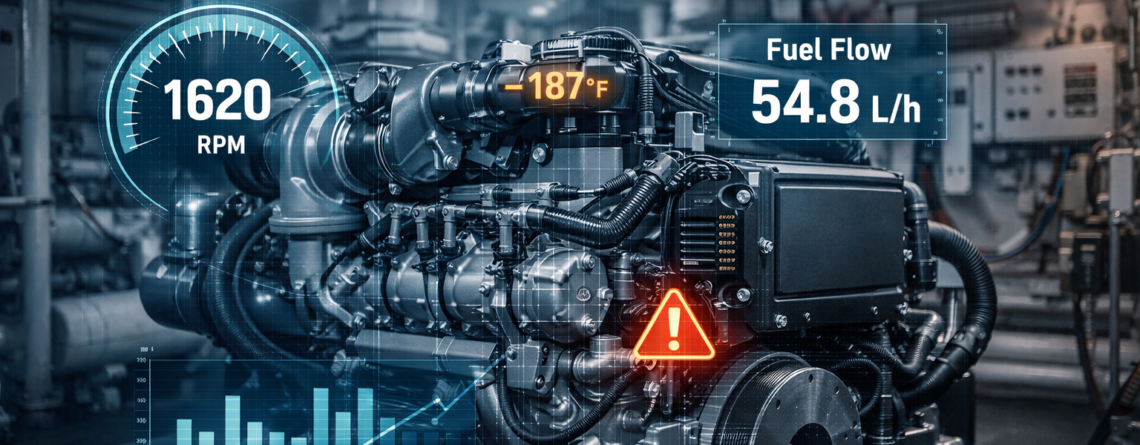
A marine diesel engine telematics monitoring system connects directly to your engine’s electronic control module (ECM) and onboard sensor network to collect real-time performance data.
That data typically includes:
- Engine RPM and load percentage
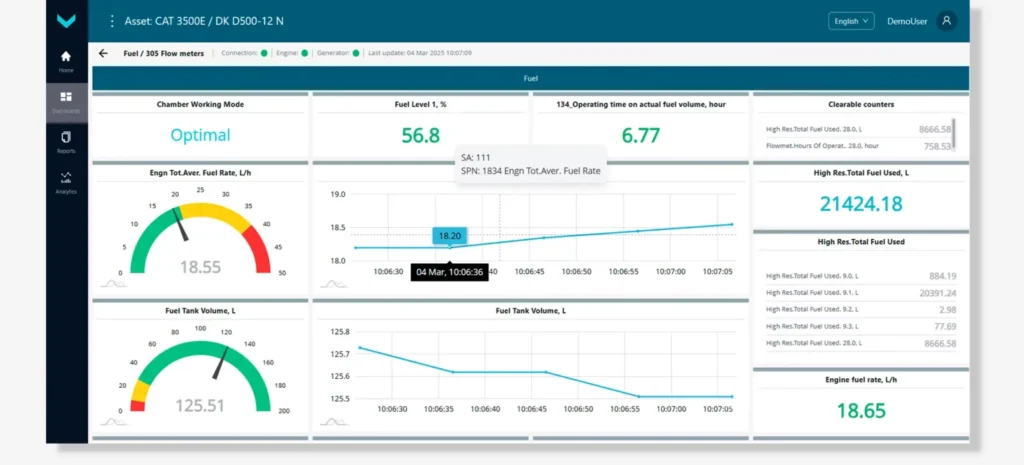
- Fuel consumption rate
- Oil pressure and temperature
- Coolant temperature
- Turbocharger boost pressure
- Operating hours
- Fault codes and warning events
This information is securely transmitted — via cellular or satellite communication — to a remote monitoring platform accessible to fleet managers or shore-side technical teams.
In short:
It transforms your propulsion system into a connected asset.
Experience From the Field: Why This Matters
We have worked with operators who experienced:
- Sudden overheating offshore
- Fuel efficiency drops that went unnoticed
- Overspeed events during heavy load
- Maintenance intervals missed due to inaccurate logging
In several cases, post-failure analysis revealed that early warning signs were present in engine data — but no system was in place to capture and interpret them remotely.
A properly configured commercial vessel engine telematics monitoring system would have flagged those trends days or even weeks in advance.
That difference is not theoretical.
It is financial.
How Telematics Improves Commercial Vessel Reliability
A modern marine diesel engine telematics monitoring system for commercial fleets enhances reliability in four key ways:
1. Continuous Data Capture
Traditional monitoring relies on periodic human observation.
Telematics collects performance data continuously from:
- ECM outputs
- CAN bus systems
- NMEA 2000 networks
- Digital throttle integration modules
This removes guesswork.
2. Predictive Maintenance Planning
Instead of servicing engines strictly by calendar intervals, operators can analyze real operating conditions.
A properly implemented predictive maintenance marine diesel engine monitoring system allows service decisions based on:
- Actual engine load patterns
- Temperature trends
- Fuel burn irregularities
- Runtime hours
This reduces both under-servicing and unnecessary maintenance.
3. Early Fault Detection
Modern electronically controlled engines already log fault codes.
Telematics makes those codes visible remotely.
A marine diesel engine telematics monitoring system with remote diagnostics allows shore-based technicians to:
- Review active fault events
- Analyze performance history
- Determine severity before dispatching service
This reduces unnecessary downtime and emergency callouts.
4. Fuel Optimization & Operational Efficiency
Fuel is one of the highest recurring operational costs for commercial vessels.
Telematics data enables:
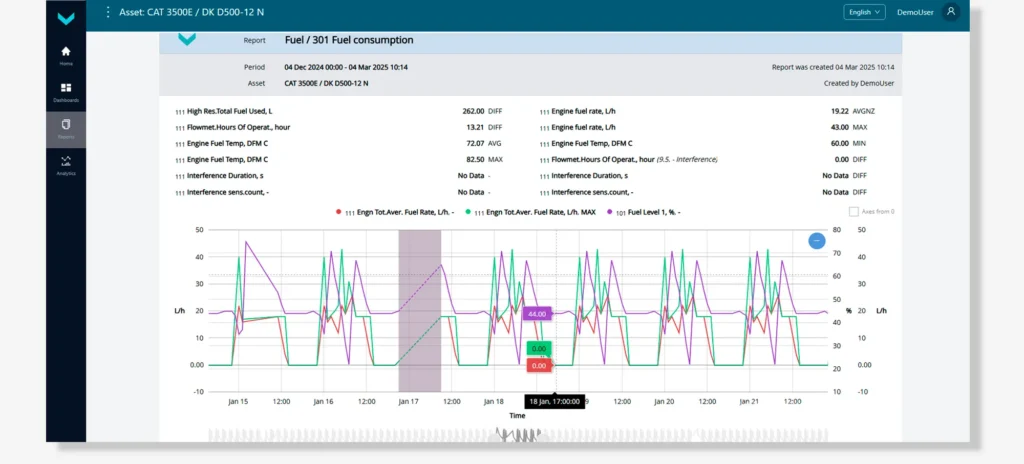
- Idle time tracking
- Load efficiency analysis
- Route-based fuel burn comparison
- Operator performance benchmarking
A structured marine diesel engine performance tracking system provides measurable fuel efficiency improvements when properly analyzed. Learn about the common rail diesel injection technology.
Regulatory and Compliance Considerations
Many commercial operators must comply with emissions regulations and maintenance documentation requirements.
A marine diesel engine telematics monitoring system for regulated vessels supports:
- Engine hour logging
- Maintenance interval verification
- Fuel consumption records
- Compliance documentation
This is especially valuable for operators subject to inspection or environmental reporting requirements. Read the EPA marine engine regulations.
Telematics vs Traditional Monitoring: A Practical Comparison
Traditional Approach:
- Analog gauges
- Manual logbooks
- Reactive repairs
- Delayed troubleshooting
Telematics-Enabled Approach:
- Real-time data streaming
- Historical performance analytics
- Automated alerts
- Predictive maintenance scheduling
- Remote fault interpretation
The operational model shifts from reactive to preventative.
For high-hour commercial vessels, that distinction is critical.
Integration With Modern Marine Diesel Engines
Most modern electronically controlled marine inboard diesel engines supplied by Coastal Wave Marine are telematics-compatible.
Integration typically occurs through:
- ECM data ports
- CAN bus interfaces
- Fleet monitoring software platforms
- Secure communication modules
For repower projects, implementing a marine diesel engine telematics system for commercial repower installations ensures the vessel remains future-ready and compatible with modern fleet management infrastructure.
Return on Investment: A Commercial Perspective
Telematics is not about convenience. It is about cost control.
Preventing a single catastrophic failure can offset years of telematics subscription and hardware investment.
Savings commonly arise from:
- Reduced emergency repair costs
- Fewer unplanned service interruptions
- Improved fuel efficiency
- Extended overhaul intervals
- Lower contract penalty exposure
For vessels operating daily or seasonally at high utilization rates, ROI is often realized quickly.
Installation and Operational Responsibility
A marine diesel engine telematics monitoring system requires:
- Stable electrical infrastructure
- Proper wiring integration
- Secure data transmission configuration
- Crew awareness of alert protocols
Telematics is not “install and forget.” It is a management tool that must be monitored and interpreted correctly.
At Coastal Wave Marine, we advise clients to work with qualified marine technicians for installation and ensure crew training is included in the implementation process.
Coastal Wave Marine’s Role
Coastal Wave Marine supplies commercial marine inboard diesel engines engineered for telematics integration and long-term operational reliability.
Our support includes:
- Engine selection consultation
- Telematics-ready configuration guidance
- Repower project planning
- Export documentation coordination
- Technical advisory services
We do not modify OEM control systems or bypass safety protections. All systems are supplied in accordance with manufacturer specifications and applicable compliance standards.
Our objective is simple:
Deliver propulsion systems that support uptime, compliance, and operational transparency.

Frequently Asked Questions (FAQs)
What data does a marine diesel engine telematics monitoring system collect?
A marine diesel engine telematics monitoring system collects real-time engine data such as RPM, load percentage, fuel consumption, oil pressure, coolant temperature, boost pressure, operating hours, and fault codes. This data helps operators track performance and detect issues early.
Can telematics be added to older engines?
In many cases, yes. Telematics can often be retrofitted to older electronically controlled engines through ECM or CAN bus integration. However, fully mechanical engines may require additional sensors or interface modules to enable monitoring.
Does telematics require internet access at sea?
Yes, for real-time monitoring. Nearshore vessels typically use cellular networks, while offshore vessels rely on satellite connectivity. Data can also be stored locally and transmitted once a connection is available.
Is data secure?
Reputable marine diesel engine telematics monitoring systems use encrypted data transmission and secure cloud platforms to protect operational information from unauthorized access.
How much can it reduce downtime?
While results vary by operation, telematics significantly reduces unplanned downtime by enabling early fault detection and predictive maintenance. Preventing even one major engine failure can save days or weeks of lost service.
Final Perspective
A marine diesel engine telematics monitoring system is not a trend.
It is a risk mitigation tool for commercial marine operators.
It improves:
- Operational visibility
- Maintenance planning
- Fuel efficiency
- Regulatory documentation
- Long-term engine protection
In modern commercial marine operations, data is no longer optional.
It is part of responsible fleet management.
And for revenue-generating vessels, proactive monitoring is not a luxury.
It is a competitive advantage.

Leave a Reply