
When we deliver a modern electronically controlled marine diesel engine to a client — whether it’s a commercial fishing vessel, patrol craft, or luxury yacht — one of the first things we explain is this:
The engine is no longer just mechanical.
It’s managed.
At Coastal Wave Marine, we supply OEM marine inboard diesel engines from globally recognized manufacturers including Yanmar, Cummins, Perkins, Volvo Penta, and other Tier-compliant marine propulsion brands. Over the years, one recurring issue we’ve seen isn’t engine failure — it’s misunderstanding.
Most boat owners don’t fully understand how a marine inboard diesel engine electronic control system works — and that lack of clarity can lead to improper maintenance decisions or unnecessary concern when fault codes appear.
Let’s clarify it properly.
What Is a Marine Inboard Diesel Engine Electronic Control System?
A marine inboard diesel engine electronic control system is the integrated digital management platform responsible for:
- Fuel injection timing and quantity
- Turbocharger boost control
- Air-to-fuel ratio calibration
- Engine speed regulation
- Emissions compliance
- Fault monitoring and protective shutdown protocols
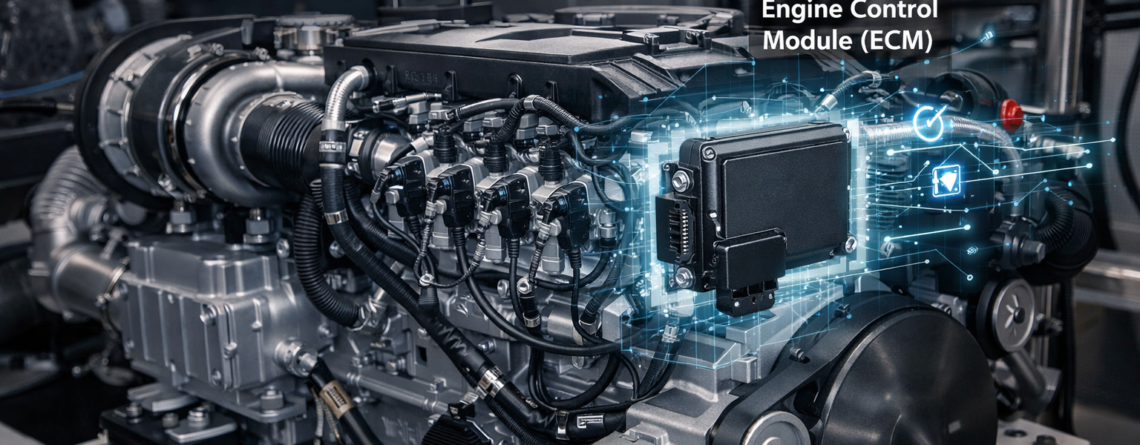
At the core of the system is the ECM (Engine Control Module), sometimes referred to as an ECU.
In modern marine propulsion systems — particularly electronically controlled common rail diesel engines — the ECM continuously processes sensor data and adjusts engine performance parameters in real time.
This is not experimental technology.
It is standard across modern commercial and recreational marine engines.
Why the Industry Transitioned Away from Mechanical Systems
For decades, mechanical injection systems dominated marine propulsion. They were durable and simple.
However, they lacked:
- Dynamic fuel mapping
- Real-time engine protection
- Emissions control capability
- Integrated diagnostics
- Digital helm compatibility
As global emissions regulations tightened and vessel performance demands increased, manufacturers transitioned to electronically managed systems.
Today, if you are purchasing a new marine inboard diesel engine for commercial or regulated waters, electronic control is not optional — it is required for compliance and operational efficiency.
How the Electronic Control System Actually Works
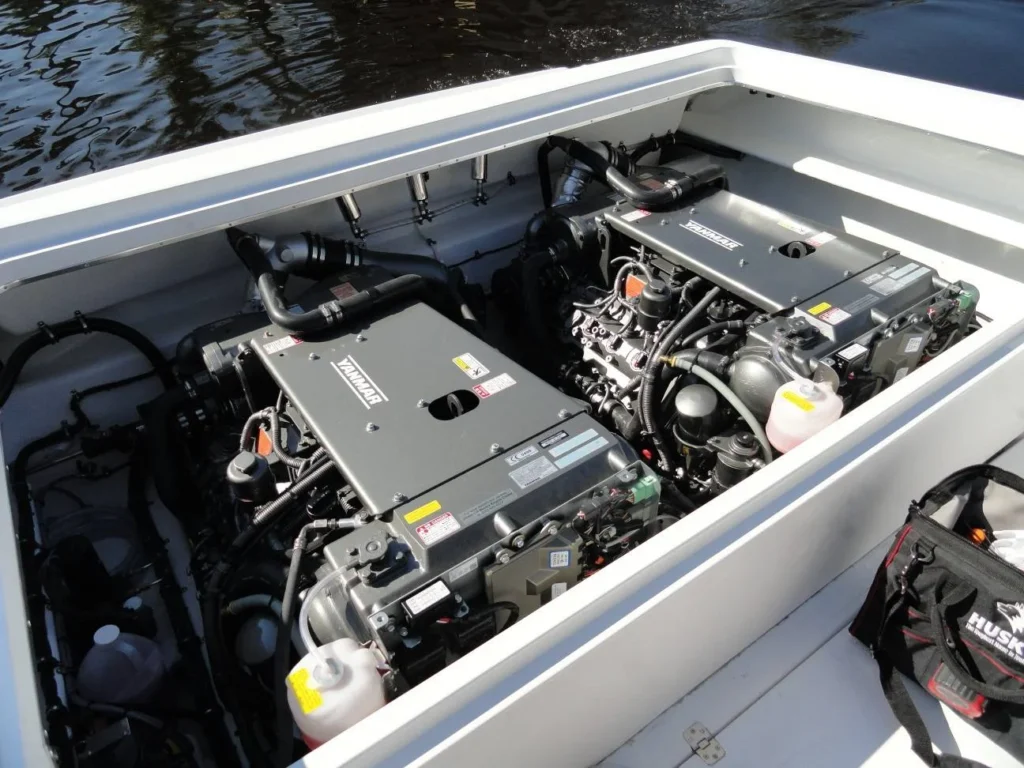
From a technical perspective, the marine inboard diesel engine electronic control system operates through a closed-loop management process.
When the engine starts:
- Crankshaft and camshaft sensors determine position and timing.
- Fuel rail pressure sensors report injection pressure.
- Intake air temperature and boost sensors calculate air density.
- Coolant temperature sensors monitor thermal conditions.
- The ECM calculates optimal injection timing in milliseconds.
- Turbo actuator commands adjust boost pressure accordingly.
This process repeats continuously — often hundreds of times per second.
If any parameter exceeds safe thresholds — such as low oil pressure, overheating, or overboost — the ECM initiates protective measures.
In many cases, what owners interpret as “engine trouble” is actually proactive engine protection.
We have seen multiple cases where a marine diesel engine ECM diagnostics system prevented catastrophic engine damage by reducing power output when abnormal readings were detected.
That is not a flaw.
That is engineered protection.
Real-World Insight: What We See Most Often
In our experience supplying electronically controlled marine diesel engines internationally, the most common issues are not ECM failures.
They are:
- Improper battery grounding
- Corroded wiring harness connections
- Voltage instability
- Water intrusion in connectors
- Unapproved electrical modifications
The ECM itself is rarely the failure point.
In one case involving a twin-engine commercial vessel, repeated limp-mode activation was traced back to unstable alternator voltage — not a defective control system.
Understanding this distinction matters.
Key Components of a Marine Inboard Diesel Engine Electronic Control System
Engine Control Module (ECM)
The central processing unit responsible for:
- Injection mapping
- Load response calibration
- Fault logging
- Safety shutdown triggers
Sensor Network
Including:
- Fuel rail pressure sensors
- Boost pressure sensors
- Coolant temperature sensors
- Oil pressure sensors
- Crankshaft and camshaft position sensors
- Exhaust gas temperature sensors
Each sensor feeds precise data to the ECM for real-time calculation.
Electronic Fuel Injection System
Modern common-rail systems allow:
- Precise injection timing
- Multiple injection events per cycle
- Improved fuel atomization
- Reduced combustion noise
This is a core reason why a high performance marine inboard diesel engine electronic control system delivers improved fuel efficiency compared to mechanical injection systems.
Performance Benefits Backed by Engineering
When properly maintained, electronically controlled marine diesel engines provide:
- Optimized fuel consumption
- Smoother throttle response
- Reduced internal engine stress
- Lower emissions output
- Integrated digital monitoring capability
- Extended service intervals
For commercial operators, this translates into lower operating costs and reduced downtime.
For recreational owners, it means smoother operation and improved helm integration.
Electronic vs Mechanical Marine Diesel Engines
While mechanical engines remain in service worldwide, the advantages of electronically managed systems include:
- Real-time performance optimization
- Built-in diagnostics
- Automated safety protocols
- Digital throttle integration
- Compliance with modern emissions standards
Mechanical engines cannot dynamically adjust injection timing based on load, temperature, and atmospheric conditions.
Electronic systems can.
Compliance and Regulatory Considerations
Many jurisdictions now require engines that meet emissions standards such as IMO, EPA Tier, or equivalent marine regulations.
Electronic control systems are essential for achieving and maintaining these compliance thresholds.
For operators in regulated commercial waters, this is not merely a preference — it is a legal requirement.
Maintenance Responsibilities
Electronic control systems do not eliminate maintenance requirements.
They require:
- Stable voltage supply
- Proper battery condition
- Corrosion-free connectors
- Regular diagnostic checks
- Software calibration verification when recommended by OEM
At Coastal Wave Marine, we advise all clients to maintain proper electrical system integrity and consult certified marine technicians for diagnostic procedures.
Integration With Modern Marine Systems
A modern marine inboard diesel engine electronic control system with digital throttle integration allows compatibility with:
- NMEA 2000 networks
- Digital helm displays
- Remote vessel monitoring systems
- Engine synchronization modules
- Fleet management software
This level of integration significantly improves operational transparency and maintenance scheduling.
When Should You Consider Upgrading?
You may consider upgrading to a modern electronically controlled marine diesel engine if:
- Your current engine lacks emissions compliance
- Fuel efficiency is declining
- You require digital helm integration
- Diagnostic limitations are increasing downtime
- You are planning a marine engine repower project
Modern repower installations often include fully integrated marine diesel engine electronic control systems for commercial vessels to improve operational reliability and long-term efficiency. Read about the common rail diesel injection technology.
Coastal Wave Marine: Our Role
At Coastal Wave Marine, we specialize in supplying OEM marine inboard diesel engines equipped with advanced electronic control systems for commercial and recreational applications worldwide.
Our services include:
- Technical engine selection consultation
- Calibration verification
- Export documentation and logistics
- International shipping coordination
- After-sales guidance
We do not modify factory calibration settings or bypass protective systems. We supply engines according to OEM specifications and compliance standards.
Our objective is to ensure clients understand both the capabilities and responsibilities associated with electronically controlled marine propulsion systems.

Frequently Asked Questions (FAQs)
What does a marine inboard diesel engine electronic control system do?
A marine inboard diesel engine electronic control system manages fuel injection, turbo boost, throttle response, emissions compliance, and engine protection. It uses an ECM to monitor sensors in real time and adjust performance for efficiency, safety, and reliability.
Can you run a marine diesel engine without electronic controls?
Older mechanical engines can operate without electronics. However, modern marine diesel engines are designed to function with an electronic control system. Removing it would prevent proper operation and eliminate built-in engine protection and compliance features.
How long does an ECM last?
An Engine Control Module (ECM) typically lasts 10–20 years or more with proper maintenance. Most issues are caused by voltage instability, corrosion, or wiring problems — not the ECM itself.
Are electronic marine engines more reliable?
Yes. Electronically controlled engines are generally more reliable because they monitor performance continuously, detect faults early, and activate protective shutdowns to prevent serious damage.
What causes ECM failure in boats?
Common causes include voltage spikes, poor grounding, water intrusion, corroded wiring, and improper modifications. True ECM failure is rare when the electrical system is properly maintained.
Final Perspective
A marine inboard diesel engine electronic control system is not a complication.
It is a precision-engineered management platform designed to:
- Protect your investment
- Optimize fuel delivery
- Extend service life
- Improve emissions compliance
- Provide real-time diagnostics
- Reduce catastrophic failure risk
The more you understand how it functions, the more confident you become in operating it.
In modern marine propulsion, electronic control is not a luxury.
It is the industry standard.
And when properly supported and maintained, it is one of the most valuable systems on board your vessel.
Next Post: The Smart Operator’s Guide to Selecting a Fuel Efficient Marine Inboard Diesel Engine for Workboats
Comment (1)
[…] Next Post: Marine Inboard Diesel Engine Electronic Control System Explained: What Most Boat Owners Still Don’… […]